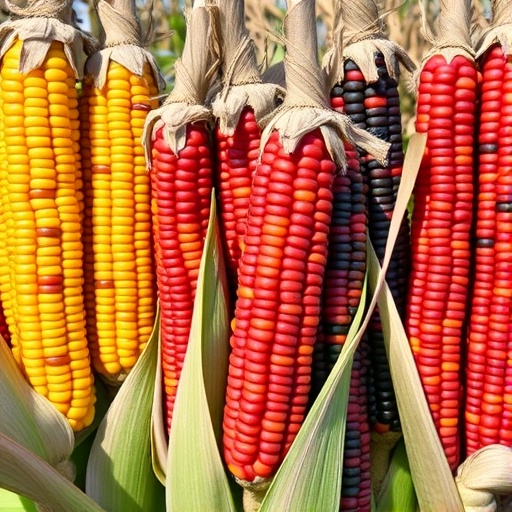
In recent years, the adaptation and improvement of staple crops have been at the forefront of agricultural research. Among them, maize, or corn, scientifically known as Zea mays ssp. mays, stands out due to its significance in global food security and economic stability. The study of wild relatives of maize has emerged as a captivating area of inquiry, offering promising avenues for enhancing genetic diversity and resilience in contemporary maize varieties. A groundbreaking study conducted by Sahoo, Varalakshmi, and Singh sheds light on how these wild relatives can serve as a vital resource in the ongoing quest for maize improvement.
Wild relatives of maize are species that exist within the same genus but are distinct from the domesticated maize we rely on today. These relatives are not just remnant populations but rather reservoirs of rich genetic diversity that have evolved over millennia. Their adaptive traits, which have been honed through natural selection, present an invaluable opportunity for breeders aiming to tackle current agricultural challenges such as climate change, pest resistance, and nutritional enhancement.
As the world grapples with the pressing issue of food security, the need for more resilient crop varieties has never been more urgent. Maize, with its extensive use in food products, animal feed, and bioenergy, is particularly susceptible to environmental pressures. Among the significant pressures are fluctuating climate conditions and the increasing prevalence of crop diseases. By tapping into the genetic material of wild relatives, researchers can introduce beneficial traits into existing maize genetics that enhance yield stability and resource efficiency.
The study highlights the methodical diversity analysis performed on various wild relatives. This analysis not only examines genetic variance but also considers phenotypic characteristics. By understanding the relationship between these traits and environmental adaptability, it becomes possible for breeders to make informed choices about which wild relatives to incorporate into breeding programs. The potential for effectiveness increases as these traits are carefully evaluated, ensuring that only the most advantageous characteristics are selected.
Genetic mapping is a crucial component of this analysis. Utilizing cutting-edge genomic technologies, scientists can identify specific genes responsible for desirable traits in wild relatives. This high-resolution approach allows for pinpoint genetic modifications that could lead to significant improvements in domesticated maize. As such, the role of advanced genetic tools cannot be understated; they bridge the gap between traditional breeding practices and modern biotechnological advancements.
Furthermore, the study’s findings stress the importance of collaboration across different scientific disciplines. Integrating knowledge from genetics, agronomy, and ecology can forge stronger partnerships that push the boundaries of maize research. Those interactions yield not only an enriched understanding of the plant’s biology but also enhance strategies for deploying these wild relatives effectively. This interdisciplinary collaboration may serve as a blueprint for future agricultural innovations across various crop species.
In a striking revelation, the research suggests that wild maize relatives do not only offer variations in genetic traits but can also exhibit particular adaptability advantages in the face of adverse environmental conditions. This resilience is inherent given their exposure to diverse habitats and climate stresses over time. Consequently, by leveraging these attributes, there is potential for breeding maize varieties that can withstand droughts, floods, and diseases more effectively.
Biotechnological advancements also create opportunities for enhancing traits that may not be present in wild relatives. Techniques such as CRISPR and other gene editing technologies can introduce modifications that improve traits beyond what is traditionally achievable through conventional breeding. Thus, merging the gene editing revolution with the genetic diversity offered by wild relatives holds incredible promise for maize improvement.
Additionally, addressing nutritional content is a significant aspect of maize enhancement. With malnutrition affecting millions globally, particularly in developing countries, breeding for enhanced nutritional profiles in staple crops is essential. Genetic resources from wild relatives can introduce higher levels of vitamins and minerals, thereby potentially transforming the nutritional landscape of maize and contributing significantly to global health objectives.
As climate change continues to reshape agricultural landscapes, the genetic insights gained from this study will play a pivotal role in preparing maize for future uncertainties. As ecological pressures mount, having a suite of resilient maize varieties that can thrive in diverse and changing conditions will be invaluable for farmers and food systems alike. The genetic traits gleaned from wild relatives will help ensure that maize can adapt to unexpected challenges, thereby securing its position as a vital global crop.
This pioneering research is a clarion call to the agricultural sector, urging a renewed focus on the genetic treasure troves found in our world’s biodiversity. With the ever-growing threat of climate change, pest invasions, and shifting agricultural demands, we must prioritize the conservation and study of these wild relatives. Their potential contribution to enhancing the genetic arsenal of maize could prove critical not only for improving crop yields but for fostering a more resilient agricultural framework worldwide.
In conclusion, the exploration of wild relatives in maize improvement signifies a resolute stride toward sustainable agriculture. By harnessing the wealth of genetic diversity they offer, scientists and breeders are treading a path that leads to innovative solutions against the backdrop of a rapidly evolving global landscape. The question is no longer if we can improve maize through these wild relatives, but rather how expansive and impactful those improvements can potentially be.
As research continues to unfold, the implications of this work will reverberate through various sectors—from agriculture to nutrition to climate resilience. The lessons learned from wild relatives may not only illuminate maize’s future but could also forge a pathway for other crops facing similar challenges. The journey of discovery is ongoing, and the excitement surrounding the intersection of wild biodiversity and agricultural science is palpable.
In light of these progressive applications, the agricultural community must rally behind this initiative, advocating for research funding and collaborative projects that aim to unlock the full potential of wild relatives in crop improvement. It’s not just an investment in the future of maize, but a blueprint for how humanity can adapt its agricultural practices in a rapidly changing world.
With ongoing advancements in technology and research techniques, the dialogue surrounding wild relatives will only gain traction, fostering further exploration and discovery. This new era of agricultural research not only highlights the need for genetic diversity but emphasizes that our best allies in combating food insecurity may already be growing in the wild.
As we dive into this realm of possibilities, it becomes increasingly clear that the convergence of traditional plant breeding knowledge and modern genetic exploration may be the key to soaring maize production levels, and ultimately, a more food-secure future for us all.
Subject of Research: The enhancement of maize improvement through the use of wild relatives for genetic diversity.
Article Title: Wild relatives enhance genetic resources for maize (Zea Mays ssp. Mays) improvement through diversity analysis.
Article References:
Sahoo, S., Varalakshmi, S., Singh, P. et al. Wild relatives enhance genetic resources for maize (Zea Mays ssp. Mays) improvement through diversity analysis.
Discov. Plants 3, 11 (2026). https://doi.org/10.1007/s44372-026-00472-9
Image Credits: AI Generated
DOI: https://doi.org/10.1007/s44372-026-00472-9
Keywords: Genetic diversity, wild relatives, maize improvement, agricultural resilience, food security.
Tags: adaptation strategies for maizeagricultural research on cropsclimate resilience in agricultureenhancing maize varieties with wild relativesevolutionary traits in wild speciesfood security and agriculturegenetic diversity in cropsmaize improvement through breedingnutritional enhancement of staple cropspest resistance in maizewild relatives of maizeZea mays genetic resources