• HOME
  • NEWS
  • EXPLORE
    • CAREER
      • Companies
      • Jobs
    • EVENTS
    • iGEM
      • News
      • Team
    • PHOTOS
    • VIDEO
    • WIKI
  • BLOG
  • COMMUNITY
    • FACEBOOK
    • INSTAGRAM
    • TWITTER
Friday, September 25, 2026
BIOENGINEER.ORG
No Result
View All Result
  • Login
  • HOME
  • NEWS
  • EXPLORE
    • CAREER
      • Companies
      • Jobs
        • Lecturer
        • PhD Studentship
        • Postdoc
        • Research Assistant
    • EVENTS
    • iGEM
      • News
      • Team
    • PHOTOS
    • VIDEO
    • WIKI
  • BLOG
  • COMMUNITY
    • FACEBOOK
    • INSTAGRAM
    • TWITTER
  • HOME
  • NEWS
  • EXPLORE
    • CAREER
      • Companies
      • Jobs
        • Lecturer
        • PhD Studentship
        • Postdoc
        • Research Assistant
    • EVENTS
    • iGEM
      • News
      • Team
    • PHOTOS
    • VIDEO
    • WIKI
  • BLOG
  • COMMUNITY
    • FACEBOOK
    • INSTAGRAM
    • TWITTER
No Result
View All Result
Bioengineer.org
No Result
View All Result
Home NEWS Science News Biology

Wild bees need deadwood in the forest

Bioengineer by Bioengineer
September 6, 2025
in Biology
Reading Time: 3 mins read
0
IMAGE
Share on FacebookShare on TwitterShare on LinkedinShare on RedditShare on Telegram

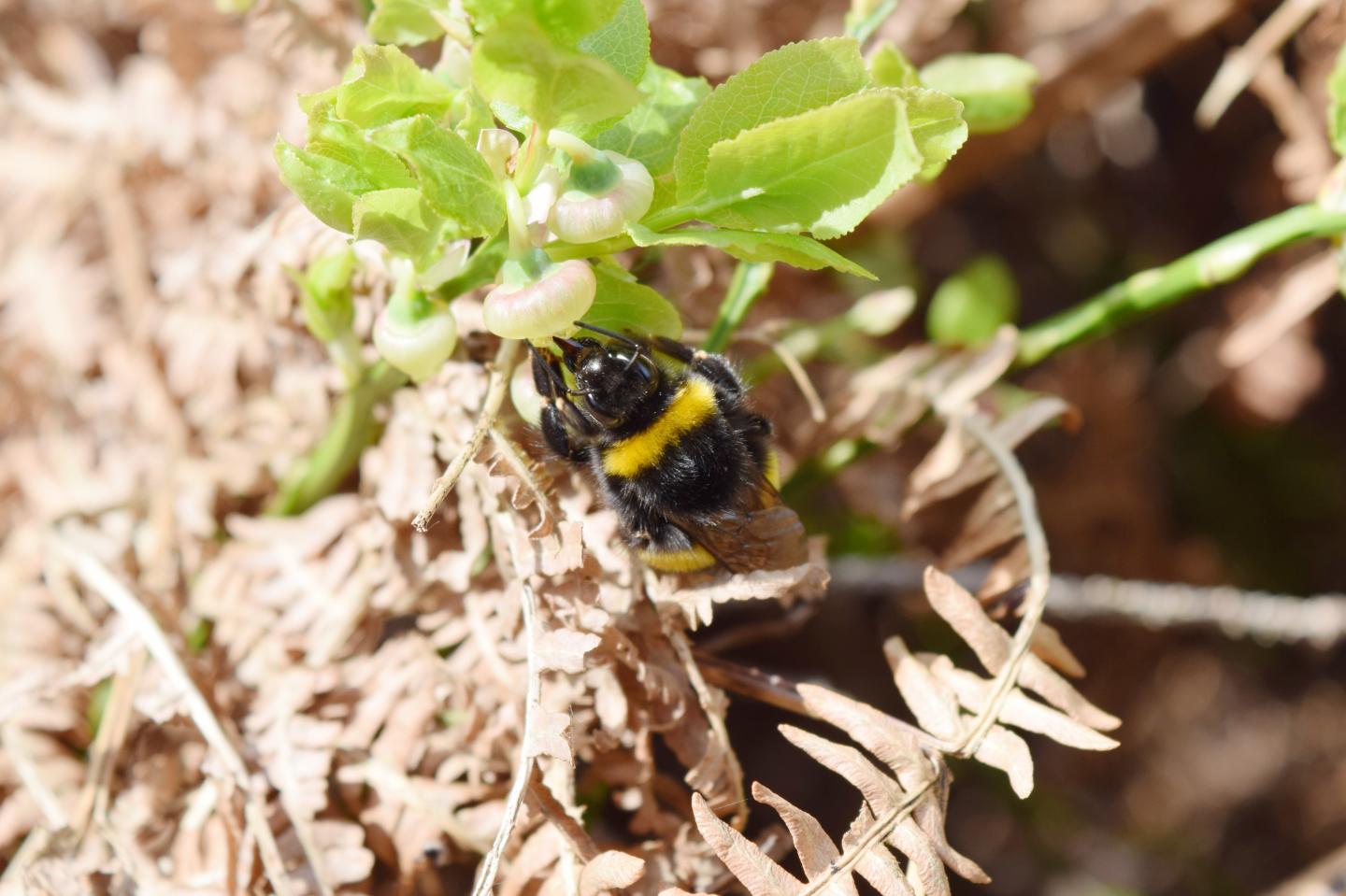
How many tree species are there in the forest? How are the trees scattered throughout? How high are the individual tree crowns? Are there fallen trees or hollowed-out tree trunks? Forest scientists characterize forests according to structural factors. “Structural richness is very important for biodiversity in forests. But forests used for forestry are generally poor in terms of structure,” says Tristan Eckerter from the Chair of Nature Conservation and Landscape Ecology at the University of Freiburg. Therefore, together with research teams from the Chair of Silviculture and the Black Forest National Park, he investigated whether structures such as standing timber in forests help to promote the diversity of wild bees. In addition, the researchers analyzed which other natural features of the spruce-dominated forest help wild bees survive. They found that creating deadwood in coniferous forests is a promising restoration measure to promote the abundance of aboveground nesting bees. The scientists recently published their findings in the journal Forest Ecology and Management.

Restauration experiment aims to strengthen biodiversity

As part of this long-term restoration experiment, structural richness was artificially created in 2016 on several sample plots in the Black Forest National Park. Researchers felled and uprooted 20 spruce trees per plot, creating deadwood and small gaps in six 50 by 50 meter plots. Six other plots were left in their natural state as a control group. “The restoration measures have increased what we call the structural complexity of the forest stands. That is, these plots provide a more diverse, varied habitat. We would not have thought to have found so many different wild bees as a result,” explains Eckerter.

Standing deadwood promotes bee population

The researchers compared how many wild bees were in the different plots in June 2018 and 2019. Their results show that deadwood increases the abundance and biodiversity of wild bees. In this regard, standing deadwood particularly encourages above-ground nesting bees such as masked bees. “We suspect that some of the bees use deadwood as a nesting site,” says Eckerter. As a result, he recommends, “If the bark beetle has already flown out and the tree is already dead, it’s important to leave the standing dead tree for the bees.”

Increased blueberry growth

In addition, the thinner forest areas prove beneficial to bees, as the light stimulates the growth of flowering plants. Increased blueberry growth provides bees with more nectar, increasing the abundance and richness of the bee community. Looking toward the future, Prof. Dr. Alexandra Klein, head of the Chair of Nature Conservation and Landscape Ecology, emphasizes, „In the course of climate change, forest areas will be increasingly characterized by deadwood and sparse areas caused by storms, droughts or bark beetles. As a result, forest habitat will increase in importance for wild bees.”

###

Contact:

Tristan Eckerter

Chair of Nature Conservation and Landscape Ecology

Faculty of Environment and Natural Resources

Tel.: 0176 85056045

E-Mail: [email protected]

Dr. Marc Förschler

Head of Ecosystem Monitoring, Research and Conservation

Black Forest National Park

Tel.: 07442 18018 200

E-Mail: [email protected]

Media Contact
Tristan Eckerter
[email protected]

Original Source

https://www.pr.uni-freiburg.de/pm-en/press-releases-2021/wild-bees-need-deadwood-in-the-forest

Related Journal Article

http://dx.doi.org/10.1016/j.foreco.2021.119412

Tags: BiologyDeadwood conservationEntomologyForest biodiversityForest restorationStructural complexityWild bees
Share12Tweet8Share2ShareShareShare2

Related Posts

Splicing Complex Tied to Cell Fate Decisions in Developing Worms

Splicing Complex Tied to Cell Fate Decisions in Developing Worms

September 25, 2026
How Mosquitoes Really Find Us: A Sensory Journey From CO2 to Blood Meal

How Mosquitoes Really Find Us: A Sensory Journey From CO2 to Blood Meal

September 25, 2026

Jumping Genes Reveal How Jellyfish Genomes Grew, Shrank and Diversified Across Ancient Lineages

September 25, 2026

Six-Year Light Trap Study Reveals How Weather Drives Rice Pest Outbreaks in Bangladesh

September 25, 2026
Please login to join discussion

POPULAR NEWS

  • Splicing Complex Tied to Cell Fate Decisions in Developing Worms

    29 shares
    Share 12 Tweet 7
  • Miniature tunnels reveal how joints sap the stiffness of giant shield linings

    29 shares
    Share 12 Tweet 7
  • Hidden Ground Cherry Turns Up in Assam, Extending a Wandering Species Into Northeast India

    29 shares
    Share 12 Tweet 7
  • Cell-Disguised Nanoparticles Show Promise for Targeted Colon Cancer Therapy

    29 shares
    Share 12 Tweet 7

About

We bring you the latest biotechnology news from best research centers and universities around the world. Check our website.

Follow us

Recent News

Splicing Complex Tied to Cell Fate Decisions in Developing Worms

Miniature tunnels reveal how joints sap the stiffness of giant shield linings

Hidden Ground Cherry Turns Up in Assam, Extending a Wandering Species Into Northeast India

Subscribe to Blog via Email

Enter your email address to subscribe to this blog and receive notifications of new posts by email.

Join 85 other subscribers
  • Contact Us

Bioengineer.org © Copyright 2023 All Rights Reserved.

Welcome Back!

Login to your account below

Forgotten Password?

Retrieve your password

Please enter your username or email address to reset your password.

Log In
No Result
View All Result
  • Homepages
    • Home Page 1
    • Home Page 2
  • News
  • National
  • Business
  • Health
  • Lifestyle
  • Science

Bioengineer.org © Copyright 2023 All Rights Reserved.