• HOME
  • NEWS
  • EXPLORE
    • CAREER
      • Companies
      • Jobs
    • EVENTS
    • iGEM
      • News
      • Team
    • PHOTOS
    • VIDEO
    • WIKI
  • BLOG
  • COMMUNITY
    • FACEBOOK
    • INSTAGRAM
    • TWITTER
Monday, May 11, 2026
BIOENGINEER.ORG
No Result
View All Result
  • Login
  • HOME
  • NEWS
  • EXPLORE
    • CAREER
      • Companies
      • Jobs
        • Lecturer
        • PhD Studentship
        • Postdoc
        • Research Assistant
    • EVENTS
    • iGEM
      • News
      • Team
    • PHOTOS
    • VIDEO
    • WIKI
  • BLOG
  • COMMUNITY
    • FACEBOOK
    • INSTAGRAM
    • TWITTER
  • HOME
  • NEWS
  • EXPLORE
    • CAREER
      • Companies
      • Jobs
        • Lecturer
        • PhD Studentship
        • Postdoc
        • Research Assistant
    • EVENTS
    • iGEM
      • News
      • Team
    • PHOTOS
    • VIDEO
    • WIKI
  • BLOG
  • COMMUNITY
    • FACEBOOK
    • INSTAGRAM
    • TWITTER
No Result
View All Result
Bioengineer.org
No Result
View All Result
Home NEWS Science News Chemistry

Why you should care about better fiber optics

Bioengineer by Bioengineer
May 23, 2019
in Chemistry
Reading Time: 3 mins read
0
IMAGE
Share on FacebookShare on TwitterShare on LinkedinShare on RedditShare on Telegram

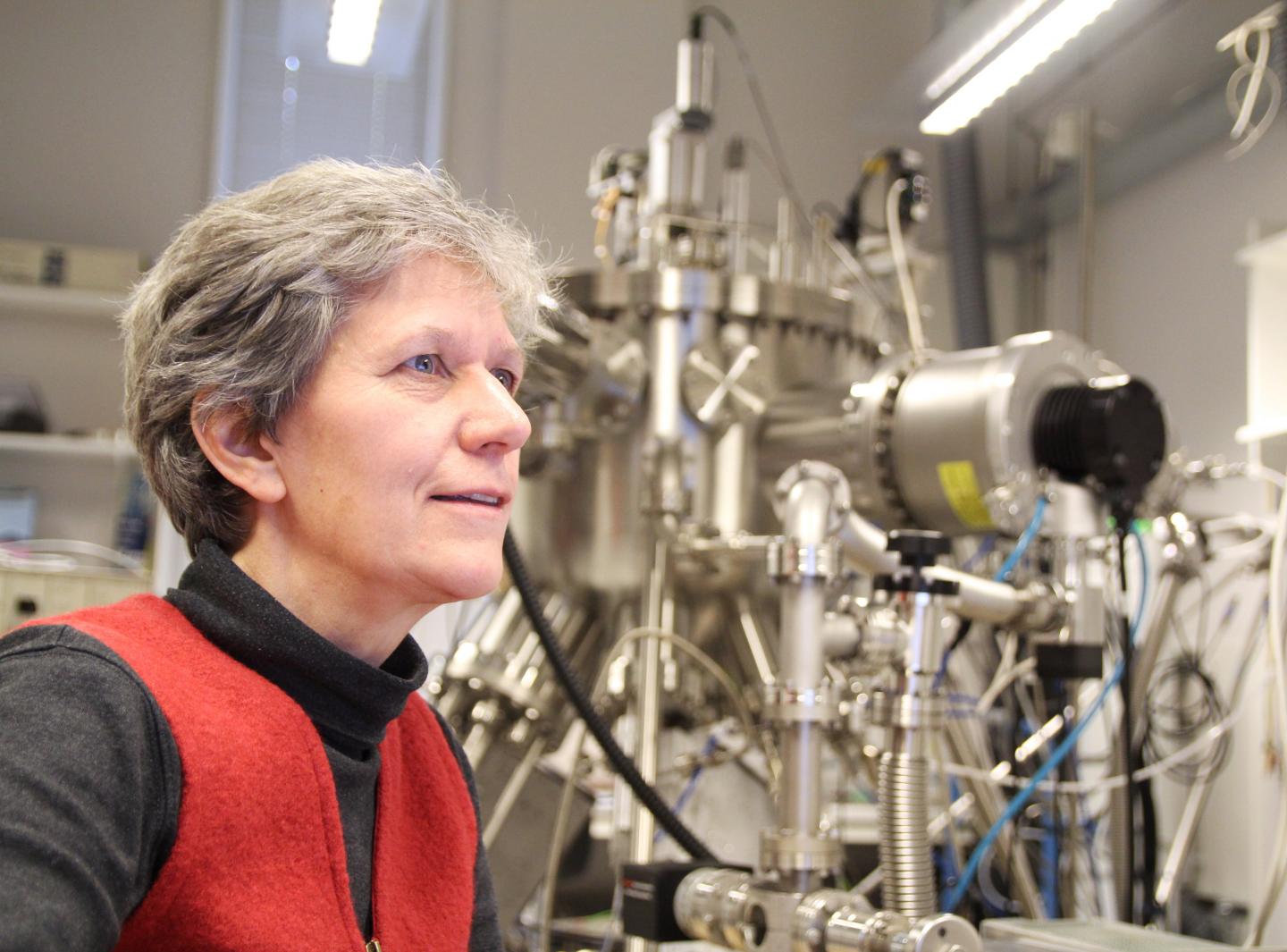
Fiber optic research can give us better medical equipment, improved environmental monitoring, more media channels — and maybe better solar panels
IMAGE

Credit: Photo: Per Henning, NTNU

Fibre optic research can give us better medical equipment, improved environmental monitoring, more media channels – and maybe better solar panels.

“Optical fibres are remarkably good at transmitting signals without much loss in the transfer,” says Professor Ursula Gibson at NTNU’s Department of Physics.

However.

“Glass fibres are good up to a wavelength of about 3 microns. More than that, and they’re not so good,” she says.

And that is sometimes problematic.Telecom uses the the near infrared part of the wave spectrum because it has the least loss of energy when passing through glass.

But if we could utilize even longer wavelengths, the benefits would include better medical diagnoses and more precise environmental monitoring of airborne gas particles.Longer wavelengths could also mean more space for media channels, since the competition is fierce for the wavelengths where free space transmission normally takes place now.

Gallium antimonide

Optical glass fibres are not made of pure glass, but require a core with a bit of some other material to transmit signals.

This is clearly quite complicated to achieve, and the methods have gradually been perfected over the last 50 years.At NTNU, various research groups have been experimenting with optical fibres using a semiconductor core of silicon (Si) and gallium antimonide (GaSb) instead of small amounts of germanium oxide, which is used in silica fibres now.Some of the researchers’ latest research findings have now been presented in Nature Communications.

PhD candidate Seunghan Song is the first author of the article in the prestigious journal.The article “describes a method for making optical fibres where part of the core that is gallium antimonide, which can emit infrared light. Then the fibre is laser treated to concentrate the antimonide,” says Gibson.

This process is carried at room temperature. The laser processing affects the properties of the core.

Cables and solar cells

Silicon is well known as the most commonly used material in solar panels. Along with oxygen, silicon is the most common material in glass and glass fibre cables as well.

Gallium antimonide is less typical, although others have also used the same composition in optical instruments. But not in the same way.

With the new method, the gallium antimonide is initially distributed throughout the silicon. This is a simpler and cheaper method than others to grow crystals, and the technology offers many possible applications.

“Our results are first and foremost a step towards opening up larger portion of the electromagnetic wave spectrum for optical fibre transmission,” Gibson says.

Learning about the fundamental properties of the semiconductor materials in glass fibres allows us to make more efficient use of rare resources like gallium.

###

Source: Nature Communications. Laser restructuring and photoluminescence of glass-clad GaSb/Si-core optical fibres . S. Song, K. Lønsethagen, F. Laurell, T. W. Hawkins, J. Ballato, M. Fokine & U. J. Gibson. Published: 17 April 2019.

https://www.nature.com/articles/s41467-019-09835-1

https://doi.org/10.1038/s41467-019-09835-1

Media Contact
Ursula Gibson
[email protected]

Original Source

https://geminiresearchnews.com/2019/05/why-you-should-care-about-better-fibre-optics/

Related Journal Article

http://dx.doi.org/10.1038/s41467-019-09835-1

Tags: Chemistry/Physics/Materials SciencesMaterialsOptics
Share13Tweet8Share2ShareShareShare2

Related Posts

Miniature Sensor Uses Light to Detect Touch — Chemistry

Miniature Sensor Uses Light to Detect Touch

May 8, 2026
Iron Minerals Determine Whether Dissolved Organic Matter Fuels Microbes or Becomes Long-Term Carbon Storage — Chemistry

Iron Minerals Determine Whether Dissolved Organic Matter Fuels Microbes or Becomes Long-Term Carbon Storage

May 8, 2026

Kate Evans Appointed Associate Lab Director for Biological and Environmental Systems Science at ORNL

May 8, 2026

Advancing Multiscale Modeling and Overcoming Operational Challenges in Autothermal CO₂-to-Methanol Reactors

May 8, 2026
Please login to join discussion

POPULAR NEWS

  • Research Indicates Potential Connection Between Prenatal Medication Exposure and Elevated Autism Risk

    840 shares
    Share 336 Tweet 210
  • New Study Reveals Plants Can Detect the Sound of Rain

    728 shares
    Share 290 Tweet 182
  • Salmonella Haem Blocks Macrophages, Boosts Infection

    61 shares
    Share 24 Tweet 15
  • Breastmilk Balances E. coli and Beneficial Bacteria in Infant Gut Microbiomes

    57 shares
    Share 23 Tweet 14

About

We bring you the latest biotechnology news from best research centers and universities around the world. Check our website.

Follow us

Recent News

Tinengotinib Alone or with Atezolizumab in Tumors

Fear of Falling and Activity Affect Elderly Life Quality

Transforming Jellyfish Bycatch into a Valuable Collagen Source for Cosmetics and Biotechnology

Subscribe to Blog via Email

Enter your email address to subscribe to this blog and receive notifications of new posts by email.

Join 82 other subscribers
  • Contact Us

Bioengineer.org © Copyright 2023 All Rights Reserved.

Welcome Back!

Login to your account below

Forgotten Password?

Retrieve your password

Please enter your username or email address to reset your password.

Log In
No Result
View All Result
  • Homepages
    • Home Page 1
    • Home Page 2
  • News
  • National
  • Business
  • Health
  • Lifestyle
  • Science

Bioengineer.org © Copyright 2023 All Rights Reserved.