• HOME
  • NEWS
  • EXPLORE
    • CAREER
      • Companies
      • Jobs
    • EVENTS
    • iGEM
      • News
      • Team
    • PHOTOS
    • VIDEO
    • WIKI
  • BLOG
  • COMMUNITY
    • FACEBOOK
    • INSTAGRAM
    • TWITTER
Tuesday, May 19, 2026
BIOENGINEER.ORG
No Result
View All Result
  • Login
  • HOME
  • NEWS
  • EXPLORE
    • CAREER
      • Companies
      • Jobs
        • Lecturer
        • PhD Studentship
        • Postdoc
        • Research Assistant
    • EVENTS
    • iGEM
      • News
      • Team
    • PHOTOS
    • VIDEO
    • WIKI
  • BLOG
  • COMMUNITY
    • FACEBOOK
    • INSTAGRAM
    • TWITTER
  • HOME
  • NEWS
  • EXPLORE
    • CAREER
      • Companies
      • Jobs
        • Lecturer
        • PhD Studentship
        • Postdoc
        • Research Assistant
    • EVENTS
    • iGEM
      • News
      • Team
    • PHOTOS
    • VIDEO
    • WIKI
  • BLOG
  • COMMUNITY
    • FACEBOOK
    • INSTAGRAM
    • TWITTER
No Result
View All Result
Bioengineer.org
No Result
View All Result
Home NEWS Science News Health

Why we get diarrhea

Bioengineer by Bioengineer
June 14, 2017
in Health
Reading Time: 2 mins read
0
Share on FacebookShare on TwitterShare on LinkedinShare on RedditShare on Telegram
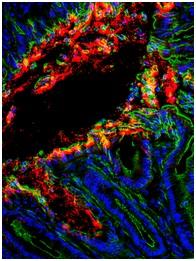
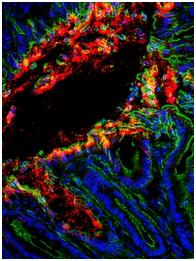
IMAGE

Credit: Image courtesy of the Turner laboratory at Brigham and Women's Hospital.

Researchers want to know: does diarrhea serve a purpose? Does it actually help clear the bacteria causing a gastrointestinal infection, or is it merely a symptom of disease that should be prevented as much as possible? In a new study from Brigham and Women's Hospital, investigators explore the immune mechanism that drives diarrhea, concluding that it does play a critical role in pathogen clearance in the early stages of infection. The new study, published today in Cell Host and Microbe, also uncovers a previously unrecognized role for interleukin-22, an immune system molecule, in the host's defense against infection.

"The hypothesis that diarrhea clears intestinal pathogens has been debated for centuries," said corresponding author Jerrold Turner, MD, PhD, of the BWH Departments of Pathology and Medicine. "Its impact on the progression of intestinal infections remains poorly understood. We sought to define the role of diarrhea and to see if preventing it might actually delay pathogen clearance and prolong disease."

To investigate, researchers used a mouse model infected with Citrobacter rodentium, the mouse equivalent of an E. coli infection. Using this model, they saw an increase in the permeability of the intestinal barrier within just two days of infection — well before inflammation and epithelial damage. In particular, they uncovered a critical role for interleukin-22 that in turn influences another molecule called claudin-2, previously known to be involved in causing diarrhea. They found that diarrhea resulting from the signaling of these two molecules helped promote pathogen clearance and limited disease severity.

Other investigators have proposed developing new therapeutics to inhibit claudin-2. However, Turner and colleagues explain that the activation of this pathway may be critical for combating an infection, particularly in the early stages of a disease. They conclude that diarrhea is critical to enteric pathogen clearance, and that IL-22 may play a key role in host defense.

###

This work was supported by National Institute of Health grants F30DK103511, T32HD007009, R01DK61931, R01DK68271, and R24DK099803; Crohn's and Colitis Foundation of America; the State Scholarship Fund of China 201208110294; and Core Research for Evolutional Science and Technology of the Japan Science and Technology Agency.

Paper cited: Tsai PY et al. "IL-22 upregulates epithelial claudin-2 to drive diarrhea and enteric pathogen clearance." Cell Host & Microbe DOI: 10.1016/j.chom.2017.05.009

Media Contact

Haley Bridger
[email protected]
617-525-6383
@BrighamWomens

http://www.brighamandwomens.org

Related Journal Article

http://dx.doi.org/10.1016/j.chom.2017.05.009

############

Story Source: Materials provided by Scienmag

Share12Tweet8Share2ShareShareShare2

Related Posts

AI Revolutionizes Mental Health Care: New Reichman University Study Led by Prof. Anat Shoshani Unveils Therapy at Your Fingertips — Medicine

AI Revolutionizes Mental Health Care: New Reichman University Study Led by Prof. Anat Shoshani Unveils Therapy at Your Fingertips

May 19, 2026

Persistent Inequities Continue to Impact Cardiovascular Disease Burden and Care

May 19, 2026

Leveraging Technology to Enhance Emergency Response for Cardiac and Stroke Cases

May 19, 2026

Older Adults’ Views on Online Nutrition Education

May 18, 2026
Please login to join discussion

POPULAR NEWS

  • Research Indicates Potential Connection Between Prenatal Medication Exposure and Elevated Autism Risk

    845 shares
    Share 338 Tweet 211
  • New Study Reveals Plants Can Detect the Sound of Rain

    731 shares
    Share 292 Tweet 182
  • Salmonella Haem Blocks Macrophages, Boosts Infection

    62 shares
    Share 25 Tweet 16
  • Breastmilk Balances E. coli and Beneficial Bacteria in Infant Gut Microbiomes

    58 shares
    Share 23 Tweet 15

About

We bring you the latest biotechnology news from best research centers and universities around the world. Check our website.

Follow us

Recent News

AI Revolutionizes Mental Health Care: New Reichman University Study Led by Prof. Anat Shoshani Unveils Therapy at Your Fingertips

Persistent Inequities Continue to Impact Cardiovascular Disease Burden and Care

New Insights into How Smoking Causes Lung Stiffness

Subscribe to Blog via Email

Enter your email address to subscribe to this blog and receive notifications of new posts by email.

Join 82 other subscribers
  • Contact Us

Bioengineer.org © Copyright 2023 All Rights Reserved.

Welcome Back!

Login to your account below

Forgotten Password?

Retrieve your password

Please enter your username or email address to reset your password.

Log In
No Result
View All Result
  • Homepages
    • Home Page 1
    • Home Page 2
  • News
  • National
  • Business
  • Health
  • Lifestyle
  • Science

Bioengineer.org © Copyright 2023 All Rights Reserved.