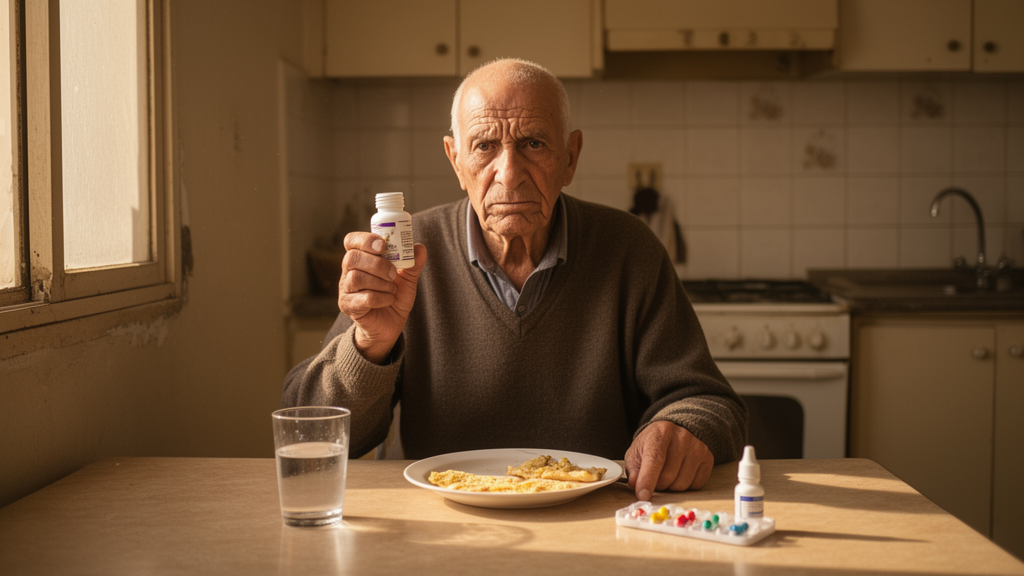
Gout is one of the most painful and well-characterized forms of inflammatory arthritis, and yet one of the most stubborn problems in its treatment has nothing to do with the drugs themselves. Urate-lowering therapy works: it reduces serum uric acid, prevents flares, and over time can dissolve the monosodium urate crystals that drive the disease. The trouble is that a large share of patients simply do not take their medication as prescribed. A new study conducted at a rheumatology outpatient clinic in Alexandria, Egypt, puts hard numbers on that gap and identifies who is most at risk of falling through it.
The research, published in BMC Nursing by a team from the Medical-Surgical Nursing Department at the Faculty of Nursing, Alexandria University, followed 150 adults aged 21 to 60 who had been diagnosed with gout and prescribed urate-lowering therapy for at least three months. Data collection ran from November 1, 2024, to March 30, 2025, and the findings are stark: roughly 60.7 percent of respondents showed a low level of adherence to their medications, while only 39.3 percent reported high adherence. In other words, in this clinic population, the majority of patients were not taking the very therapy designed to control their disease.
The scale of non-adherence in gout is not a new observation internationally, but the Egyptian data add a locally grounded picture of why patients disengage. The authors point to a familiar cluster of barriers: the complexity of treatment regimens, the cost of medications, side effects, simple forgetfulness, and deeply individual health beliefs about whether long-term therapy is necessary. On the provider side, poor communication and inadequate patient education emerge as contributing factors, a reminder that adherence is a two-way transaction between clinic and patient rather than a personal failing of the person holding the prescription.
Methodologically, the study took a descriptive approach with a convenience sample, screening participants carefully before enrollment. To be included, patients had to have the capacity to give informed consent and understand the study requirements, and they needed at least three months of exposure to urate-lowering therapy so that adherence patterns could reasonably be assessed. The exclusions were equally deliberate: individuals with comorbidities that could independently affect medication adherence, people already enrolled in other clinical trials, and anyone unable to provide informed consent were left out. This design choice helps isolate adherence behavior tied to gout treatment rather than to competing medical burdens.
Two instruments carried the analytical weight of the study. The first was a sociodemographic and clinical data questionnaire, gathering the background variables that adherence research has long implicated in outcomes: age, sex, income, and clinical characteristics. The second was the Intentional Non-Adherence Scale, or INAS, a validated tool that measures the deliberate dimension of skipping medication, distinguishing patients who consciously choose not to take their drugs from those who miss doses by accident. That distinction matters for intervention design, because intentional non-adherence usually reflects beliefs, fears, or cost calculations, while unintentional non-adherence responds better to reminders and simplification of regimens.
The demographic patterns in the results are instructive. Adherence rates were higher among male patients and among those aged 30 to 39, and patients with sufficient income adhered better than those with financial strain. The income finding echoes a persistent theme in chronic disease management worldwide: when out-of-pocket medication costs collide with household budgets, the prescription bottle is often the first casualty. In a health system transitioning toward universal health insurance and universal health coverage, as Egypt currently is, the study’s authors argue that these financial barriers deserve direct policy attention rather than being treated as background noise.
The clinical data told a complementary story. Better adherence correlated with certain clinical characteristics, suggesting that patients who have experienced the consequences of uncontrolled gout, or who understand their disease more fully, are more likely to stay on therapy. This aligns with the broader mechanistic picture of gout: when serum uric acid remains elevated, monosodium urate crystals continue to deposit in joints and soft tissues, flares recur, and in advanced cases tophi form, visible and palpable deposits that modern imaging tools such as dual-energy CT, ultrasound, and MRI can detect. Patients who grasp that trajectory, and who feel their flares are taken seriously, have a concrete reason to persist with a drug that may produce no immediate sensation of benefit.
That last point is one of the quiet paradoxes of urate-lowering therapy. Unlike an analgesic, which rewards the patient within the hour, allopurinol and its peers work preventively, and the early weeks of treatment can even trigger flares as crystal stores begin to mobilize. A patient who starts therapy, feels worse, and receives no clear explanation from a busy clinic has every incentive to quit. The study’s emphasis on provider communication and education as determinants of adherence speaks directly to this trap, and it positions nursing staff, who typically spend the most time with patients, as the frontline for correcting it.
The authors draw a set of implications that reach beyond the clinic walls. They call for enhanced public awareness campaigns to correct the common misconception that gout is a self-inflicted inconvenience rather than a chronic crystalline arthropathy requiring sustained management. They advocate early screening programs to catch hyperuricemia and gout before joint damage accumulates. And they urge targeted interventions to improve healthcare access and medication adherence among underserved populations, the group in which non-adherence is most concentrated and its consequences most severe. Tailored nursing interventions and multidisciplinary collaboration, they argue, can meaningfully improve both outcomes and quality of life.
For a disease that burdens patients with recurrent agony and burdens health systems with avoidable emergency visits, joint destruction, and cardiovascular comorbidity, the message of this study is deceptively simple: the effectiveness of a drug is measured in the population not by its pharmacology but by whether people actually take it. With more than six in ten patients in this Egyptian cohort falling short of adequate adherence, the gap between what urate-lowering therapy can do and what it does do remains wide. Closing it will require attention to cost, communication, and the health beliefs of individual patients, in the rheumatology clinic and far beyond it.
Subject of Research: Determinants of non-adherence to urate-lowering therapy among gout patients in an Egyptian rheumatology outpatient clinic
Article Title: Determinants of gout therapy non-adherence in patients attending an Egyptian rheumatology outpatient clinic
Article References: Ali, S. S., Ibrahim, S. R. S., & Mohammed, M. S. (2026). Determinants of gout therapy non-adherence in patients attending an Egyptian rheumatology outpatient clinic. BMC Nursing, 25(1), Article 777. https://doi.org/10.1186/s12912-026-05073-1
Image Credits: AI Generated
DOI: 10.1186/s12912-026-05073-1
Keywords: gout, medication adherence, urate-lowering therapy, Egypt, rheumatology, outpatient clinic, INAS, nursing interventions, patient compliance, hyperuricemia, health barriers, Determinants
News Source: Ophelia Keating. (October 19, 2026). Why Six in Ten Gout Patients Skip Their Medication: New Egyptian Study Maps the Adherence Gap. Scienmag.