• HOME
  • NEWS
  • EXPLORE
    • CAREER
      • Companies
      • Jobs
    • EVENTS
    • iGEM
      • News
      • Team
    • PHOTOS
    • VIDEO
    • WIKI
  • BLOG
  • COMMUNITY
    • FACEBOOK
    • INSTAGRAM
    • TWITTER
Saturday, May 30, 2026
BIOENGINEER.ORG
No Result
View All Result
  • Login
  • HOME
  • NEWS
  • EXPLORE
    • CAREER
      • Companies
      • Jobs
        • Lecturer
        • PhD Studentship
        • Postdoc
        • Research Assistant
    • EVENTS
    • iGEM
      • News
      • Team
    • PHOTOS
    • VIDEO
    • WIKI
  • BLOG
  • COMMUNITY
    • FACEBOOK
    • INSTAGRAM
    • TWITTER
  • HOME
  • NEWS
  • EXPLORE
    • CAREER
      • Companies
      • Jobs
        • Lecturer
        • PhD Studentship
        • Postdoc
        • Research Assistant
    • EVENTS
    • iGEM
      • News
      • Team
    • PHOTOS
    • VIDEO
    • WIKI
  • BLOG
  • COMMUNITY
    • FACEBOOK
    • INSTAGRAM
    • TWITTER
No Result
View All Result
Bioengineer.org
No Result
View All Result
Home NEWS Science News Biology

Why it doesn’t get dark when you blink

Bioengineer by Bioengineer
September 24, 2018
in Biology
Reading Time: 2 mins read
0
Share on FacebookShare on TwitterShare on LinkedinShare on RedditShare on Telegram
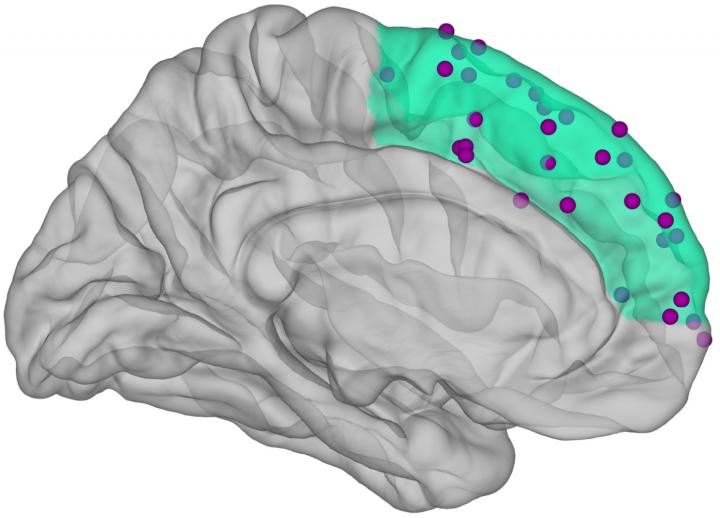
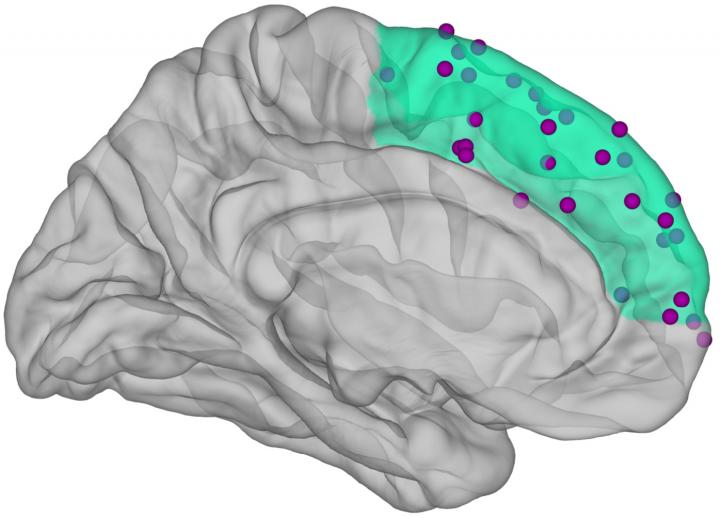
IMAGE

Credit: Caspar M. Schwiedrzik

Every five seconds we close our eyes and blink to moisten them. During this brief moment no light falls on our retina yet it is not constantly dark and we continue to observe a stable picture of our environment. The brain seems to remember the percepts that have just happened. Caspar Schwiedrzik and Sandrin Sudmann, neuroscientists at the German Primate Center and the University Medical Center Göttingen, have in cooperation with colleagues from the United States performed studies on epilepsy patients to determine where this memory is situated in the brain and how it works. They have identified a brain area that plays a crucial role in perceptual memory. This finding enables a better understanding of the interaction of perception and memory (Current Biology).

Even though we constantly blink and move our head and eyes, we still see our world as a stable, unified whole. It must therefore be possible for the brain to retain visual information for a short period of time and then put it together to form a conclusive image without interruptions. Caspar Schwiedrzik and his team of neuroscientists suspected that a specific brain region known as the medial prefrontal cortex which plays an important role in short-term memory and decision-making may be a key player in this process.

At New York University the scientists had the opportunity to study this region of the brain in patients with epilepsy. To treat their disease, electrodes were temporarily implanted in the brain of these patients. Subjects were shown a dot lattice on a screen and were asked to indicate their perception of the orientation (for example horizontal or vertical) of the points. They were then shown a second dot lattice and were asked to indicate the orientation of the points. If both orientations were the same, this was interpreted as an indication that the subjects used the information from the first round to establish a conclusive percept in the second round. While the subjects performed the task, their neural activity in the prefrontal cortex was recorded. In one of the subjects a section of the superior frontal gyrus was removed due to an earlier illness and she was unable to store the visual information.

"Our research shows that the medial prefrontal cortex calibrates current visual information with previously obtained information and thus enables us to perceive the world with more stability, even when we briefly close our eyes to blink," says Caspar Schwiedrzik, first author of the study and scientists at the German Primate Center and at the University Medical Center Göttingen. This is not only true for blinking but also for higher cognitive functions. "Even when we see a facial expression, this information influences the perception of the expression on the next face that we look at," says Schwiedrzik.

"We were able to show that the prefrontal cortex plays an important role in perception and in context-dependent behavior," says Schwiedrzik, summarizing the findings of the study. In further studies, the researchers want to investigate, among other things, the role that confidence in one's own perception plays in perceptual memory.

###

Media Contact

Dr. Caspar M. Schwiedrzik
[email protected]
49-055-139-12358

http://dpz.eu

Share12Tweet8Share2ShareShareShare2

Related Posts

Ohio Wall Lizards Overcame Genetic Bottleneck Through Reproduction, Study Finds — Biology

Ohio Wall Lizards Overcame Genetic Bottleneck Through Reproduction, Study Finds

May 29, 2026
Double Agent Unveils Unexpected Revelations — Biology

Double Agent Unveils Unexpected Revelations

May 29, 2026

University of Toronto Scientists Work to Enhance Access to Advanced Research and Biomanufacturing Tools in Resource-Limited Areas

May 29, 2026

CLPTM1L Alters Lipid Rafts to Drive Glioblastoma Progression

May 29, 2026
Please login to join discussion

POPULAR NEWS

  • ESMO 2025: mRNA COVID Vaccines Enhance Efficacy of Cancer Immunotherapy

    319 shares
    Share 128 Tweet 80
  • Multi-Hospital Study Reveals Long Covid Burden Is Twice as High as Current Estimates

    80 shares
    Share 32 Tweet 20
  • Common Food Preservatives Associated with Elevated Blood Pressure and Increased Heart Disease Risk

    56 shares
    Share 22 Tweet 14
  • New Study Reveals Plants Can Detect the Sound of Rain

    736 shares
    Share 294 Tweet 184

About

We bring you the latest biotechnology news from best research centers and universities around the world. Check our website.

Follow us

Recent News

Reducing Chronic Health Risks in Childhood Cancer Survivors

Nanoparticles Silence CLYBL, Reprogram Macrophages, Protect Lungs

T-Cell Engager Shows Promise in Autoimmune Neuropathy

Subscribe to Blog via Email

Enter your email address to subscribe to this blog and receive notifications of new posts by email.

Join 82 other subscribers
  • Contact Us

Bioengineer.org © Copyright 2023 All Rights Reserved.

Welcome Back!

Login to your account below

Forgotten Password?

Retrieve your password

Please enter your username or email address to reset your password.

Log In
No Result
View All Result
  • Homepages
    • Home Page 1
    • Home Page 2
  • News
  • National
  • Business
  • Health
  • Lifestyle
  • Science

Bioengineer.org © Copyright 2023 All Rights Reserved.