• HOME
  • NEWS
  • EXPLORE
    • CAREER
      • Companies
      • Jobs
    • EVENTS
    • iGEM
      • News
      • Team
    • PHOTOS
    • VIDEO
    • WIKI
  • BLOG
  • COMMUNITY
    • FACEBOOK
    • INSTAGRAM
    • TWITTER
Sunday, May 17, 2026
BIOENGINEER.ORG
No Result
View All Result
  • Login
  • HOME
  • NEWS
  • EXPLORE
    • CAREER
      • Companies
      • Jobs
        • Lecturer
        • PhD Studentship
        • Postdoc
        • Research Assistant
    • EVENTS
    • iGEM
      • News
      • Team
    • PHOTOS
    • VIDEO
    • WIKI
  • BLOG
  • COMMUNITY
    • FACEBOOK
    • INSTAGRAM
    • TWITTER
  • HOME
  • NEWS
  • EXPLORE
    • CAREER
      • Companies
      • Jobs
        • Lecturer
        • PhD Studentship
        • Postdoc
        • Research Assistant
    • EVENTS
    • iGEM
      • News
      • Team
    • PHOTOS
    • VIDEO
    • WIKI
  • BLOG
  • COMMUNITY
    • FACEBOOK
    • INSTAGRAM
    • TWITTER
No Result
View All Result
Bioengineer.org
No Result
View All Result
Home NEWS Science News Biology

Why fish intake by pregnant women improves the growth of a child’s brain

Bioengineer by Bioengineer
February 11, 2018
in Biology
Reading Time: 2 mins read
0
Share on FacebookShare on TwitterShare on LinkedinShare on RedditShare on Telegram
IMAGE

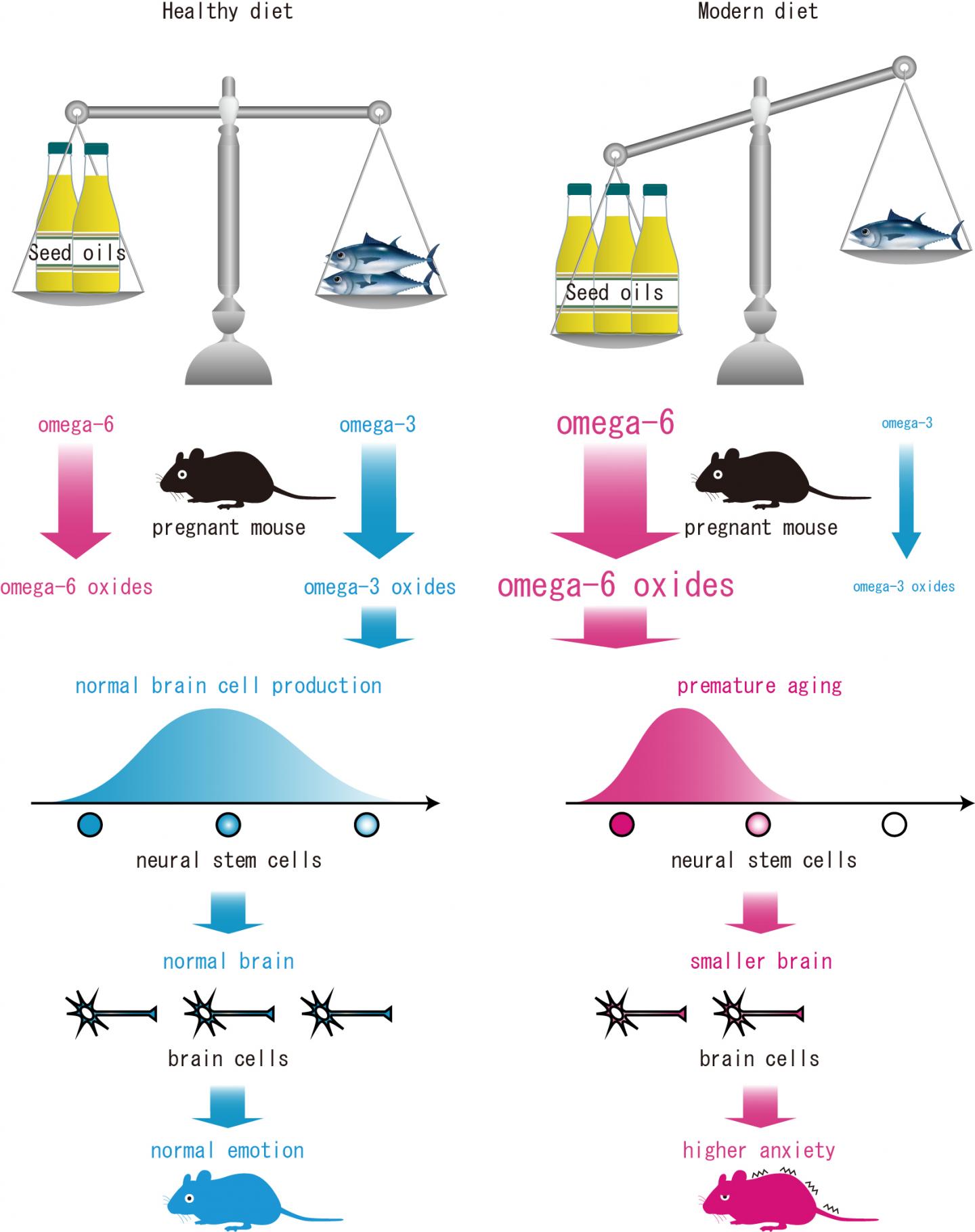
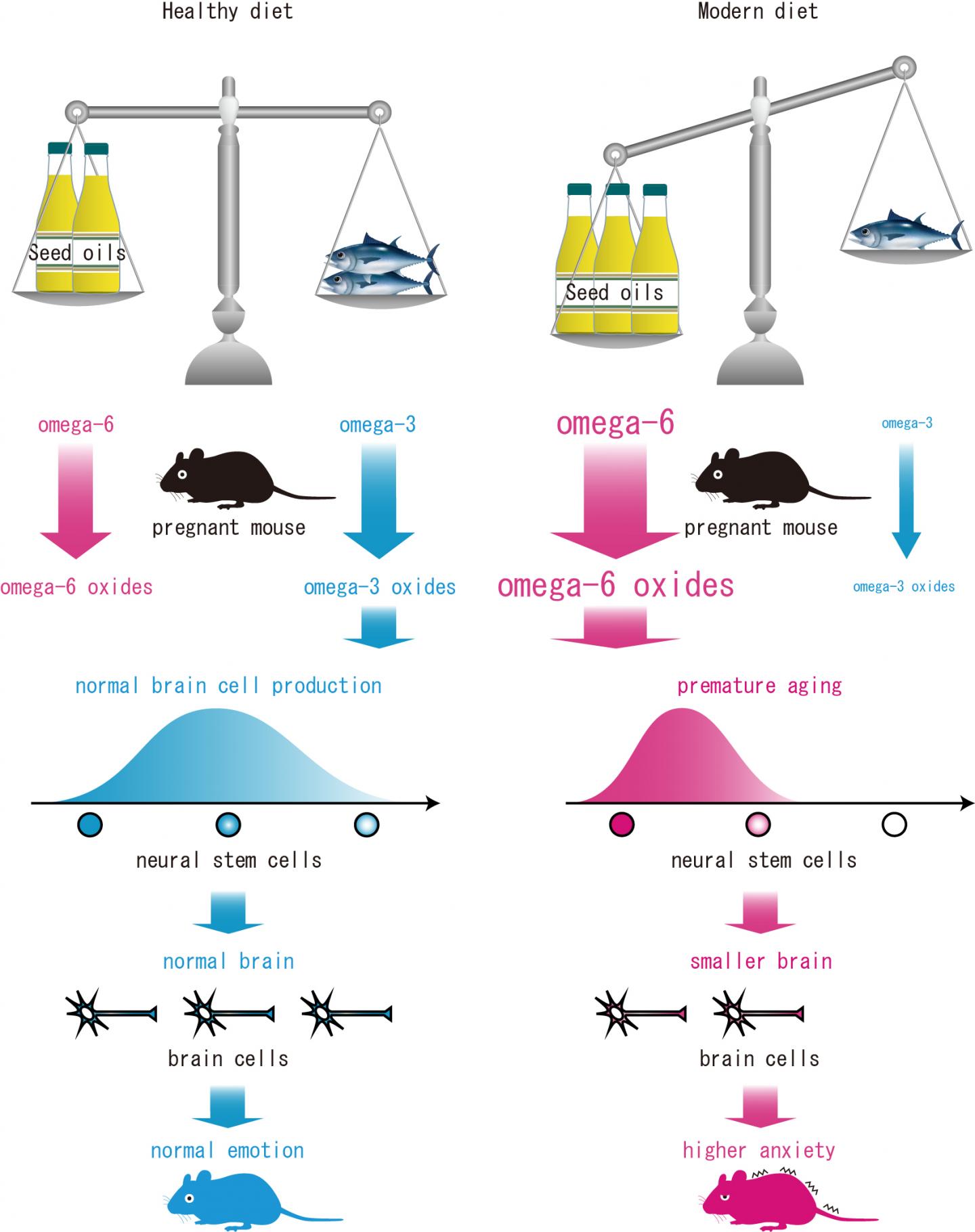
IMAGE: Dietary lipid contains fatty acids such as omega-6 and omega-3, which are essential nutrients for many animals and humans. We found from an animal study the underlying mechanism of how…

Credit: Noriko Osumi

Researchers at Tohoku University's School of Medicine have found an explanation for the correlation between eating fish during pregnancy, and the health of the baby's brain.

Dietary lipid contains fatty acids such as omega-6 and omega-3, which are essential nutrients for many animals and humans. The research group, led by Professor Noriko Osumi, found that a balanced intake of lipids by pregnant women is necessary for the normal brain formation of the unborn child.

In an animal study, the researchers noticed that when female mice were fed an omega-6-rich/omega-3-poor diet, their offsprings were born with a smaller brain and showed abnormal emotional behavior in adulthood.

This is significant because people in many countries these days have similarly poor dietary patterns and tend to consume more seed oils that are rich in omega-6 fatty acids and less fish rich in omega-3 fatty acids.

According to Professor Osumi, the brain abnormality found in the offsprings of mice used in the study, was caused by a premature aging of fetal neural stem cells that produce brain cells. The premature aging was promoted by an imbalance of oxides of omega-6 and omega-3 fatty acids. The offsprings also showed higher anxiety levels, even though they were raised on nutritionally optimized diets from an early lactation period.

A diet that contains a good balance of omega-6 and omega-3 fatty acids is known to improve the development of brain functions; this is based on earlier researches that evaluated the effects of maternal intake of an omega-3-poor diet on brain function in children.

The new study took this premise further and focused on the effects of dietary lipids on the brain formation. The results reveal why omega-6 and omega-3 balance is important for future brain function, and reinforces earlier suggestions that more fish intake by women during pregnancy can advantageously affect the child's health.

###

Publication Details:

Authors: Nobuyuki Sakayori, Takako Kikkawa, Hisanori Tokuda, Emiko Kiryu, Kaichi Yoshizaki, Hiroshi Kawashima, Tetsuya Yamada, Hiroyuki Arai, Jing X Kang, Hideki Katagiri, Hiroshi Shibata, Sheila M Innis, Makoto Arita and Noriko Osumi

Title: Maternal dietary imbalance between omega-6 and omega-3 polyunsaturated fatty acids impairs neocortical development via epoxy metabolites

Journal: Stem Cells

For enquiries about the research:

Professor Noriko Osumi
Department of Developmental Neuroscience, Center for Neuroscience
United Centers for Advanced Research and Translational Medicine
Tohoku University School of Medicine
Tel: +81-22-717-8203
Email: osumimed.tohoku.ac.jp

For all other enquiries:

Hitoshi Inada
Public Relations Office
Tohoku University School of Medicine
Tel: +81-22-717-7891
Email: hinadamed.tohoku.ac.jp

Media Contact

Noriko Osumi
[email protected]
81-227-178-203
@TohokuUniPR

http://www.tohoku.ac.jp/en/

Share12Tweet8Share2ShareShareShare2

Related Posts

Uncovering C. elegans Immunity via Genetic Screens — Biology

Uncovering C. elegans Immunity via Genetic Screens

May 16, 2026
Single mother must adapt swiftly — the survival of her colony depends on it — Biology

Single mother must adapt swiftly — the survival of her colony depends on it

May 15, 2026

Why Are Nearly Everyone Right-Handed? It Might Be Linked to How We Learned to Walk

May 15, 2026

Excessive Neuronal Activity Initiates Severe Autoimmune Brain Disorder

May 15, 2026
Please login to join discussion

POPULAR NEWS

  • Research Indicates Potential Connection Between Prenatal Medication Exposure and Elevated Autism Risk

    844 shares
    Share 338 Tweet 211
  • New Study Reveals Plants Can Detect the Sound of Rain

    730 shares
    Share 291 Tweet 182
  • Salmonella Haem Blocks Macrophages, Boosts Infection

    62 shares
    Share 25 Tweet 16
  • Breastmilk Balances E. coli and Beneficial Bacteria in Infant Gut Microbiomes

    58 shares
    Share 23 Tweet 15

About

We bring you the latest biotechnology news from best research centers and universities around the world. Check our website.

Follow us

Recent News

Interacting with an AI Doctor Before In-Person Consultations Enhances Cancer Patients’ Comprehension and Lowers Anxiety

Cerebellar Growth Links Brain Maturation and Language

Flexible Framework Optimizes Data Center Site Planning

Subscribe to Blog via Email

Enter your email address to subscribe to this blog and receive notifications of new posts by email.

Join 82 other subscribers
  • Contact Us

Bioengineer.org © Copyright 2023 All Rights Reserved.

Welcome Back!

Login to your account below

Forgotten Password?

Retrieve your password

Please enter your username or email address to reset your password.

Log In
No Result
View All Result
  • Homepages
    • Home Page 1
    • Home Page 2
  • News
  • National
  • Business
  • Health
  • Lifestyle
  • Science

Bioengineer.org © Copyright 2023 All Rights Reserved.