• HOME
  • NEWS
  • EXPLORE
    • CAREER
      • Companies
      • Jobs
    • EVENTS
    • iGEM
      • News
      • Team
    • PHOTOS
    • VIDEO
    • WIKI
  • BLOG
  • COMMUNITY
    • FACEBOOK
    • INSTAGRAM
    • TWITTER
Monday, October 5, 2026
BIOENGINEER.ORG
No Result
View All Result
  • Login
  • HOME
  • NEWS
  • EXPLORE
    • CAREER
      • Companies
      • Jobs
        • Lecturer
        • PhD Studentship
        • Postdoc
        • Research Assistant
    • EVENTS
    • iGEM
      • News
      • Team
    • PHOTOS
    • VIDEO
    • WIKI
  • BLOG
  • COMMUNITY
    • FACEBOOK
    • INSTAGRAM
    • TWITTER
  • HOME
  • NEWS
  • EXPLORE
    • CAREER
      • Companies
      • Jobs
        • Lecturer
        • PhD Studentship
        • Postdoc
        • Research Assistant
    • EVENTS
    • iGEM
      • News
      • Team
    • PHOTOS
    • VIDEO
    • WIKI
  • BLOG
  • COMMUNITY
    • FACEBOOK
    • INSTAGRAM
    • TWITTER
No Result
View All Result
Bioengineer.org
No Result
View All Result
Home Headlines

Why do we fall asleep when bored?

Bioengineer.org by Bioengineer.org
January 26, 2018
in Headlines, Health, Science News
Reading Time: 2 mins read
0
Share on FacebookShare on TwitterShare on LinkedinShare on RedditShare on Telegram
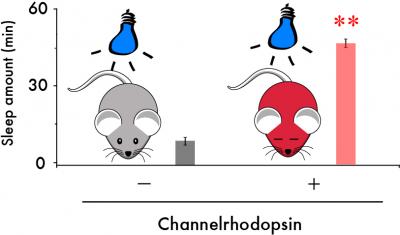
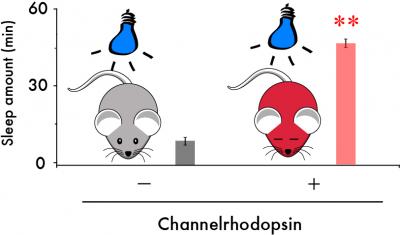
IMAGE

Credit: University of Tsukuba

University of Tsukuba researcher discovers why we have the tendency to fall asleep in the absence of motivating stimuli, i.e., when bored.

Tsukuba, Japan – Losing yourself in your favorite things without sleeping, or falling asleep during boring lectures — As humans, we often defy sleepiness and stay awake when attention is necessary, but also experience an inescapable desire to sleep in boring situations. The brain mechanisms governing the regulation of sleep by cognitive and emotional factors are not well understood. A new paper published in the journal Nature Communications finds that a part of the brain that is associated with motivation and pleasure – the nucleus accumbens – also can produce sleep. The new findings may explain why we have the tendency to fall asleep in the absence of motivating stimuli, i.e., when bored.

Researchers at the University of Tsukuba's International Institute for Integrative Sleep Medicine (WPI-IIIS) and Fudan University's Department of Pharmacology in the School of Basic Medical Sciences used chemo-genetic and optical techniques to remotely control the activities of nucleus accumbens neurons and the behaviors they mediate. As a result, the Japanese-Chinese team discovered that nucleus accumbens neurons have an extremely strong ability to induce sleep that is indistinguishable from the major component of natural sleep, known as slow-wave sleep, as it is characterized by slow and high-voltage brain waves.

"The classic somnogen adenosine is a strong candidate for evoking the sleep effect in the nucleus accumbens," says Yo Oishi, the lead author on this project. Adenosine has long been known to represent a state of relative energy deficiency and to induce sleep via adenosine receptors. A specific subtype of adenosine receptors, the A2A receptors, are densely expressed in the nucleus accumbens. Caffeine, the most widely consumed psychostimulant in the world, produces its arousal effect also in the nucleus accumbens by blocking A2A receptors. Compounds that activate A2A receptors in the nucleus accumbens may open safe therapeutic avenues for treating insomnia, which is one of the most common sleep problems with an estimated prevalence of 10-15% in the general population and 30-60% in the older population.

###

Media Contact

Masataka Sasabe
[email protected]
81-298-535-857

Related Journal Article

http://dx.doi.org/10.1038/s41467-017-00781-4

Share12Tweet8Share2ShareShareShare2

Related Posts

Hidden Tick- and Flea-Borne Probes in HIV Patients Reveal High Bartonella Exposure but No Active Infection

Hidden Tick- and Flea-Borne Probes in HIV Patients Reveal High Bartonella Exposure but No Active Infection

October 5, 2026
Neural Networks Trained on a 24-Dimensional Lattice Could Shrink AI to 0.76 Bits per Weight

Neural Networks Trained on a 24-Dimensional Lattice Could Shrink AI to 0.76 Bits per Weight

October 5, 2026

Childhood Adversity Linked to Modest Rise in Heart Disease Risk Across Four Ageing Cohorts

October 5, 2026

Apathy and Personality Changes Drive Early Disability in Frontotemporal Dementia

October 5, 2026
Please login to join discussion

POPULAR NEWS

  • Alloys That Shrink Their Own Grains: New PIX Mechanism Refines Metals With Heat Alone

    Alloys That Shrink Their Own Grains: New PIX Mechanism Refines Metals With Heat Alone

    29 shares
    Share 12 Tweet 7
  • Endurance Exercise Reshapes the Liver in Males and Females Through Distinct Molecular Routes

    29 shares
    Share 12 Tweet 7
  • Single Transcription Factor PU.1 Rapidly Converts Fibroblasts into Macrophage-Lineage Cells

    29 shares
    Share 12 Tweet 7
  • New Scale Measures How Ready Nurse Educators Really Are for the AI Era

    29 shares
    Share 12 Tweet 7

About

We bring you the latest biotechnology news from best research centers and universities around the world. Check our website.

Follow us

Recent News

Alloys That Shrink Their Own Grains: New PIX Mechanism Refines Metals With Heat Alone

Endurance Exercise Reshapes the Liver in Males and Females Through Distinct Molecular Routes

Single Transcription Factor PU.1 Rapidly Converts Fibroblasts into Macrophage-Lineage Cells

Subscribe to Blog via Email

Success! An email was just sent to confirm your subscription. Please find the email now and click 'Confirm' to start subscribing.

Join 85 other subscribers
  • Contact Us

Bioengineer.org © Copyright 2023 All Rights Reserved.

Welcome Back!

Login to your account below

Forgotten Password?

Retrieve your password

Please enter your username or email address to reset your password.

Log In
No Result
View All Result
  • Homepages
    • Home Page 1
    • Home Page 2
  • News
  • National
  • Business
  • Health
  • Lifestyle
  • Science

Bioengineer.org © Copyright 2023 All Rights Reserved.