

• HOME
  • NEWS
  • EXPLORE
    • CAREER
      • Companies
      • Jobs
    • EVENTS
    • iGEM
      • News
      • Team
    • PHOTOS
    • VIDEO
    • WIKI
  • BLOG
  • COMMUNITY
    • FACEBOOK
    • INSTAGRAM
    • TWITTER
Thursday, April 16, 2026
BIOENGINEER.ORG
No Result
View All Result
  • Login
  • HOME
  • NEWS
  • EXPLORE
    • CAREER
      • Companies
      • Jobs
        • Lecturer
        • PhD Studentship
        • Postdoc
        • Research Assistant
    • EVENTS
    • iGEM
      • News
      • Team
    • PHOTOS
    • VIDEO
    • WIKI
  • BLOG
  • COMMUNITY
    • FACEBOOK
    • INSTAGRAM
    • TWITTER
  • HOME
  • NEWS
  • EXPLORE
    • CAREER
      • Companies
      • Jobs
        • Lecturer
        • PhD Studentship
        • Postdoc
        • Research Assistant
    • EVENTS
    • iGEM
      • News
      • Team
    • PHOTOS
    • VIDEO
    • WIKI
  • BLOG
  • COMMUNITY
    • FACEBOOK
    • INSTAGRAM
    • TWITTER
No Result
View All Result
Bioengineer.org
No Result
View All Result
Home NEWS Science News Biology

Why bioelectrodes for energy conversion are not stable

Bioengineer by Bioengineer
May 25, 2018
in Biology
Reading Time: 2 mins read
0
Share on FacebookShare on TwitterShare on LinkedinShare on RedditShare on Telegram
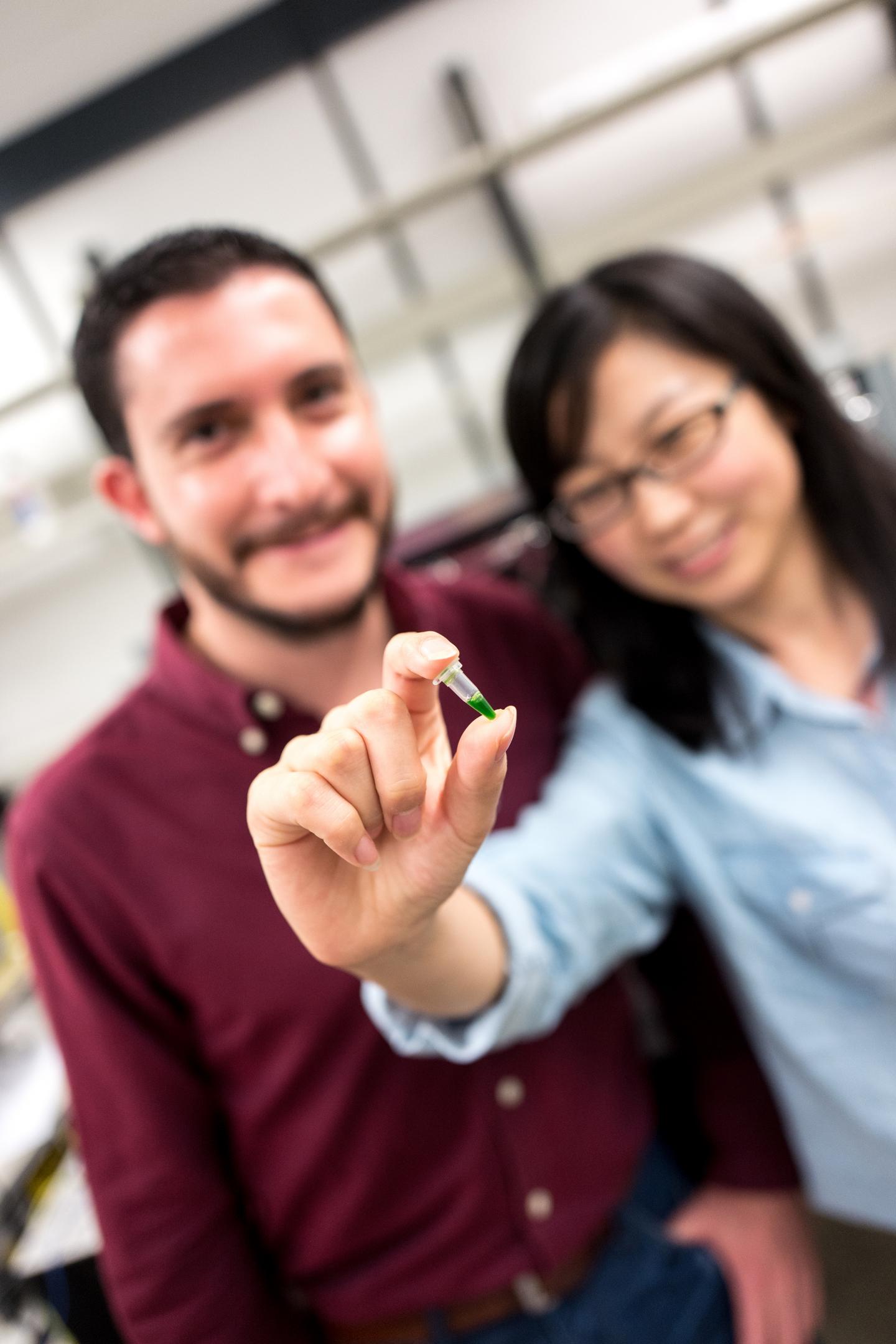
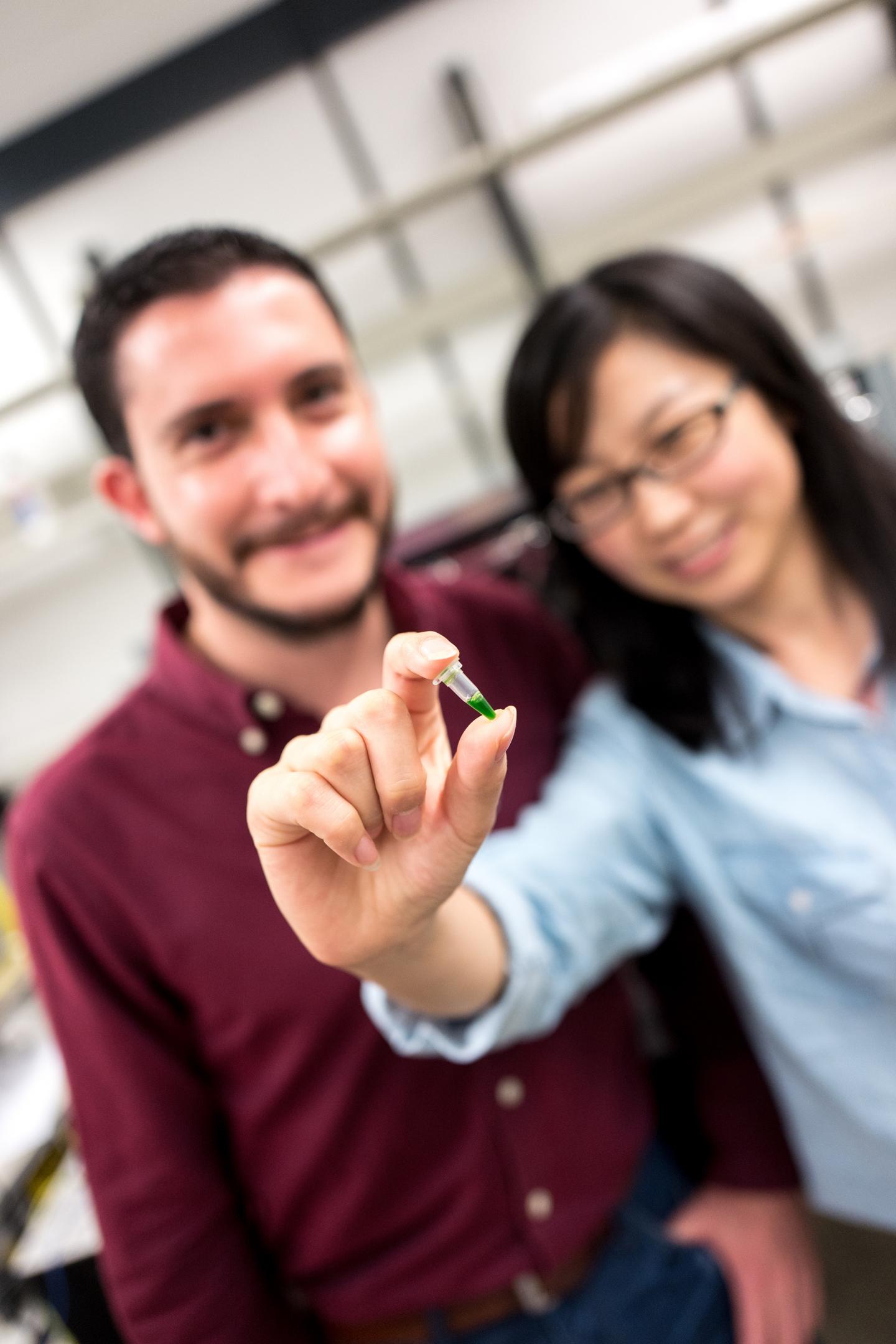
IMAGE

Credit: RUB, Kramer

Researchers at the Ruhr-Universität Bochum have discovered why bioelectrodes containing the photosynthesis protein complex photosystem I are not stable in the long term. Such electrodes could be useful for converting light energy into chemical energy in an environmentally friendly way. However, the proteins, which are stable in nature, are not functional in semi-artificial systems in the long term because reactive molecules are formed that damage the photosystem I.

The team around Dr Fangyuan Zhao, Dr Felipe Conzuelo and Prof Dr Wolfgang Schuhmann from the Centre for Electrochemical Sciences together with colleagues from the Bochum Chair of Plant Biochemistry describes the results in the journal Nature Communications.

Promising technology: Bioelectrodes

Felipe Conzuelo describes the background of the research project: "Society faces the great challenge of having to find more sustainable ways of converting and storing energy." Here it is important to understand the processes that currently still limit the lifetime of promising techniques. "Because this is the only way to develop stable solutions in the future," Fangyuan Zhao adds.

Promising techniques include electrodes in which the photosystem I is embedded in an osmium-containing polymer. When the photosynthetic protein is activated by light, it can separate positive and negative charges very efficiently. This charge gradient can serve as a source of energy, so to speak, and drive further processes.

Reactive oxygen species limit lifetime

"The photosystem I not only works efficiently, but also occurs in nature in large quantities, which makes it interesting for semi-artificial systems for energy conversion", explains Felipe Conzuelo. However, if the bioelectrode operates in an oxygen-containing environment, it suffers damage in the long term.

The scientists from Bochum used so-called scanning electrochemical microscopy to observe the processes on the electrode surface. On this surface, the photosystem I is embedded in an osmium-containing polymer. They observed which molecules are formed on the electrode surface when it is exposed to light. To do this, they exposed the system to different oxygen concentrations.

It was found that irradiation with light produced reactive oxygen species and hydrogen peroxide, which can damage the photosystem I in the long term. "Based on our results, it seems advisable to design bioelectrodes with photosystem I so that they can operate in an oxygen-free environment", Conzuelo concludes.

###

Media Contact

Wolfgang Schuhmann
[email protected]
49-234-322-6200
@ruhrunibochum

http://www.ruhr-uni-bochum.de

Original Source

http://news.rub.de/english/press-releases/2018-05-25-chemistry-why-bioelectrodes-energy-conversion-are-not-stable http://dx.doi.org/10.1038/s41467-018-04433-z


Share12Tweet8Share2ShareShareShare2

Related Posts

blank

Bacterial Immune System Regulates Gene Transfer Agents

April 16, 2026
Uncovering the Hidden Forces Behind Stem Cell Aging Beyond Cell Death

Uncovering the Hidden Forces Behind Stem Cell Aging Beyond Cell Death

April 16, 2026

How the Nordic Hamstring Exercise Prevents Injuries: A Scientific Insight

April 16, 2026

UCD Scientists Unveil Novel Cellular ‘Courier System’ for Transferring Vital Biological Messages

April 16, 2026
Please login to join discussion

POPULAR NEWS

  • Scientists Investigate Possible Connection Between COVID-19 and Increased Lung Cancer Risk

    61 shares
    Share 24 Tweet 15
  • Boosting Breast Cancer Risk Prediction with Genetics

    47 shares
    Share 19 Tweet 12
  • Popular Anti-Aging Compound Linked to Damage in Corpus Callosum, Study Finds

    45 shares
    Share 18 Tweet 11
  • NSF funds machine-learning research at UNO and UNL to study energy requirements of walking in older adults

    96 shares
    Share 38 Tweet 24

About

We bring you the latest biotechnology news from best research centers and universities around the world. Check our website.

Follow us

Recent News

Furosemide Route Impacts Diuretic Response in Preterms

Unraveling the Science Behind Endometriosis and Its Persistent, Debilitating Pain

Multimorbidity Trajectories Influence Personalized Glycaemic Patterns

Subscribe to Blog via Email

Enter your email address to subscribe to this blog and receive notifications of new posts by email.

Join 79 other subscribers
  • Contact Us

Bioengineer.org © Copyright 2023 All Rights Reserved.

Welcome Back!

Login to your account below

Forgotten Password?

Retrieve your password

Please enter your username or email address to reset your password.

Log In
No Result
View All Result
  • Homepages
    • Home Page 1
    • Home Page 2
  • News
  • National
  • Business
  • Health
  • Lifestyle
  • Science

Bioengineer.org © Copyright 2023 All Rights Reserved.
