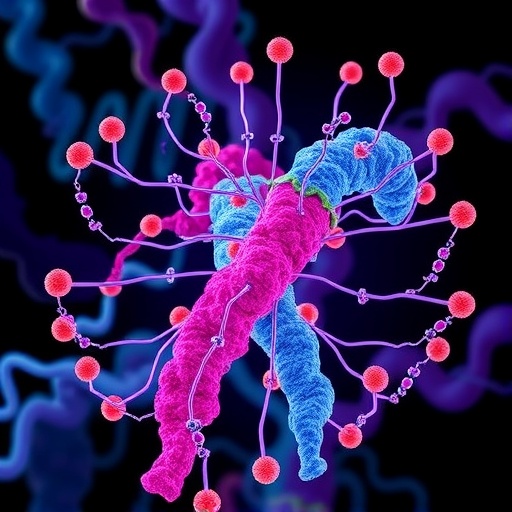
In the relentless pursuit of effective cancer therapies, a class of molecules known as BET inhibitors has captured significant scientific attention for over a decade. These inhibitors were heralded as a promising breakthrough due to their ability to block BET proteins, which play a central role in activating oncogenes that drive tumor progression. Despite compelling results in controlled laboratory settings, the translation of these drugs into clinical success has largely fallen short, with cancer patients experiencing limited therapeutic benefit, significant side effects, and unpredictable outcomes. A groundbreaking study from the Max Planck Institute of Immunobiology and Epigenetics (MPI-IE) in Freiburg now offers a transformative perspective that may reshape our understanding of BET inhibitors and enhance future cancer treatment strategies.
BET proteins—a family characterized by their conserved bromodomain and extra-terminal domain—function as critical epigenetic readers binding to chromatin through acetylated histones. This interaction facilitates the transcriptional activation of genes, including those fundamental to cancer cell survival and proliferation. Previous generations of BET inhibitors were designed to target this shared chromatin-binding domain indiscriminately across the family, predicated on the assumption that all BET proteins fulfill redundant roles during gene expression. However, this broad-spectrum approach has been called into question by recent evidence revealing functional divergence among family members.
The MPI-IE study, spearheaded by Asifa Akhtar’s laboratory, rigorously dissects the nuanced roles of two pivotal BET proteins: BRD2 and BRD4. While both belong to the BET family, their involvement at distinct junctures of the gene activation process delineates their unique biological significance. The study reveals that BRD4 primarily orchestrates the elongation phase of transcription by facilitating the release of RNA Polymerase II, the enzyme responsible for synthesizing RNA strands from DNA templates. In stark contrast, BRD2 operates upstream during transcription initiation, recruiting and assembling the essential molecular machinery required to commence gene expression. This bifurcation of function underscores why simultaneous inhibition of both proteins complicates therapeutic predictability and efficacy.
This paradigm shift is akin to understanding gene activation as a theatrical production rather than a singular event. BRD2 acts as the indispensable stage manager, meticulously organizing the props, cues, and performers to prime the cellular environment for transcription. Upon completion of this setup, BRD4 assumes the lead role, initiating the transcriptional performance. This analogy underscores the critical and previously underappreciated importance of BRD2’s preparatory role, challenging the myopic focus on BRD4-driven transcription elongation prevalent in earlier research.
Central to BRD2’s function is its sensitivity to histone acetylation—specific chemical modifications introduced by the enzyme MOF that label chromatin regions for transcriptional readiness. These acetylation “bookmarks” serve as molecular signposts, guiding BRD2 to precise chromatin locales where it can effectively cluster and marshal the transcriptional apparatus. The study demonstrates that without MOF-mediated acetylation, BRD2 fails to maintain its chromatin association, while other BET proteins like BRD4 remain largely unaffected. This histone acetylation-dependent targeting mechanism positions BRD2 as a finely tuned sensor and organizer of gene activation.
Perhaps one of the most striking discoveries involves BRD2’s ability to form dynamic clusters at gene sites, concentrating the necessary transcription components in both temporal and spatial dimensions. By selectively disabling the clustering domain of BRD2, researchers observed a near-complete transcriptional arrest, comparable to genetic deletion of the entire protein. This finding elucidates that clustering is not a mere epiphenomenon but a vital functional attribute enabling the efficiency and precision of gene transcription.
The complex interplay between BRD2 and BRD4, coupled with their divergent responses to chromatin modifications, complicates the clinical efficacy of current BET inhibitors, which non-selectively target both proteins. Such a blunt approach risks obstructing multiple phases of transcription simultaneously, resulting in unintended consequences and increased side effects. The MPI-IE team suggests that future therapeutic design should pursue specificity, developing inhibitors capable of discriminating between BRD2 and BRD4’s roles. Tailored interventions could mitigate adverse outcomes and enhance response predictability by selectively modulating gene activation stages relevant to particular cancer types.
Beyond therapeutic implications, this research enriches the fundamental understanding of transcription regulation within the nucleus. It highlights how epigenetic modifications not only signal where gene expression should occur but also orchestrate the spatial organization of transcriptional complexes through protein clustering. This multi-layered regulation ensures that gene activation proceeds with remarkable fidelity and coordination, orchestrated by molecular actors like BRD2 operating well before the transcriptional “performance” begins.
Furthermore, the findings provide a framework to explore how disruptions in acetylation patterns or BET protein functions may underpin aberrant gene expression programs in cancer and other diseases. They invite a reassessment of the epigenetic landscapes that facilitate or hinder transcription, emphasizing the dynamic cooperation between chromatin modifiers and transcriptional regulators. Such insights could open avenues for novel diagnostics and precision medicine approaches that account for the intricate choreography of gene activation machinery.
This study is emblematic of a broader shift in cancer biology towards dissecting the mechanistic subtleties underlying gene regulation and drug action. It exemplifies how high-resolution imaging and molecular biology can unravel the spatial-temporal dynamics of nuclear proteins, offering granular insights that inform drug discovery pipelines. The recognition that transcription is a staged, multi-step process with specialized molecular participants challenges conventional drug design paradigms and encourages innovation tailored to the complexity of cellular regulation.
In summary, the MPI-IE research not only clarifies a longstanding enigma—why BET inhibitors have underperformed clinically despite robust biological rationale—but also charts a promising path toward more refined cancer therapies. By delineating the distinct and complementary functions of BRD2 and BRD4, science moves closer to engineering interventions that disrupt oncogenic transcription with precision and minimal collateral damage. This advance holds the dual promise of improving patient outcomes and deepening our grasp of the epigenetic architectures that sculpt gene expression landscapes.
Subject of Research:
Cells
Article Title:
Histone acetylation-dependent clustering of BRD2 instructs transcription dynamics
News Publication Date:
9-Apr-2026
Web References:
http://dx.doi.org/10.1038/s41588-026-02533-x
Image Credits:
MPI of Immunobiology & Epigenetics, Asifa Akhtar
Keywords:
Cancer treatments, Chromatin, Transcription regulation, BET proteins, BRD2, BRD4, Histone acetylation, Gene activation, Epigenetics, RNA Polymerase II, Molecular clustering, Targeted therapy
Tags: BET inhibitors in cancer therapybromodomain and extra-terminal domain proteinschallenges in BET protein targetingclinical outcomes of BET inhibitionepigenetic readers and cancerepigenetics in cancer treatmentfuture directions in cancer drug developmentlimitations of broad-spectrum BET inhibitorsMax Planck Institute cancer researchoncogene activation and tumor progressionselective BET protein inhibition strategiesside effects of anti-cancer drugs