Singapore residents’ life expectancy increased markedly between 2004 and 2022, and a decomposition of World Health Organization mortality data links much of the gain to reduced mortality from ischemic heart disease, cerebrovascular disease, respiratory causes and cancer. Female life expectancy at birth rose from 82.0 to 85.2 years, while male life expectancy increased from 77.1 to 80.7 years. At age 65, remaining life expectancy grew from 20.0 to 22.3 years for females and from 16.5 to 19.0 years for males. The population-level study used the Arriaga method to divide changes in life expectancy by age and cause of death, examining both the sources of longer life and the persistent differences between the sexes.
The analysis identified mortality reductions among middle-aged and older adults as central to the extension of life, with reduced mortality among males aged 50 to 64 playing a particularly important role. Ischemic heart disease, cerebrovascular disease and respiratory causes were the three largest contributors to longevity extension. Compared with the 2004 baseline, these major disease groups accounted for 2.31 of the 4.08 years gained in life expectancy at birth by 2019, equivalent to 57%. At age 65, they represented 1.99 of the 3.02 years gained, or 66%. These are decomposition estimates of the observed changes rather than results from a clinical trial or a direct test of any particular intervention.
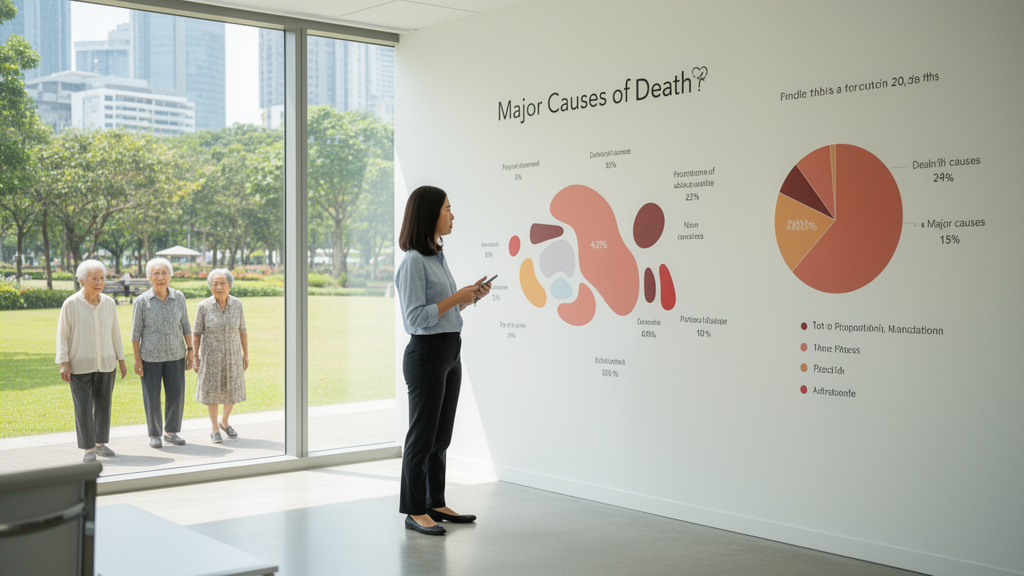
Cancer mortality became an increasingly important contributor to the improvement. The share of life-expectancy gains attributed to reductions in cancer deaths nearly tripled, rising from 12.3% in 2004–2010 to 34.2% in 2015–2019. Reduced mortality from lung cancer alone accounted for more than half of the gains attributed to neoplasms. The same disease pattern shaped the remaining sex differences in longevity. Ischemic heart disease and respiratory causes together represented more than half of the annual difference between female and male life expectancy over the study period. When the researchers examined differences at birth and at age 65, ischemic heart disease, respiratory causes and non-breast cancers emerged as the dominant contributors.
The coronavirus pandemic offset part of the longer-term gains recorded before 2022. By that year, pandemic-related losses had erased an estimated 0.76 years of female life expectancy and 0.65 years of male life expectancy, although the full-period figures for 2004–2022 remained above those recorded at the beginning of the interval. The longevity gap at birth narrowed by 0.36 years, while the gap at age 65 was unchanged between 2004 and 2022. The findings show that Singapore’s rising life expectancy during the period was associated chiefly with lower mortality from several major disease groups, with cancer playing a growing role. The study’s scope is the resident population and its 2004–2022 mortality pattern; it does not establish whether individual causes of mortality will continue to contribute in the same proportions or establish the mechanisms behind the observed changes.
Subject of Research: Cause-specific contributions to changes in Singapore residents’ life expectancy by age and sex, 2004–2022
Article Title: Causes of life expectancy extension in Singapore, 2004–2022: Bridging past and present
Article References: Dukhovnov, D. (2026). Causes of life expectancy extension in Singapore, 2004–2022: Bridging past and present. BMC Public Health. https://doi.org/10.1186/s12889-026-29769-w
Image Credits: AI Generated
DOI: 10.1186/s12889-026-29769-w
Keywords: Singapore, life expectancy, mortality, Arriaga method, cardiovascular disease, cancer mortality, sex differences, respiratory disease, COVID-19, demographic transition, Causes, life
News Source: Beatrice Stafford. (October 26, 2026). WHO decomposition links Singapore’s longevity gains to fewer major-disease deaths. Scienmag.