• HOME
  • NEWS
  • EXPLORE
    • CAREER
      • Companies
      • Jobs
    • EVENTS
    • iGEM
      • News
      • Team
    • PHOTOS
    • VIDEO
    • WIKI
  • BLOG
  • COMMUNITY
    • FACEBOOK
    • INSTAGRAM
    • TWITTER
Tuesday, August 18, 2026
BIOENGINEER.ORG
No Result
View All Result
  • Login
  • HOME
  • NEWS
  • EXPLORE
    • CAREER
      • Companies
      • Jobs
        • Lecturer
        • PhD Studentship
        • Postdoc
        • Research Assistant
    • EVENTS
    • iGEM
      • News
      • Team
    • PHOTOS
    • VIDEO
    • WIKI
  • BLOG
  • COMMUNITY
    • FACEBOOK
    • INSTAGRAM
    • TWITTER
  • HOME
  • NEWS
  • EXPLORE
    • CAREER
      • Companies
      • Jobs
        • Lecturer
        • PhD Studentship
        • Postdoc
        • Research Assistant
    • EVENTS
    • iGEM
      • News
      • Team
    • PHOTOS
    • VIDEO
    • WIKI
  • BLOG
  • COMMUNITY
    • FACEBOOK
    • INSTAGRAM
    • TWITTER
No Result
View All Result
Bioengineer.org
No Result
View All Result
Home NEWS Science News Biology

When flowers reached Australia

Bioengineer by Bioengineer
December 12, 2019
in Biology
Reading Time: 2 mins read
0
IMAGE
Share on FacebookShare on TwitterShare on LinkedinShare on RedditShare on Telegram

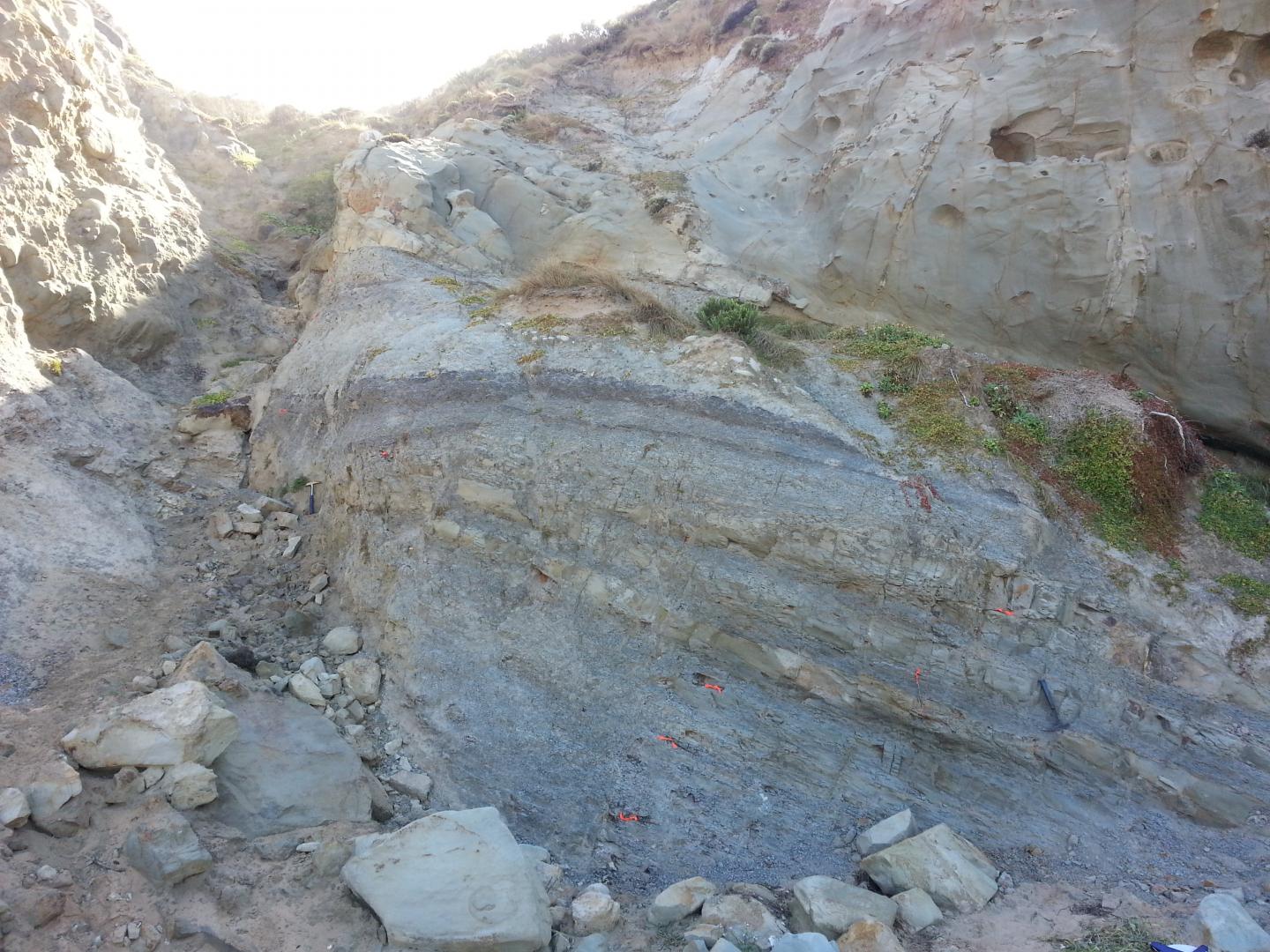
First blooms made it to Australia 126 millions years ago
IMAGE

Credit: Vera Korasidis


New research has revealed that Australia’s oldest flowering plants are 126 million years old and may have resembled modern magnolias, buttercups and laurels.

Undertaken by University of Melbourne palynologist, Dr Vera Korasidis, the study also found that Australia’s first blooms got their foothold in ‘high southern latitude’ regions like the Otway and Gippsland ranges.

Dr Korasidis’ research, “The rise of flowering plants in the high southern latitudes of Australia”, reconstructed our earliest flower-bearing forests, from 126-100 million years ago, to conclude that climate change prevented or slowed the expansion of flowers into Australasia with the temperatures at the high southern latitudes too cold to support the earliest flowering plants.

The research also established that the first flowers related to 72 per cent of today’s living angiosperm species that first appeared in southern Australia about 108 million years ago – 17 million years after the first flowers evolved in equatorial regions.

The world’s oldest flower, Montsechia, is 130 million years old and was discovered in Spain.

“Our research, completed on dinosaur-bearing rocks throughout Victoria,suggests that warming temperatures allowed the first flowering plants to migrate to the cooler regions at the earth’s poles,” said Dr Korasidis.

“The true diversity of primitive flowers in southern near-polar settings has only just been discovered because ‘sieving’ practices resulted in pollen grains, produced by the earlier flowers, being ‘rinsed down the sink’ for over 50 years.”

Dr Korasidis said the study would help to “piece together Australia’s paleoclimate record and understand the interaction between climate, CO2 and the evolution of faunas and floras.”

The age of southern Australia’s polar vertebrates, including dinosaurs, has also now been determined and is 126-110 million years old based on this study and new research by fellow University of Melbourne palynologist and co-author, Dr Barbara Wagstaff.

Angiosperm pollen produced by the oldest flowers was recovered from numerous sites across Victoria indicating the large areal extent of flowers during the Early Cretaceous period. All material is housed in the Palaeontology collection at Museum Victoria in Melbourne.

###

The research was funded through an ARC Linkage Grant and National Geographic Grant titled “Dating the Dinosaurs”.

Media Contact
Lito Vilisoni Wilson
[email protected]
61-046-686-7909

Original Source

https://about.unimelb.edu.au/newsroom

Related Journal Article

http://dx.doi.org/10.1016/j.revpalbo.2019.104126

Tags: Earth ScienceEvolutionPaleontology
Share12Tweet8Share2ShareShareShare2

Related Posts

Scientists map plant-fungus symbiosis at single-cell resolution

Scientists map plant-fungus symbiosis at single-cell resolution

August 18, 2026
One in 20 Australian women now receive intravenous iron infusions

One in 20 Australian women now receive intravenous iron infusions

August 18, 2026

Scientists identify crucial steps that initiate DNA replication

August 18, 2026

Diverse Legume Defence Signals and Clustered Receptors Co-Evolved from Conserved Subtilase Scaffolds

August 18, 2026
Please login to join discussion

POPULAR NEWS

  • Scientists map plant-fungus symbiosis at single-cell resolution

    29 shares
    Share 12 Tweet 7
  • Machine Learning Predicts Microslit Panel Surface Impedance in Grazing Flow

    29 shares
    Share 12 Tweet 7
  • UC San Diego Wins $12.3 Million Grant to Study HIV-Methamphetamine Connection

    29 shares
    Share 12 Tweet 7
  • Engineered Gel Cells Carry Artificial DNA Receptors to Detect and Treat Aflatoxin

    29 shares
    Share 12 Tweet 7

About

We bring you the latest biotechnology news from best research centers and universities around the world. Check our website.

Follow us

Recent News

Scientists map plant-fungus symbiosis at single-cell resolution

Machine Learning Predicts Microslit Panel Surface Impedance in Grazing Flow

UC San Diego Wins $12.3 Million Grant to Study HIV-Methamphetamine Connection

Subscribe to Blog via Email

Enter your email address to subscribe to this blog and receive notifications of new posts by email.

Join 85 other subscribers
  • Contact Us

Bioengineer.org © Copyright 2023 All Rights Reserved.

Welcome Back!

Login to your account below

Forgotten Password?

Retrieve your password

Please enter your username or email address to reset your password.

Log In
No Result
View All Result
  • Homepages
    • Home Page 1
    • Home Page 2
  • News
  • National
  • Business
  • Health
  • Lifestyle
  • Science

Bioengineer.org © Copyright 2023 All Rights Reserved.