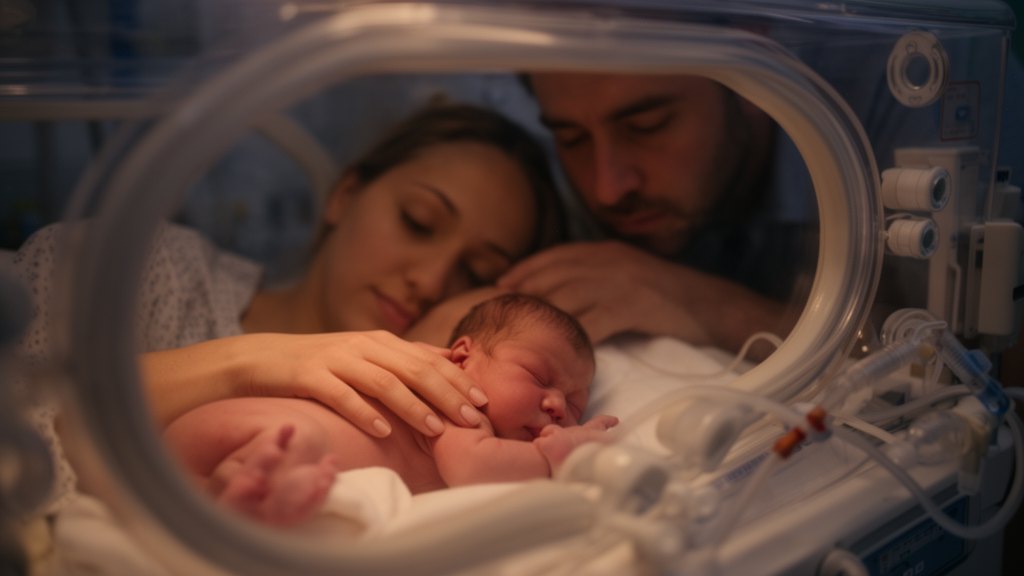
Every year, hundreds of thousands of infants worldwide are born extremely preterm, at or near the limits of viability, and for their families the moment of discharge from the neonatal intensive care unit is both a triumph and a threshold. Survival rates for these babies have improved dramatically over recent decades, but survival is only the beginning of the story. Children born extremely preterm face elevated risks of cognitive delays, language impairment, motor difficulties and other neurodevelopmental challenges that can persist into school age and beyond. A new review published in Pediatric Research argues that this trajectory is not fixed, and that a set of modifiable home and environmental factors, identified and organized by the research team, could meaningfully shift developmental outcomes for the most vulnerable infants.
The review, led by Rhandi Christensen of The Hospital for Sick Children and the University of Toronto, together with colleagues including Daniela Salvo, Kathryn Y. Manning, Tricia Williams and Mehmet N. Cizmeci, synthesizes evidence on what families and health systems can do after the NICU to support the developing brain. The authors frame their answer around a memorable structure they call The 6 Ps to Promote Positive Neurodevelopmental Outcomes in Prematurity. These are post-discharge follow-up in neonatal neurodevelopmental programs, providing enriched environments, the physical environment, parent education, parenting style and parent wellness. Each element represents a point of leverage where targeted action, counseling or policy could alter the developmental path of a child born extremely preterm.
The biological rationale for why these factors matter lies in the remarkable plasticity of the infant brain. The authors draw on recent work in neonatal neuroplasticity and metaplasticity, which bridges neuroscience and clinical practice, and on research into sensitive periods for recovery from early brain injury. In the first years of life, neural circuits are being wired at an extraordinary pace, and the quality of a child’s experiences during these windows can influence how, and how well, the brain reorganizes after the injuries and disruptions that commonly accompany extreme prematurity. The review’s authors have previously described this concept as the home exposome, the idea that the cumulative experiences of the home environment biologically shape child neurodevelopmental outcomes.
The first of the six Ps, structured post-discharge follow-up, addresses a well-documented gap in care. Neonatal neurodevelopmental follow-up programs exist to monitor children born preterm using standardized developmental surveillance, allowing early identification of delays and timely referral to intervention services. Evidence-informed developmental milestones published by the American Academy of Pediatrics provide the benchmarks against which these children can be tracked. The urgency of early detection is underscored by intervention research: international clinical practice guidelines for infants at high risk of cerebral palsy emphasize that early, accurate diagnosis combined with early intervention yields the best results, and randomized trials of programs such as Goals-Activity-Motor Enrichment have shown that motor and cognitive outcomes can be improved when support begins in infancy rather than after delays have become entrenched.
The second and third Ps concern enrichment and the physical environment. The review highlights a substantial body of evidence that enriched environments, settings offering varied sensory, cognitive and social stimulation, can act as a potential treatment for developmental disorders, not merely a backdrop for development. Concrete interventions fall into this category. Randomized controlled trials have tested language interventions delivered to parents of preterm infants and found benefits for language outcomes at two years of age. Studies of parent speech show that increased parent talk is associated with earlier vocalizations in preterm infants, even as parent stress complicates that relationship. Shared book reading, whether begun in the NICU or at home, has been linked in multiple studies to improved cognitive development and stronger parent-infant interaction. Music interventions and structured visual stimulation have also been examined in the neonatal unit and in early intervention trials, with randomized evidence suggesting benefits for visual function in preterm infants.
Beyond the immediate home, the review confronts a broader and less comfortable determinant: the neighborhood and socioeconomic context in which a child grows up. Research using the Child Opportunity Index, a multidimensional measure of neighborhood conditions influencing children’s health, has linked place-based opportunity at birth to child development from infancy through age four, and a recent meta-analysis has summarized the relationship between this index and children’s health more generally. In preterm populations specifically, studies have shown that socioeconomic status can modify the relationship between brain injury and neurodevelopmental outcome, meaning that two children with similar brain injuries may follow very different developmental paths depending on the resources around them. Maternal education, analyzed across fifteen European very-preterm birth cohorts in the RECAP Preterm platform, is likewise associated with cognitive development. The authors note that policy-level tools, including unconditional cash transfers for families, have evidence supporting improvements in health service use and health outcomes, and a pilot randomized trial is currently exploring cash transfers for Medicaid-eligible parents of preterm infants.
The remaining Ps, parent education, parenting style and parent wellness, shift the focus to the caregivers themselves. Parenting behavior is associated with the early neurobehavioral development of very preterm children, and brain imaging studies have linked maternal behavior to brain development and to cognitive and language outcomes in preterm-born children. Structured parenting programs have a strong evidence base: meta-analytic work on the Triple P-Positive Parenting Program, along with the Incredible Years program and Parent-Child Interaction Therapy, demonstrates that parenting interventions can reduce child behavior problems. Newer, technology-delivered options are extending reach, including internet-based parenting interventions designed for children with congenital and neonatal neurodevelopmental risk, and telepsychology trials of positive parenting programs for children with neurological risk, work that became especially relevant during the COVID-19 pandemic.
Parent wellness, the final P, may be the most underappreciated. Systematic reviews and meta-analyses have found high prevalence of anxiety and post-traumatic stress symptoms among parents of babies admitted to neonatal units, and depressive symptoms are common in mothers of prematurely born infants. Parental post-traumatic reactions after premature birth have been linked to sleeping and eating problems in the infant, and parent mental health has been associated with the neurodevelopmental outcomes of children hospitalized in the NICU. The review points to interventions that support both parent and child simultaneously, such as kangaroo mother care, which a systematic review and meta-analysis found benefits maternal and paternal health as well as infant outcomes. Screening parents of high-risk infants for emotional distress, peer support programs, and structured transition processes such as planned family-centered discharge have all been studied as ways to buffer this stress during the vulnerable move from hospital to home.
The practical heart of the review is its translation of this evidence into counseling guidance. As parents prepare to leave the NICU, the authors observe, they face deep uncertainty about their child’s future and often ask a simple question: what can we do for our baby? The 6 Ps framework gives clinicians an evidence-informed structure for answering it, encouraging parents to attend follow-up appointments, build language-rich and stimulating daily routines, read and talk with their infant, engage with parenting support when needed, and attend to their own mental health. Qualitative research on parents’ experiences of early intervention programs suggests that families want to participate actively in their infant’s development, and that programs succeed best when they involve parents as partners rather than passive recipients of therapy.
The significance of this work lies in its reframing of prognosis. For decades, counseling after extreme prematurity has centered on risk, on the statistical likelihood of impairment derived from cohort studies such as EPICure in England, EPIPAGE-2 in France, and large national networks in the United States and Canada. Those data remain essential for honesty and planning, and they document that outcomes, while improving, still include substantial rates of developmental difficulty. But this review adds the other half of the conversation: a catalog of factors that are genuinely modifiable, spanning the clinic, the home, the neighborhood and the policy arena. If the developing brain is shaped by experience, then the period after discharge is not an epilogue to the NICU story but an active phase of treatment, one in which parents, clinicians and communities all hold tools that can change how the story unfolds.
Subject of Research: Modifiable home and environmental factors influencing neurodevelopmental outcomes in children born extremely preterm
Article Title: Life after the NICU: targeting modifiable factors to improve neurodevelopmental outcomes in children born extremely preterm
Article References: Christensen, R., Salvo, D., Manning, K. Y., Williams, T., & Cizmeci, M. N. (2026). Life after the NICU: targeting modifiable factors to improve neurodevelopmental outcomes in children born extremely preterm. Pediatric Research. https://doi.org/10.1038/s41390-026-05538-8
Image Credits: AI Generated
DOI: 10.1038/s41390-026-05538-8
Keywords: extremely preterm, neurodevelopment, NICU, early intervention, parenting, enriched environment, socioeconomic status, parent mental health, developmental follow-up, brain plasticity, Pediatric Research, preterm birth
News Source: Cassandra Pierce. (October 16, 2026). What Parents Can Change After the NICU: Six Factors That Shape Brain Outcomes in Extremely Preterm Children. Scienmag.