Our bodies go through several changes throughout our lives. The same happens with the microbes that live with us. After all, these make up a big portion of the cells in our organism. But, in comparison with the cells that make up our tissues and organs, these microbes divide very quickly, making occasional errors in their genetic material (mutations) more common. These errors drive the evolution of microorganisms and account for, among other things, their likelihood of causing disease.
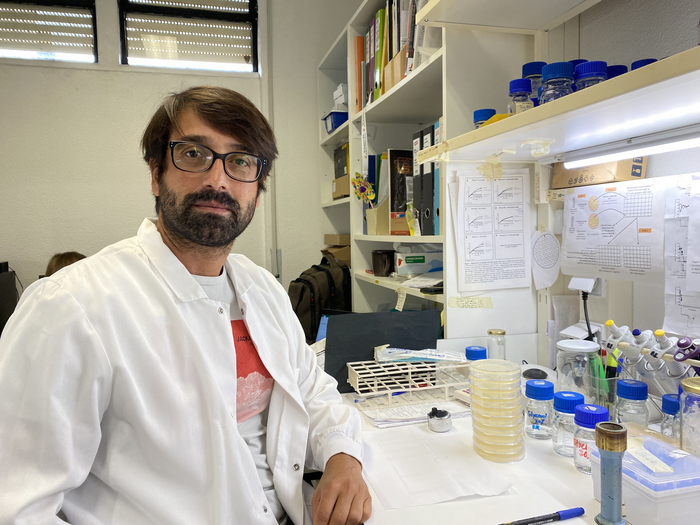
Credit: Instituto Gulbenkian de Ciência
Our bodies go through several changes throughout our lives. The same happens with the microbes that live with us. After all, these make up a big portion of the cells in our organism. But, in comparison with the cells that make up our tissues and organs, these microbes divide very quickly, making occasional errors in their genetic material (mutations) more common. These errors drive the evolution of microorganisms and account for, among other things, their likelihood of causing disease.
Most studies regarding bacterial evolution are conducted outside of living organisms or in animal models treated with antibiotic, which does not mimic a natural and healthy environment. Besides that, very few studies have assessed how microbes evolve for more than one month. For these reasons, the way bacteria evolve in the long term when colonizing a healthy host remains an open question.
Researchers from the Instituto Gulbenkian de Ciência (IGC) studied the evolution of an invader strain of the Escherichia coli bacterium for more than six thousand generations in the mouse gut. For more than a year, they isolated bacteria from mice feces to evaluate alterations in their genetic material. In the end, the authors showed that when a new bacterium colonizes the mammal gut, it evolves in two ways: 1) by generating a series of metabolic mutations that alter their ability to consume nutrients or 2) by integrating genetic material from other microorganisms.
During the study, E. coli versions that are genetic and functionally different and, thus, have different abilities to adapt to different environments, appeared. These versions of the same bacterium coexist in the host’s gut for millions of generations. This coexistence, however, can be overridden by the preferential fixation of bacteria with specific characteristics, particularly if these present beneficial mutations. This happened in all the mice that had, a priori, a resident strain of E. coli in their gut. The competition drove both strains to evolve. Specifically, the invading strain acquired genetic material from the resident one, through the action of bacteriophages (viruses that infect bacteria).
When bacteria integrate genetic material from the virus in a stable way, they become fitter to survive in the gut. However, if the virus multiplies, these end up dying. The researchers have shown that, curiously, 5 to 16 months after colonizing the host’s gut, the invading E. coli dies less because it inhibits the multiplication of the virus. This means that bacteria evolved to “domesticate” bacterial viruses, keeping the benefits they brought, but getting rid of the associated costs.
“It was truly exciting to find out bacteria use so many different processes to evolve in the gut”, says Nelson Frazão, postdoc at the IGC and first author of the paper. This work paves the way towards foreseeing the evolution of the bacteria in our bodies. “By understanding how bacteria evolve in the long term we could anticipate and even avoid antibiotic resistance or the colonization of the gut by pathogenic bacteria that hinder the success of some treatments and can lead to death”, the researcher concludes.
Journal
Nature Communications
DOI
10.1038/s41467-022-33412-8
Article Title
Two modes of evolution shape bacterial strain diversity in the mammalian gut for thousands of generations
Article Publication Date
24-Sep-2022