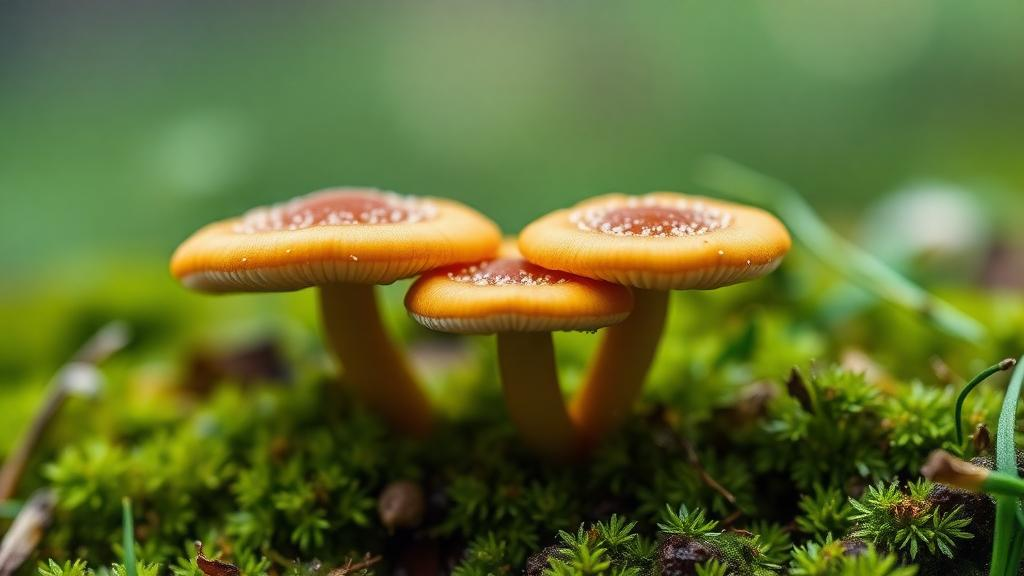
The webcaps, the mushroom-forming fungi of the genus Cortinarius, are among the most species-rich groups of ectomycorrhizal fungi in the boreal forests of the Northern Hemisphere. More than 3,000 species have been formally described, and the true global diversity is estimated to approach 5,000 species. Yet despite a century of mycological study in Russia, no comprehensive, molecularly validated inventory of the genus has ever existed for Western Siberia. A new dataset published in the Biodiversity Data Journal now fills that gap, presenting 624 high-quality DNA barcodes of Cortinarius specimens collected across the region and adjacent territories, together with the metadata, photographs and morphological descriptions needed to make each sequence scientifically useful.
The genus is notoriously difficult. Webcaps form mycorrhizal partnerships with a wide range of tree species and dominate the ectomycorrhizal fungal communities of boreal and temperate forests, making them ecologically crucial players in nutrient cycling and tree health. Their taxonomy, however, is intricate, and molecular methods in recent decades have revealed numerous cryptic species and reshuffled phylogenetic relationships. A major phylogenomic study in 2020 proposed splitting Cortinarius into ten separate genera, but that classification was later challenged because of unresolved backbone branches and extensive conflicts between gene trees and species trees. Most researchers and taxonomic databases, including IndexFungorum, Catalogue of Life and GBIF, therefore continue to recognise Cortinarius in the broad sense, the approach also adopted in the new database.
According to a major revision of published records of agaricoid and boletoid fungi, Russia currently holds around 414 recorded species of Cortinarius, of which roughly 280 occur in Siberia. Studies of the genus in Western Siberia date back to the early twentieth century, but no representative checklist supported by modern molecular data had been compiled. The new resource, built at Yugra State University, consolidates approximately 2,500 specimens of Cortinarius held in the university’s biological collection, from which about 700 were selected for sequencing. The work of consolidating the collection, extracting DNA and generating sequences spanned three years.
Specimen preparation followed standard methods of fungal taxonomy. Fresh fruiting bodies were photographed and described in the field, and morphological descriptions were based on examination of both fresh and dried material. Microstructures were studied and documented using a Zeiss AxioStar microscope with a digital camera, with a standard set of reagents including 5% potassium hydroxide, 1% Congo Red solution and Melzer’s reagent. All specimen data were stored in the Specify 7 collection database, organised into dedicated tables for samples, collection events, personnel, DNA extracts, associated images, morphological descriptions and measurement files, ensuring that every sequence remains traceable to a physical voucher specimen.
DNA amplification was performed directly from plant tissue PCR kit preparations without a separate purification step, using the primers ITS1F and ITS4 to target the internal transcribed spacer (ITS) region, the standard fungal barcode marker. Reaction mixtures of 20 microlitres contained ScreenMix, both primers, deionised water and template DNA. Cycling began with five minutes of denaturation at 95 degrees Celsius, followed by 30 cycles of 20 seconds at 95 degrees, 30 seconds of primer annealing at 54 degrees and 60 seconds of extension at 72 degrees, with a final seven-minute extension. PCR and sequencing products were cleaned with commercial purification kits, and sequencing was carried out on an Applied Biosystems Sanger 3500 series genetic analyser. Sequences that failed quality thresholds were re-sequenced in the forward or reverse direction as needed.
Bioinformatic processing applied strict quality controls. Raw reads required a minimum length of 50 bases, an average quality score of at least Q20 and an end quality of at least Q15, with a sliding window of five bases used to determine reliable sequence boundaries. Forward and reverse reads were aligned with the Needleman-Wunsch algorithm, contigs were assembled with at least 20 bases of overlap, and conflicting positions were resolved by prioritising forward-read nucleotides. Each final sequence was scored with a composite quality formula, calculated as length multiplied by 0.4 minus the percentage of ambiguous bases multiplied by 0.6, and classified as failed, low, medium, good or excellent. Taxonomic assignment used a mass BLAST protocol against the UNITE and INSDC fungal reference databases on the PlutoF platform, with best hits restricted to species-level matches with proper binomial names, excluding entries marked sp., cf. or aff., and with priority given to type specimens.
The geographic coverage of the sequenced specimens is dominated by the Khanty-Mansi Autonomous Okrug, which supplied 63% of the samples, and Novosibirsk Oblast with 32%, with small numbers from four other regions. The specimens came from 31 localities standardised to a five-kilometre radius, with 85% concentrated in just six key sites: the vicinity of Ugut Village, Novosibirsk City, Shapsha Village, the Mukhrino research station, Karakansky Bor and the Yugansky Nature Reserve. Collections span 2005 to 2024, with the main collectors being T.M. Bulyonkova, who contributed 54% of specimens, N.V. Filippova with 23% and E.A. Zvyagina with 16%, alongside ten other contributors.
The specimens represent three dominant ecosystem types of Western Siberia: dark coniferous taiga forests with Siberian spruce, Siberian stone pine and Siberian fir in the arboreal layer, typically with an admixture of birch, Scots pine and aspen; raised Sphagnum bogs dominated by dwarf forms of Scots pine; and a variety of almost pure Scots pine forests on poor, acidic as well as calcareous sandy soils, locally known as bors. Of the 711 specimens processed for sequencing, PCR amplification failed for only 44 samples, about 6%, and sequencing was ultimately unsuccessful for 149 specimens, roughly 10%, including five cases of contamination and 144 poor-quality reads discarded after quality control. Processing of 821 raw sequences yielded 624 final sequences with a mean length of 622 nucleotides, and 81% were classified as high quality.
The taxonomic coverage of the database includes 213 species of Cortinarius in the broad sense. Approximately 17% of the identified specimens, 106 in total, show high sequence affinity to the ITS regions of type specimens, providing strong anchors for provisional identifications. Species representation varies considerably: 94 species are represented by only one sequenced specimen, 43 by two, 69 by three to nine, and eight species by 10 to 21 sequenced specimens. Sequences showing 76 to 97% similarity to reference entries could be assigned only to the genus level, and low-percentage identity flags potentially novel taxa that may require further phylogenetic investigation and formal description through focused studies.
The complete dataset, including raw sequence files, specimen data and collection images, has been deposited in international repositories: an enriched occurrence dataset in GBIF under a Creative Commons Attribution licence, raw fastq.gz files with sample metadata in the Sequence Reads Archive, and processed sequences in GenBank. The analysis code is available on GitHub and Zenodo. The database serves two complementary purposes: as a well-curated collection of sequenced specimens with detailed metadata contributing to knowledge of Cortinarius diversity in Western Siberia, and as a regional DNA barcode reference collection that can be used in bioinformatic pipelines for species identification and community analyses. Future development will expand taxonomic and geographic coverage and investigate specimens with low similarity to existing references, which may represent species new to science.
Subject of Research: Cortinarius barcoding database of Western Siberia and adjacent areas
Article Title: Cortinarius barcoding database of Western Siberia and adjacent areas
Article References: Filippova, N., Bulyonkova, T., Zvyagina, E., Ageev, D., Rudykina, E., & Mingalimova, A. (2026). Cortinarius barcoding database of Western Siberia and adjacent areas. Biodiversity Data Journal, 14, Article e196734. https://doi.org/10.3897/bdj.14.e196734
Image Credits: AI Generated
Keywords: Cortinarius, webcaps, fungi, DNA barcoding, Western Siberia, boreal forests, ectomycorrhiza, ITS sequences, biodiversity data, GBIF, GenBank, taxonomy
News Source: Roger Howard. (October 19, 2026). Webcap fungi get a DNA barcode database for Western Siberia. Scienmag.