• HOME
  • NEWS
  • EXPLORE
    • CAREER
      • Companies
      • Jobs
    • EVENTS
    • iGEM
      • News
      • Team
    • PHOTOS
    • VIDEO
    • WIKI
  • BLOG
  • COMMUNITY
    • FACEBOOK
    • INSTAGRAM
    • TWITTER
Wednesday, November 25, 2026
BIOENGINEER.ORG
No Result
View All Result
  • Login
  • HOME
  • NEWS
  • EXPLORE
    • CAREER
      • Companies
      • Jobs
        • Lecturer
        • PhD Studentship
        • Postdoc
        • Research Assistant
    • EVENTS
    • iGEM
      • News
      • Team
    • PHOTOS
    • VIDEO
    • WIKI
  • BLOG
  • COMMUNITY
    • FACEBOOK
    • INSTAGRAM
    • TWITTER
No Result
View All Result
Bioengineer.org
No Result
View All Result
Home NEWS Science News Health

Wavelet and Even-Odd Neural Network Accurately Reconstructs High-Resolution Brain MRI Scans

by
November 25, 2026
in Health
Reading Time: 2 mins read
0
Wavelet and Even-Odd Neural Network Accurately Reconstructs High-Resolution Brain MRI Scans

Wavelet and Even-Odd Neural Network Accurately Reconstructs High-Resolution Brain MRI Scans

Share on FacebookShare on TwitterShare on LinkedinShare on RedditShare on Telegram

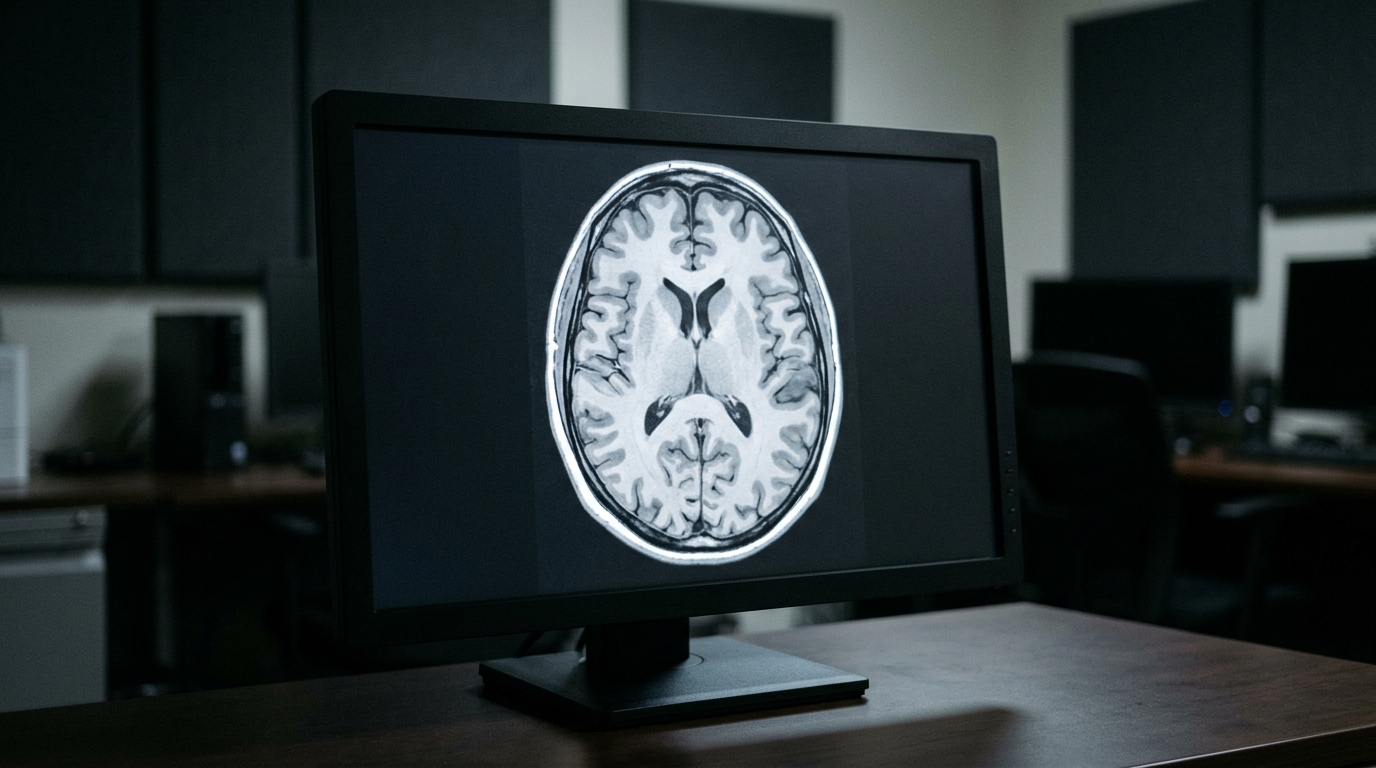
A deep learning framework integrating wavelet transformations with structured pixel decomposition has achieved superior fidelity in reconstructing high-resolution magnetic resonance imaging scans. In an experimental investigation published in Frontiers in Medicine, researchers introduced the Wavelet-Enhanced Even–Odd Convolutional Neural Network, designated as WEO-CNN, to address spatial resolution constraints in medical neuroimaging. The computational model recorded an average peak signal-to-noise ratio of 46.5 decibels, a structural similarity index measure of 0.98, and a signal-to-noise ratio of 44.7 decibels across benchmark evaluation scans.

High-resolution magnetic resonance imaging remains essential in clinical environments for accurate anatomical assessment, neurological disease monitoring, and detailed therapeutic planning. However, acquiring images with elevated spatial clarity directly from clinical scanners presents persistent technical challenges. Physical hardware boundaries, patient motion artifacts, environmental noise interference, and lengthy scanning intervals frequently degrade acquisition quality. These operational restrictions routinely yield low-resolution images characterized by blurred anatomical boundaries and attenuated diagnostic clarity, creating an operational need for reliable post-acquisition reconstruction techniques.

To overcome these physical limitations without adding scanning duration, the investigators structured the WEO-CNN architecture around a multistage computational pipeline. This mathematical decomposition separates the raw image data into multi-scale spatial-frequency subbands, isolating coarse low-frequency structural shapes from high-frequency edge information.

Following wavelet decomposition, the system applies a structured even–odd pixel sampling strategy across the transformed representations. The image pixels are divided into distinct even-indexed and odd-indexed subgrids. The known even-indexed pixels are preserved directly as baseline feature anchors, whereas the corresponding odd-indexed pixels are predicted through a lightweight convolutional neural network. The estimated odd pixels are subsequently merged with the original even pixels to form an intermediate representation.

The final reconstruction step applies an Inverse Discrete Wavelet Transform to synthesize the full intermediate components into a unified high-resolution output.

Quantitative evaluations demonstrated that the reconstructed scans matched ground-truth references with high fidelity, achieving a peak signal-to-noise ratio of 46.5 decibels and a structural similarity index measure of 0.98. Comparative analyses indicated that the WEO-CNN model outperformed conventional reconstruction baselines and established deep learning super-resolution architectures, including SRCNN, VDSR, ESRGAN, and SwinIR.

Subject of Research: Wavelet-enhanced even–odd convolutional neural network for MRI super-resolution reconstruction

Article Title: Wavelet-enhanced even–odd convolutional neural network for high-resolution MRI image reconstruction

Article References: Sugguna, S. R., & Sumesh, E. P. (2026). Wavelet-enhanced even–odd convolutional neural network for high-resolution MRI image reconstruction. Frontiers in Medicine, 13, 2008255. https://doi.org/10.3389/fmed.2026.2008255

Image Credits: AI Generated

DOI: 10.3389/fmed.2026.2008255

Keywords: magnetic resonance imaging, MRI super-resolution, convolutional neural network, WEO-CNN, discrete wavelet transform, inverse discrete wavelet transform, even-odd pixel decomposition, medical image reconstruction, brain tumor imaging, deep learning, peak signal-to-noise ratio, structural similarity index, signal-to-noise ratio, BraTS dataset, medical imaging, artificial intelligence, spatial resolution, image fidelity

News Source: Cassandra Pierce. (November 25, 2026). Wavelet and Even-Odd Neural Network Accurately Reconstructs High-Resolution Brain MRI Scans. Scienmag.


Tags: Artificial Intelligencebrain tumor imagingBraTS datasetconvolutional neural networkdeep learningdiscrete wavelet transformeven-odd pixel decompositionimage fidelityinverse discrete wavelet transformmagnetic resonance imagingmedical image reconstructionMedical ImagingMRI super-resolutionpeak signal-to-noise ratiosignal-to-noise ratiospatial resolutionstructural similarity indexWEO-CNN
Share12Tweet7Share2ShareShareShare1

Related Posts

Pediatric Cancer Caregivers Face Shifting Burdens and Fear Across Treatment Phases

Pediatric Cancer Caregivers Face Shifting Burdens and Fear Across Treatment Phases

November 25, 2026
Hospital Study Uncovers Major Deficits in Suicide Care Pathways Across Lusaka

Hospital Study Uncovers Major Deficits in Suicide Care Pathways Across Lusaka

November 25, 2026

Hybrid Brain-Computer Interface Decodes Covert Spatial Attention Without Requiring Eye Movements

November 25, 2026

Scoping Review Finds Evidence Lacking on Outcomes of Iran’s Population Law

November 25, 2026

POPULAR NEWS

  • Machine Learning and NSGA-II Optimize Deposition Geometry in Additive Manufacturing

    Machine Learning and NSGA-II Optimize Deposition Geometry in Additive Manufacturing

    29 shares
    Share 12 Tweet 7
  • Pediatric Cancer Caregivers Face Shifting Burdens and Fear Across Treatment Phases

    29 shares
    Share 12 Tweet 7
  • Hospital Study Uncovers Major Deficits in Suicide Care Pathways Across Lusaka

    29 shares
    Share 12 Tweet 7
  • Immobilized Bacterial Biosensor Enables Prototype Conductometric Biodetection of Acrylamide in Water

    29 shares
    Share 12 Tweet 7

About

We bring you the latest biotechnology news from best research centers and universities around the world. Check our website.

Follow us

Recent News

China’s Renewable Equipment Exports Link to Destination Capacity and WTO Access

Machine Learning and NSGA-II Optimize Deposition Geometry in Additive Manufacturing

Pediatric Cancer Caregivers Face Shifting Burdens and Fear Across Treatment Phases

Subscribe to Blog via Email

Enter your email address to subscribe to this blog and receive notifications of new posts by email.

Join 89 other subscribers
  • Contact Us

Bioengineer.org © Copyright 2023 All Rights Reserved.

Welcome Back!

Login to your account below

Forgotten Password?

Retrieve your password

Please enter your username or email address to reset your password.

Log In
No Result
View All Result
  • Homepages
    • Home Page 1
    • Home Page 2
  • News
  • National
  • Business
  • Health
  • Lifestyle
  • Science

Bioengineer.org © Copyright 2023 All Rights Reserved.