• HOME
  • NEWS
  • EXPLORE
    • CAREER
      • Companies
      • Jobs
    • EVENTS
    • iGEM
      • News
      • Team
    • PHOTOS
    • VIDEO
    • WIKI
  • BLOG
  • COMMUNITY
    • FACEBOOK
    • INSTAGRAM
    • TWITTER
Friday, May 15, 2026
BIOENGINEER.ORG
No Result
View All Result
  • Login
  • HOME
  • NEWS
  • EXPLORE
    • CAREER
      • Companies
      • Jobs
        • Lecturer
        • PhD Studentship
        • Postdoc
        • Research Assistant
    • EVENTS
    • iGEM
      • News
      • Team
    • PHOTOS
    • VIDEO
    • WIKI
  • BLOG
  • COMMUNITY
    • FACEBOOK
    • INSTAGRAM
    • TWITTER
  • HOME
  • NEWS
  • EXPLORE
    • CAREER
      • Companies
      • Jobs
        • Lecturer
        • PhD Studentship
        • Postdoc
        • Research Assistant
    • EVENTS
    • iGEM
      • News
      • Team
    • PHOTOS
    • VIDEO
    • WIKI
  • BLOG
  • COMMUNITY
    • FACEBOOK
    • INSTAGRAM
    • TWITTER
No Result
View All Result
Bioengineer.org
No Result
View All Result
Home NEWS Science News Biology

Water-saving alternative forage crops for Texas livestock

Bioengineer by Bioengineer
July 9, 2020
in Biology
Reading Time: 2 mins read
0
IMAGE
Share on FacebookShare on TwitterShare on LinkedinShare on RedditShare on Telegram

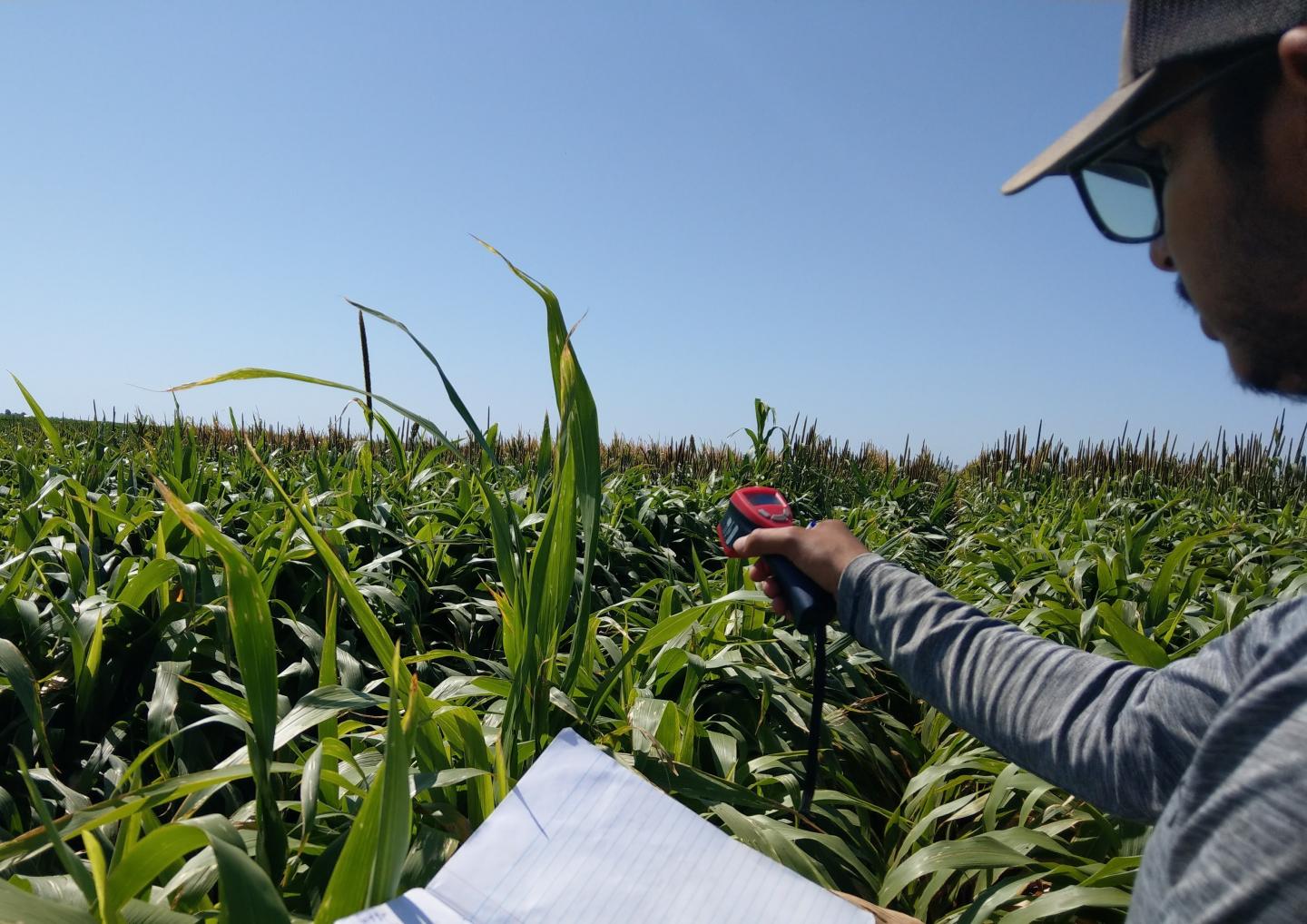
IMAGE

Credit: Sukhbir Singh

In the semi-arid Texas High Plains, growers and producers are concerned about the sustainability of beef and dairy industries, which rely heavily on irrigated corn for feed-grain and silage. A main source of irrigation–the Ogallala Aquifer–is declining rapidly. The aquifer’s decline emphasizes the need for producers and growers to find alternative, water-efficient forage crops for sustainable beef and dairy production in the region.

In a new study published in Crop Science, researchers from Texas Tech University investigated the potential of forage sorghum and pearl millet as alternatives to corn for forage production. The 2-year study evaluated the physiological responses of multiple varieties of all three crops under various irrigation regimes, including dryland. The team collected data on leaf water potential, stomatal conductance, and canopy temperature. They also studied the influence of these responses on biomass production and nutritive values.

The study reported that sorghum showed better physiological responses and produced greater biomass under water-stress conditions compared to pearl millet and corn. Though the nutritive value of sorghum was lower than corn, sorghum could provide growers with an alternative to produce higher biomass with less water. As a management option, forage sorghum could be mixed with high nutrition supplements to achieve desirable feed quality and increase profitability.

###

Adapted from Bhattarai, B., Singh, S., West, C.P., Ritchie, G.L. and Trostle, C.L. (2020), Effect of deficit irrigation on physiology and forage yield of forage sorghum, pearl millet, and corn.

Media Contact
Rachel Schutte
[email protected]

Related Journal Article

http://dx.doi.org/10.1002/csc2.20171

Tags: Agricultural Production/EconomicsAgricultureEarth ScienceEcology/EnvironmentHydrology/Water ResourcesNutrition/NutrientsPlant SciencesResearch/DevelopmentZoology/Veterinary Science
Share12Tweet8Share2ShareShareShare2

Related Posts

Precision Anti-Aging Strategies Focus on Eliminating Harmful Senescent Cells While Preserving Beneficial Ones — Biology

Precision Anti-Aging Strategies Focus on Eliminating Harmful Senescent Cells While Preserving Beneficial Ones

May 15, 2026
Root-Knot Nematodes Hijack Plant Signaling Peptides — Biology

Root-Knot Nematodes Hijack Plant Signaling Peptides

May 15, 2026

61 Newly Discovered Beetle Species Highlight How Much We Still Have to Learn About Biodiversity

May 15, 2026

Supercomputer Simulations Uncover How Bacterial Enzyme Pumps Sodium Ions, Opening Doors to Novel Antibiotics

May 15, 2026
Please login to join discussion

POPULAR NEWS

  • Research Indicates Potential Connection Between Prenatal Medication Exposure and Elevated Autism Risk

    843 shares
    Share 337 Tweet 211
  • New Study Reveals Plants Can Detect the Sound of Rain

    729 shares
    Share 291 Tweet 182
  • Salmonella Haem Blocks Macrophages, Boosts Infection

    62 shares
    Share 25 Tweet 16
  • Breastmilk Balances E. coli and Beneficial Bacteria in Infant Gut Microbiomes

    58 shares
    Share 23 Tweet 15

About

We bring you the latest biotechnology news from best research centers and universities around the world. Check our website.

Follow us

Recent News

Unlocking Hepatocellular Carcinoma Diagnosis: The Role of Neu5Gc-Linked Serum IgG Glycosylation

New Report Maps Strategies for Climate-Disease Preparedness

Atomic Clocks Unveil the Quantum Nature of Time

Subscribe to Blog via Email

Enter your email address to subscribe to this blog and receive notifications of new posts by email.

Join 82 other subscribers
  • Contact Us

Bioengineer.org © Copyright 2023 All Rights Reserved.

Welcome Back!

Login to your account below

Forgotten Password?

Retrieve your password

Please enter your username or email address to reset your password.

Log In
No Result
View All Result
  • Homepages
    • Home Page 1
    • Home Page 2
  • News
  • National
  • Business
  • Health
  • Lifestyle
  • Science

Bioengineer.org © Copyright 2023 All Rights Reserved.