

• HOME
  • NEWS
  • EXPLORE
    • CAREER
      • Companies
      • Jobs
    • EVENTS
    • iGEM
      • News
      • Team
    • PHOTOS
    • VIDEO
    • WIKI
  • BLOG
  • COMMUNITY
    • FACEBOOK
    • INSTAGRAM
    • TWITTER
Friday, July 10, 2026
BIOENGINEER.ORG
No Result
View All Result
  • Login
  • HOME
  • NEWS
  • EXPLORE
    • CAREER
      • Companies
      • Jobs
        • Lecturer
        • PhD Studentship
        • Postdoc
        • Research Assistant
    • EVENTS
    • iGEM
      • News
      • Team
    • PHOTOS
    • VIDEO
    • WIKI
  • BLOG
  • COMMUNITY
    • FACEBOOK
    • INSTAGRAM
    • TWITTER
  • HOME
  • NEWS
  • EXPLORE
    • CAREER
      • Companies
      • Jobs
        • Lecturer
        • PhD Studentship
        • Postdoc
        • Research Assistant
    • EVENTS
    • iGEM
      • News
      • Team
    • PHOTOS
    • VIDEO
    • WIKI
  • BLOG
  • COMMUNITY
    • FACEBOOK
    • INSTAGRAM
    • TWITTER
No Result
View All Result
Bioengineer.org
No Result
View All Result
Home NEWS Science News Biology

Warmer waters from climate change will leave fish shrinking, gasping for air

Bioengineer by Bioengineer
August 21, 2017
in Biology
Reading Time: 2 mins read
0
Share on FacebookShare on TwitterShare on LinkedinShare on RedditShare on Telegram
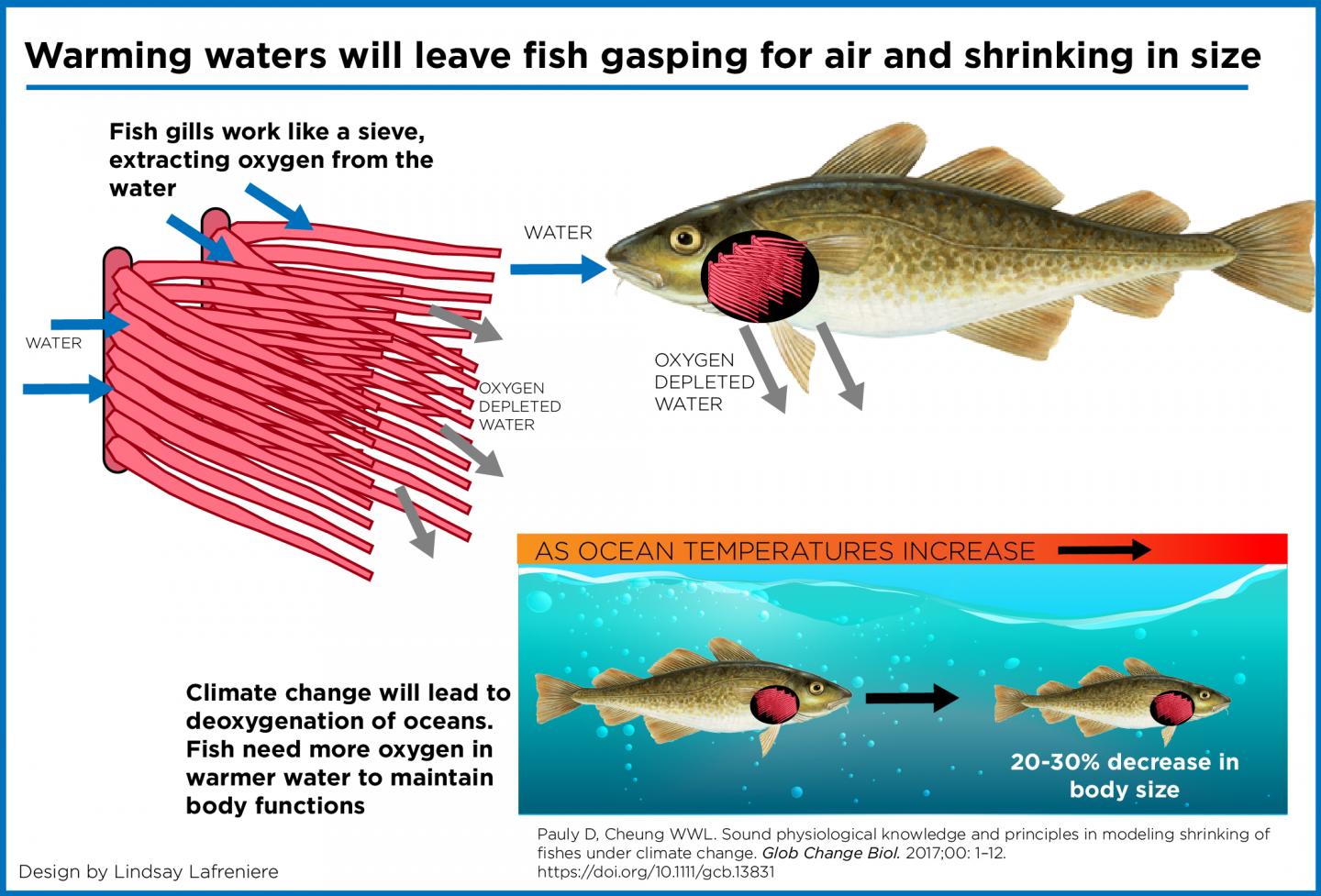
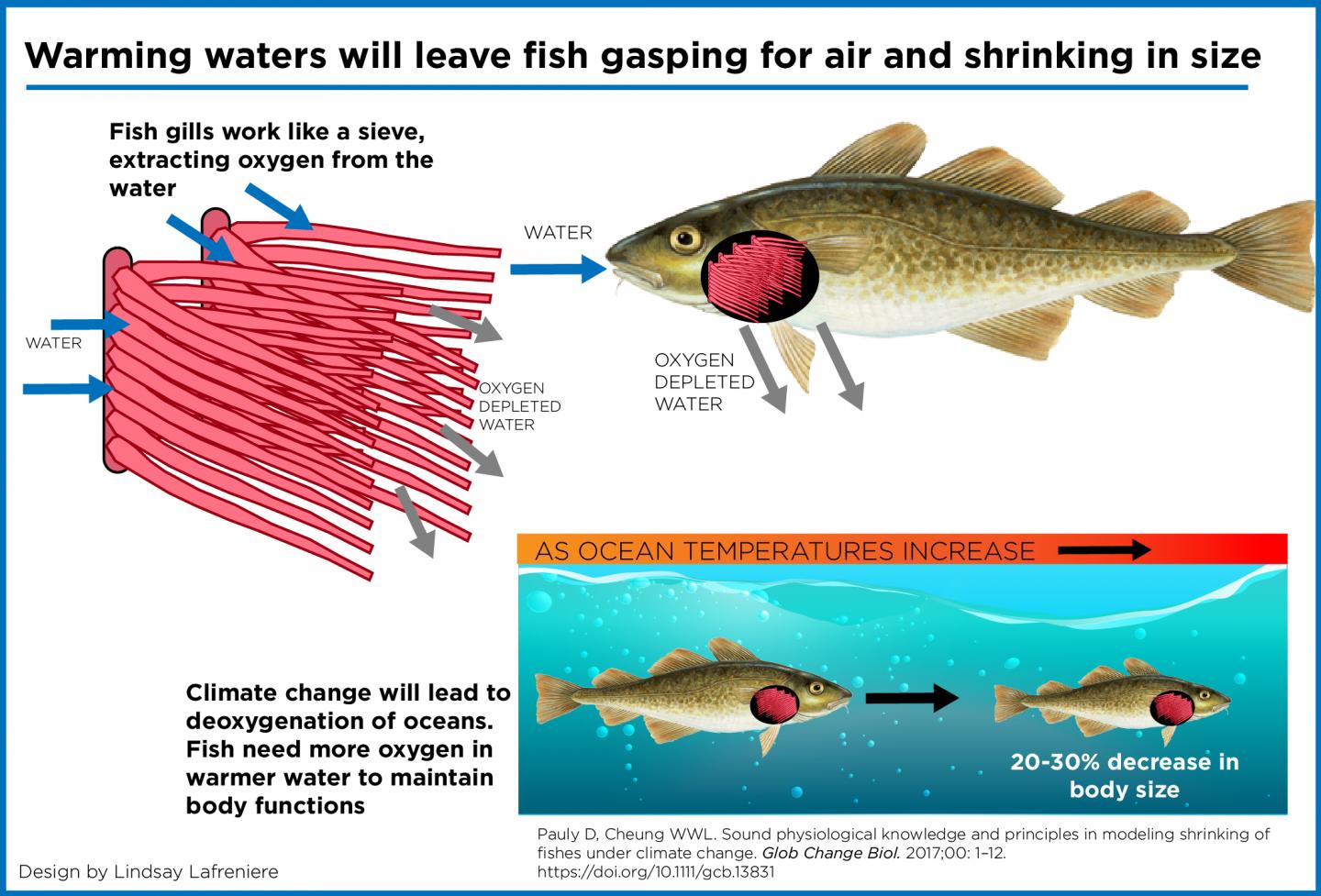
IMAGE

Credit: Lindsay Lafreniere

Fish are expected to shrink in size by 20 to 30 per cent if ocean temperatures continue to climb due to climate change.

A new study by researchers at the University of British Columbia provides a deeper explanation of why fish are expected to decline in size.

"Fish, as cold-blooded animals, cannot regulate their own body temperatures. When their waters get warmer, their metabolism accelerates and they need more oxygen to sustain their body functions," said William Cheung, co-author of the study, associate professor at the Institute for the Ocean and Fisheries and director of science for the Nippon Foundation-UBC Nereus Program. "There is a point where the gills cannot supply enough oxygen for a larger body, so the fish just stops growing larger."

Daniel Pauly, the study's lead author and principal investigator of the Sea Around Us at the Institute for the Ocean and Fisheries, explains that as fish grow into adulthood their demand for oxygen increases because their body mass becomes larger. However, the surface area of the gills — where oxygen is obtained — does not grow at the same pace as the rest of the body. He calls this set of principles that explains why fish are expected to shrink "gill-oxygen limitation theory."

For example, as a fish like cod increases its weight by 100 per cent, its gills only grow by 80 per cent or less. When understood in the context of climate change, this biological rule reinforces the prediction that fish will shrink and will be even smaller than thought in previous studies.

Warmer waters increase fish's need for oxygen but climate change will result in less oxygen in the oceans. This means that gills have less oxygen to supply to a body that already grows faster than them. The researchers say this forces fish to stop growing at a smaller size to be able to fulfill their needs with the little oxygen available to them.

Some species may be more affected by this combination of factors. Tuna, which are fast moving and require more energy and oxygen, may shrink even more when temperatures increase.

Smaller fish will have an impact on fisheries production as well as the interaction between organisms in the ecosystems.

###

Pauly and Cheung's study "Sound physiological knowledge and principles in modeling shrinking fishes under climate change" was published in Global Change Biology doi: 10.1111/gcb.13831.

Media Contact

Valentina Ruiz Leotaud
[email protected]
604-827-3164
@UBCnews

http://www.ubc.ca

Original Source

http://www.seaaroundus.org/warmer-waters-from-climate-change-will-leave-fish-shrinking-gasping-for-air/ http://dx.doi.org/10.1111/gcb.13831


Share12Tweet7Share2ShareShareShare1

Related Posts

Unmedicated Depressed Women Show Reduced Heat Tolerance Compared to SSRI Users

Unmedicated Depressed Women Show Reduced Heat Tolerance Compared to SSRI Users

July 10, 2026
Balancing Pollinator Protection and Climate Change Efforts

Balancing Pollinator Protection and Climate Change Efforts

July 9, 2026

Genetic Adaptations Enable Survival of Earth’s Highest-Dwelling Mammal

July 9, 2026

Scientists Discover Key Mechanism Driving Nerve Cell Growth

July 9, 2026
Please login to join discussion

POPULAR NEWS

  • Detection of EDCs in Breast Milk and Infant Urine Up to Six Months Highlights Early Exposure Risks

    77 shares
    Share 31 Tweet 19
  • New Drug Candidate Developed at McMaster Shows Potential for Treating Brain Cancer

    58 shares
    Share 23 Tweet 15
  • KTU Researchers Explore Ultrasound’s Role in Enhancing Blood Flow Beyond Diagnostics

    53 shares
    Share 21 Tweet 13
  • 高齢者の骨粗鬆症治療の持続性比較

    51 shares
    Share 20 Tweet 13

About

We bring you the latest biotechnology news from best research centers and universities around the world. Check our website.

Follow us

Recent News

How Race, Wealth, Education, and Gender Impact AIDS in Brazil

UK Family History Services Assessed in National Survey

Over 40% of Users Are Reducing AI Usage Amid Declining Popularity

Subscribe to Blog via Email

Success! An email was just sent to confirm your subscription. Please find the email now and click 'Confirm' to start subscribing.

Join 84 other subscribers
  • Contact Us

Bioengineer.org © Copyright 2023 All Rights Reserved.

Welcome Back!

Login to your account below

Forgotten Password?

Retrieve your password

Please enter your username or email address to reset your password.

Log In
No Result
View All Result
  • Homepages
    • Home Page 1
    • Home Page 2
  • News
  • National
  • Business
  • Health
  • Lifestyle
  • Science

Bioengineer.org © Copyright 2023 All Rights Reserved.
