


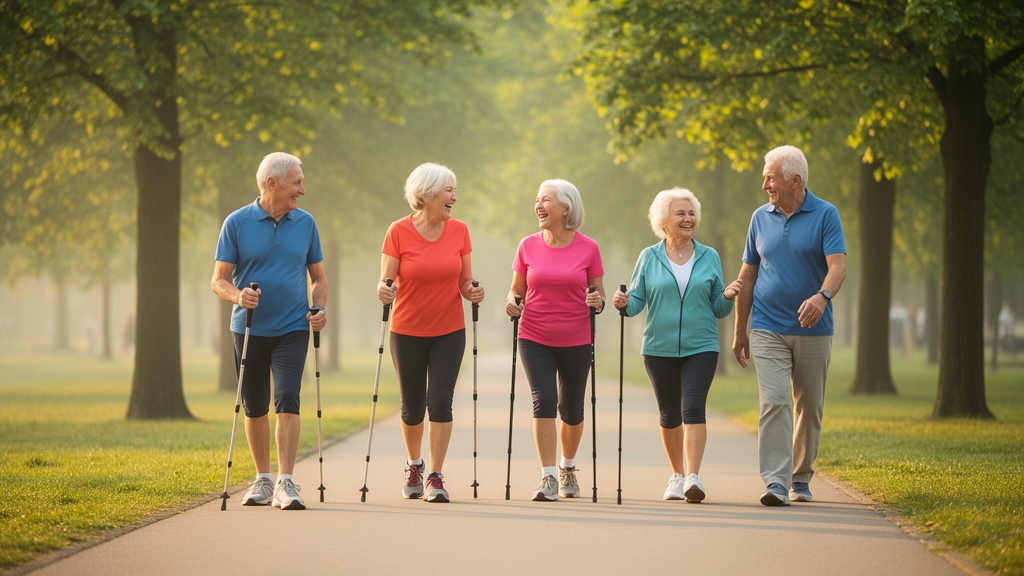
A new scoping review published in the European Review of Aging and Physical Activity maps what the existing research says about the physical and psychosocial effects of these sports in older populations, and finds early but consistent signals of benefit alongside notable gaps in the evidence.
The review, led by Charles Bellette and colleagues, followed PRISMA-ScR guidelines and searched four databases: MEDLINE, EMBASE, SPORTDiscus and CINAHL, using search constructs relating to older adults and walking sports.
Twelve studies with varying designs met the inclusion criteria. Walking football dominated the literature, appearing in nine of the twelve studies, while two studies examined walking sports in general and one focused on walking netball. That concentration matters: most of what is known about walking sports for older adults currently rests on a single sport, and findings may not transfer neatly to other formats.
On the physical side, the researchers reported consistent functional improvements across the included studies. Some studies also documented gains in specific physical domains, including cardiorespiratory fitness, cardiometabolic health, body composition, muscular strength and balance. However, the review’s authors note that physical health outcomes showed some variability across different methodological approaches, and that this variability appears potentially influenced by how long the interventions lasted — a reminder that a few weeks of walking football may not produce the same adaptations as months of regular participation.
The psychosocial findings were, if anything, more uniform. Studies consistently reported improvements in perceived mental health, affect, confidence, social connection, belonging and loneliness.
The picture was not uniformly positive. The authors note occasional reports of negative psychosocial experiences among participants, linked to competitiveness or poor sportsmanship.
The authors are careful about the strength of their conclusions. Despite heterogeneity in both methodological and intervention designs across the twelve studies, they conclude that walking sports participation may promote positive physical and psychosocial health outcomes in older adults — a deliberately cautious formulation. As a scoping review, the work maps and synthesises existing evidence descriptively; it does not pool effect sizes or establish causal effects, and the included studies varied widely in design.
The review’s authors call for further research to confirm these findings and to support embedding walking sports within public health strategies.
Subject of Research: Physical and psychosocial effects of walking sports participation in older adults
Article Title: The physical and psychosocial effects of walking sports in older adults: a scoping review
Article References: Bellette, C., McIntyre, K., Gordon, B., & Cousins, S. (2026). The physical and psychosocial effects of walking sports in older adults: a scoping review. European Review of Aging and Physical Activity. https://doi.org/10.1186/s11556-026-00439-5
Image Credits: AI Generated
DOI: 10.1186/s11556-026-00439-5
Keywords: walking sports, walking football, walking netball, older adults, scoping review, physical activity, psychosocial health, cardiorespiratory fitness, social connection, loneliness, ageing, public health
News Source: Beatrice Stafford. (October 28, 2026). Walking sports may boost physical and psychosocial health in older adults, review finds. Scienmag.



