


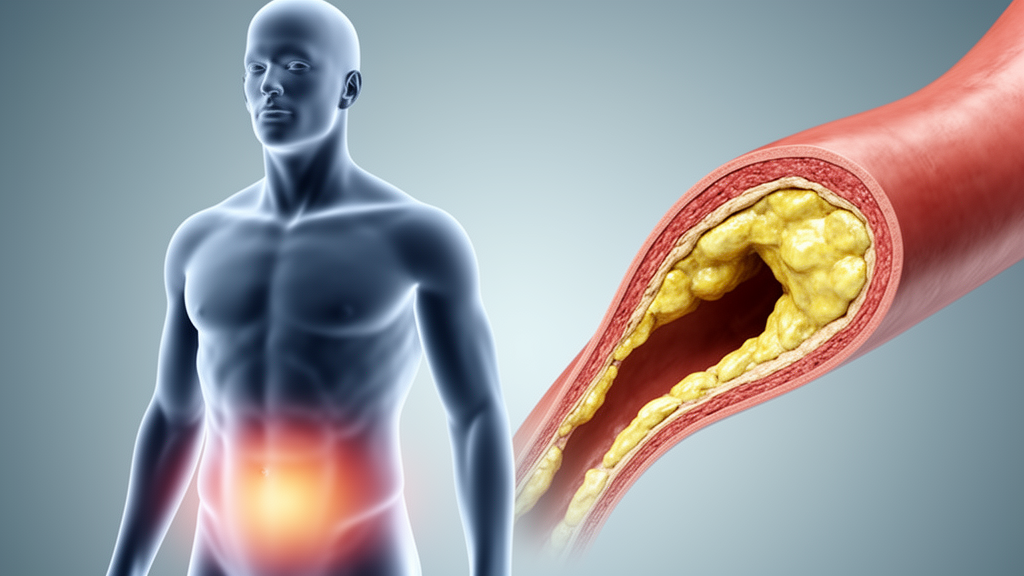
A simple anthropometric measure that combines waist circumference with body weight—the weight-adjusted waist index (WWI)—shows a significant positive association with thickening of the carotid artery walls in older adults from a low-income rural area of northern China, according to a cross-sectional study published in BMC Cardiovascular Disorders.
Carotid intima-media thickness, or CIMT, is a well-established marker of atherosclerosis and a predictor of cardiovascular events. The WWI, calculated from waist circumference adjusted for body weight, captures both abdominal obesity and overall body mass in a single figure, and has been suggested as a potential indicator of cardiovascular risk. The research team set out to examine how this index relates to CIMT in a rural Chinese population, while also identifying risk factors that contribute to vascular health.
The study was conducted between May and June 2019 and involved 2,260 participants aged 50 years and older living in a low-income rural region of northern China. People with existing cardiovascular or cerebrovascular diseases, or with missing data, were excluded. The researchers collected information on demographic characteristics, lifestyle factors, clinical history, and laboratory measurements including fasting plasma glucose, blood lipids, and blood pressure. Carotid ultrasound was used to measure CIMT, and the relationship between WWI and CIMT was assessed with multivariable linear and logistic regression adjusted for established risk factors.
Participants had a mean age of 62.68 years, with a standard deviation of 8.51 years, and 43.8 percent were male. Across the cohort, the analysis found a significant positive correlation between WWI and mean CIMT, with a regression coefficient of 0.009 and a p-value of 0.012. In practical terms, higher WWI values tended to accompany thicker carotid artery linings after adjustment for other risk factors.
WWI was also significantly associated with CIMT thickening as a binary outcome, with an odds ratio of 1.309 and a 95 percent confidence interval of 1.059 to 1.617, and a p-value of 0.013. This means each unit increase in the index was linked to roughly 31 percent higher odds of carotid intima-media thickening in this population, although the cross-sectional design cannot establish that the index causes arterial changes.
Exploratory subgroup analyses suggested the association was statistically significant in participants aged 60 and older, in those with hypertension, in people with higher education levels, in males, and in non-diabetic participants. However, none of these subgroup interactions survived correction for multiple comparisons, so the apparent subgroup patterns should be treated with caution and require confirmation in independent samples.
The researchers also tested how well WWI alone could discriminate between people with and without CIMT thickening using receiver operating characteristic curves. The result was modest: an area under the curve of 0.557, with a p-value of 0.012 and an optimal threshold of 10.374. An AUC this close to 0.5 indicates limited discriminative ability, meaning WWI by itself is far from a reliable diagnostic test for carotid atherosclerosis.
The authors conclude that WWI is significantly associated with both mean CIMT and CIMT thickening in this rural Chinese population. Because the index is simple, non-invasive, and inexpensive to obtain, they suggest it may serve as a complementary indicator alongside conventional risk factors when identifying individuals with carotid atherosclerosis—while explicitly noting that it is not suitable as a stand-alone screening tool.
Several limitations shape how these findings should be read. The study is cross-sectional, so it captures a single point in time and cannot determine whether a higher WWI precedes arterial thickening. The sample is restricted to adults aged 50 and older in one low-income rural area, which may limit generalizability to other ages, regions, or income settings. The authors state that longitudinal studies in diverse populations are needed to confirm the association and clarify its clinical value.
For now, the study adds to the evidence linking central adiposity measures to early vascular changes, and highlights a low-cost metric that could complement—but not replace—established cardiovascular risk assessment in resource-limited settings.
Subject of Research: The association between the weight-adjusted waist index and carotid atherosclerosis in a low-income rural Chinese population
Article Title: Association between weight-adjusted waist index and carotid atherosclerosis in low-income population: a cross-sectional study
Article References: Xue, H., Wang, H., Hao, J., Li, B., Wang, L., Fan, C., Yang, C., Wang, J., Ning, X., & Li, Y. (2026). Association between weight-adjusted waist index and carotid atherosclerosis in low-income population: a cross-sectional study. BMC Cardiovascular Disorders. https://doi.org/10.1186/s12872-026-06909-z
Image Credits: AI Generated
DOI: 10.1186/s12872-026-06909-z
Keywords: weight-adjusted waist index, carotid intima-media thickness, atherosclerosis, cross-sectional study, rural China, abdominal obesity, cardiovascular risk, anthropometric measure, hypertension, ultrasound, Association, between
News Source: Ophelia Keating. (October 30, 2026). Waist-to-weight index linked to carotid artery thickening in rural China study. Scienmag.



