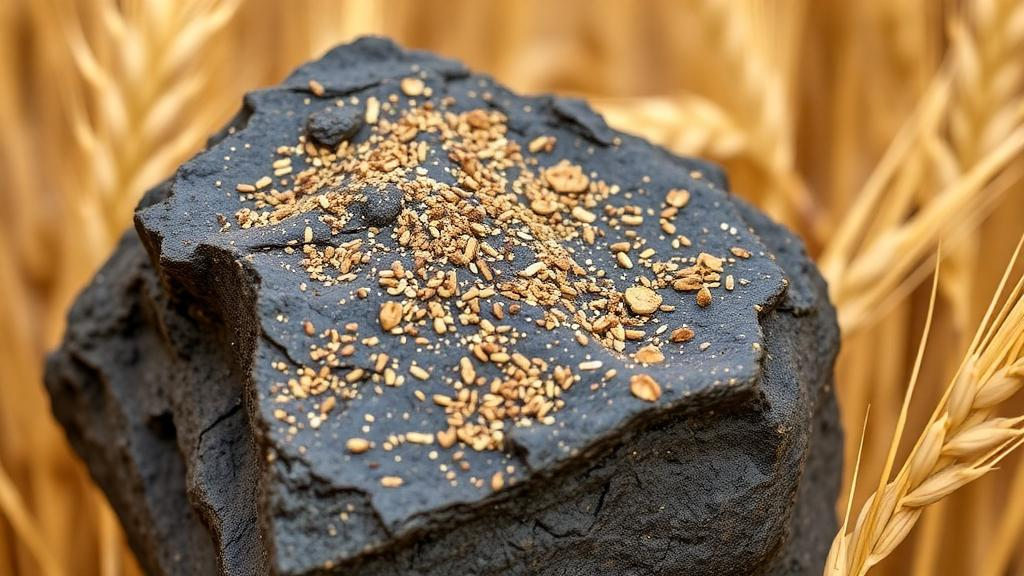
Wheat feeds more people than any other crop on Earth, yet the fertilizers that sustain it come with mounting environmental and economic costs. A new two-year greenhouse study published in Plant Biosystems suggests that a humble volcanic rock, when loaded with the right bacteria, could help shift the balance. Researchers found that wheat plants grown with plant growth-promoting rhizobacteria, or PGPR, delivered through porous volcanic tuff produced 20.43 percent more grain than untreated controls, while showing broad improvements in photosynthesis, antioxidant defenses, hormone balance, and nutrient uptake. The findings point toward a low-cost biological input that could complement, rather than replace, conventional fertilization in sustainable wheat production.
The study focused on the ‘Kırik’ wheat cultivar, a landrace population traditionally grown in eastern Türkiye and valued for its cold tolerance and bread-making quality. Rather than applying bacteria directly to the soil, where survival rates can be poor, the team used tuff as a carrier material. Tuff is a porous volcanic stone with high water-holding capacity and a strong cation exchange capacity, properties that allow it to retain moisture and nutrients while providing a protective habitat for microbial communities. Large tuff granules measuring approximately 9 by 14 by 11 millimeters were inoculated with a PGPR consortium at a concentration of roughly 4.8 × 10^10 colony-forming units per gram and then applied directly to the root zone of each plant.
Across two growing seasons, the inoculated plants consistently outperformed the non-inoculated controls. Grain yield rose by just over 20 percent, a substantial gain for a treatment that involved no additional synthetic fertilizer. The physiological measurements behind that yield boost tell a coherent story. Chlorophyll content increased, stomatal conductance improved, membrane permeability was enhanced, and photosynthetic rate climbed significantly. In practical terms, the treated plants were able to capture more light energy, exchange gases more efficiently, and maintain healthier cellular membranes, all of which feed directly into the carbon budget that ultimately determines how many grains a wheat head can fill.
One of the most striking aspects of the research is the detailed biochemical profiling the team performed. Antioxidant enzyme activities rose across the board: catalase increased by 11.43 percent, superoxide dismutase by 14.83 percent, and peroxidase by 10.71 percent. These enzymes form the front line of the plant’s defense against reactive oxygen species, unstable molecules that damage membranes, proteins, and DNA when photosynthesis and metabolism run under stress. Higher antioxidant capacity means the bacterial treatment did not merely push plants to grow faster; it also strengthened the cellular machinery that keeps growth sustainable under the oxidative pressures that inevitably accompany rapid metabolism and fluctuating environmental conditions.
The hormone data reveal how the bacteria reprogrammed plant signaling. Levels of indole-3-acetic acid, the principal auxin that drives cell elongation and root development, rose by 13.59 percent. Gibberellic acid, which governs stem elongation and germination, increased by 7 percent, and salicylic acid, a key immune signaling molecule, climbed by 9.27 percent. Meanwhile, abscisic acid, the stress hormone that typically signals plants to close stomata and slow growth, dropped by 16.67 percent. That simultaneous pattern, more growth-promoting hormones and less stress hormone, is precisely what a plant in a comfortable, well-nourished state would be expected to show, and it helps explain why the treated wheat could sustain higher photosynthetic rates and greater yield.
Nutrient analysis added another layer to the mechanism. Concentrations of essential elements rose significantly, most notably phosphorus by 18.49 percent, copper by 10.61 percent, and iron by 9.99 percent. Phosphorus is often the most limiting nutrient in agricultural soils because it binds tightly to minerals and becomes unavailable to roots; many PGPR strains solubilize it by excreting organic acids. The study also documented generally enhanced amino acid and organic acid contents in the treated plants, consistent with improved nitrogen assimilation and metabolic activity. Notably, sodium and boron concentrations decreased by 5 percent and 3.48 percent respectively, suggesting the treatment may help plants exclude potentially harmful elements, an effect with implications for salt-affected and marginal soils.
The choice of carrier material is more than a technical footnote. Liquid bacterial inoculants often fail in the field because desiccation, UV exposure, and competition with native soil microbes rapidly reduce viable cell counts. Tuff addresses several of these problems at once: its porous structure shelters bacteria, buffers moisture, and slowly releases nutrients through cation exchange, effectively turning each granule into a microhabitat that seeds the rhizosphere over time. The approach has precedent in the same research group’s earlier work, which showed that bacterially inoculated tuff improved yield and physiological parameters in grape and tomato, but the new study extends the concept to the world’s most important cereal crop with a far deeper biochemical characterization.
The broader context makes the result timely. Wheat provides roughly a fifth of the calories and protein consumed globally, and demand continues to rise with population growth, while the environmental costs of synthetic nitrogen and phosphorus fertilizers, from greenhouse gas emissions to eutrophication of waterways, face increasing regulatory pressure, including under the European Green Deal. Biological inputs such as PGPR are attractive precisely because they work with existing plant physiology: they solubilize locked-up nutrients, produce growth-promoting compounds, and prime antioxidant defenses, all at a fraction of the energy cost of industrial fertilizer synthesis. The tuff carrier adds the advantage of being an abundant, inexpensive volcanic material in regions like Anatolia where it occurs naturally.
The authors are careful about the limits of their evidence. The work was conducted in a greenhouse over two years, and they explicitly note that further field studies comparing the PGPR-tuff approach with standard chemical fertilization are needed to confirm its practical applicability and support broader adoption. Greenhouse conditions rarely reproduce the temperature swings, pest pressure, and soil heterogeneity of open fields, and yield gains of 20 percent under controlled conditions often shrink when translated to farm scale. Still, the consistency of the response across two seasons, and the breadth of the measured effects spanning physiology, hormones, antioxidants, and nutrition, give the finding unusual robustness for an early-stage study.
If field trials bear out the greenhouse results, the implications could extend well beyond wheat. A scalable, low-cost delivery system for beneficial bacteria would be relevant to barley, maize, rice, and horticultural crops alike, and the demonstrated reductions in sodium accumulation hint at applications in salt-stressed soils that are expanding worldwide. For now, the study stands as a compelling proof of concept: that a chunk of volcanic rock and a community of root-dwelling bacteria, working together, can measurably rewire a plant’s chemistry toward growth. As agriculture searches for ways to maintain yields while cutting chemical inputs, solutions drawn from the rhizosphere, the teeming microbial world just beneath our feet, are proving they deserve a central place in the conversation.
Subject of Research: Effects of PGPR-enriched volcanic tuff on wheat yield, physiology, and biochemical profiles
Article Title: Enhanced wheat (Triticum aestivum) performance: effects of PGPR-enriched on yield and biochemical profiles
Article References: Yıldıran Söğürtlüpınar, S., İnanç, M., Keçe, Y. M., Tarhan, L., Soğutmaz Özdemir, B., Şahin, F., Turan, M., & Güneş, A. (2026). Enhanced wheat (Triticum aestivum) performance: effects of PGPR-enriched on yield and biochemical profiles. Plant Biosystems, 160(5), Article 279. https://doi.org/10.1007/s44473-026-00291-6
Image Credits: AI Generated
DOI: 10.1007/s44473-026-00291-6
Keywords: PGPR, wheat, volcanic tuff, plant growth-promoting rhizobacteria, grain yield, antioxidant enzymes, phytohormones, photosynthesis, nutrient uptake, sustainable agriculture, biochemical profile, Triticum aestivum
News Source: Alan Morgan. (October 6, 2026). Volcanic Rock Loaded With Bacteria Boosts Wheat Yield by 20 Percent. Scienmag.