• HOME
  • NEWS
  • EXPLORE
    • CAREER
      • Companies
      • Jobs
    • EVENTS
    • iGEM
      • News
      • Team
    • PHOTOS
    • VIDEO
    • WIKI
  • BLOG
  • COMMUNITY
    • FACEBOOK
    • INSTAGRAM
    • TWITTER
Tuesday, November 17, 2026
BIOENGINEER.ORG
No Result
View All Result
  • Login
  • HOME
  • NEWS
  • EXPLORE
    • CAREER
      • Companies
      • Jobs
        • Lecturer
        • PhD Studentship
        • Postdoc
        • Research Assistant
    • EVENTS
    • iGEM
      • News
      • Team
    • PHOTOS
    • VIDEO
    • WIKI
  • BLOG
  • COMMUNITY
    • FACEBOOK
    • INSTAGRAM
    • TWITTER
No Result
View All Result
Bioengineer.org
No Result
View All Result
Home NEWS Science News Health

Visual Foundation Models With Adapters Recognize Parkinson’s Disease From OCT Scans

by
November 17, 2026
in Health, Technology
Reading Time: 2 mins read
0
Visual Foundation Models With Adapters Recognize Parkinson's Disease From OCT Scans

Visual Foundation Models With Adapters Recognize Parkinson's Disease From OCT Scans

Share on FacebookShare on TwitterShare on LinkedinShare on RedditShare on Telegram

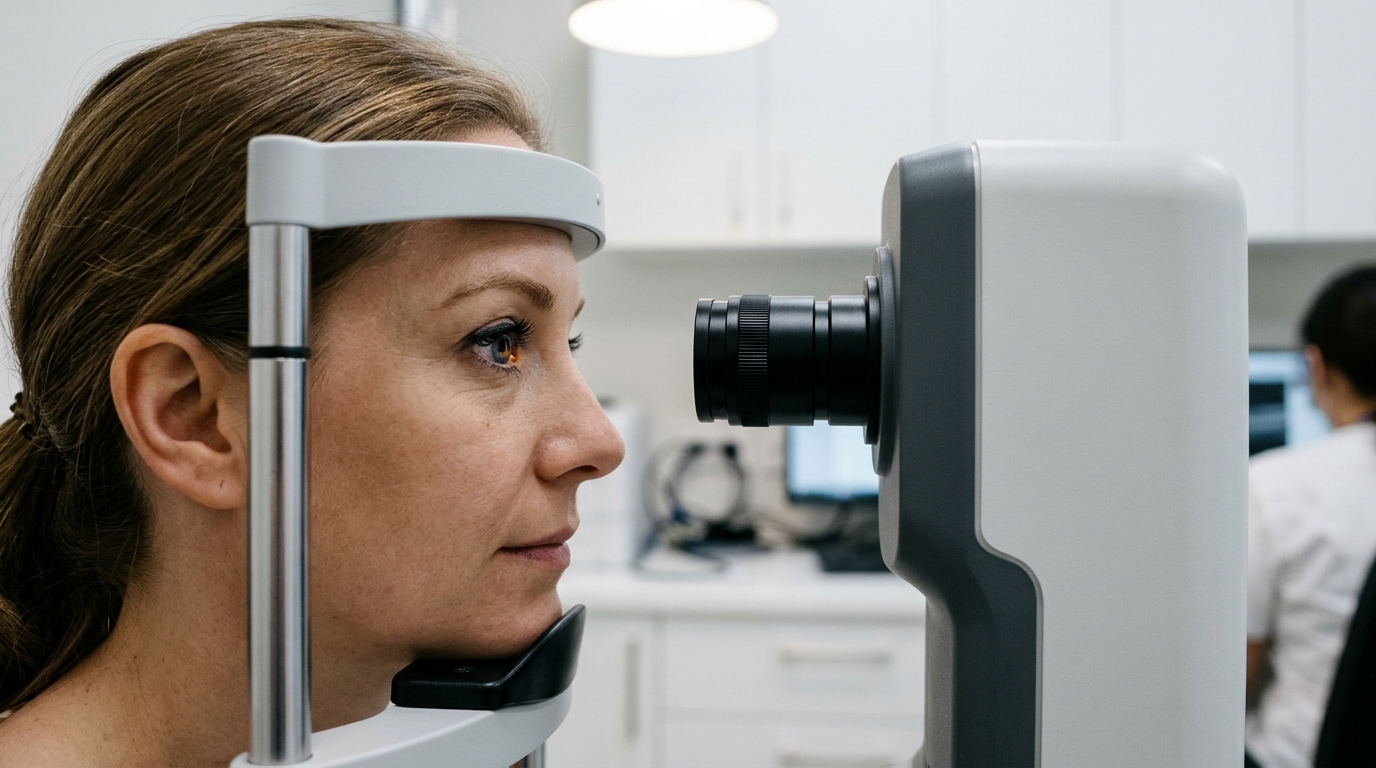
A newly developed transfer learning framework called VFM-Adapter enables pre-trained visual foundation models to identify Parkinson’s disease from optical coherence tomography images, achieving an overall diagnostic accuracy of 77.66 percent. By utilizing adapter learning, the methodology successfully equips large computer vision models with specialized disease recognition capabilities while updating only a small fraction of parameters.

Conventional deep learning approaches typically require an extensive collection of optical coherence tomography images alongside substantial computational resources, making model training and optimization prohibitively expensive in terms of time and computing infrastructure.

To resolve these computational and data barriers, the study introduces the VFM-Adapter framework, which transfers knowledge from pre-trained visual foundation models into the medical domain. By implementing the adapter learning paradigm, the researchers successfully adapt general visual representations for optical coherence tomography recognition by adding only a few trainable parameters to the existing architectures.

The core design of the framework introduces three distinct lightweight adapters: a global adapter, a local adapter, and a token-wise adapter. These modular components work collaboratively to effectively leverage the transferability of feature representations from pre-trained visual foundation models to optical coherence tomography images, providing the underlying models with strong recognition capability.

In empirical performance evaluations, the VFM-Adapter model demonstrated balanced diagnostic accuracy across multiple evaluation metrics.

The researchers reported that VFM-Adapter outperformed established state-of-the-art deep neural networks, including standard convolutional neural networks, attention-based convolutional neural networks, and vision transformers. Furthermore, extensive ablation studies conducted by the team confirmed the structural effectiveness of each individual adapter, verifying that competitive performance was maintained while updating only a small number of parameters.

The study concludes that VFM-Adapter provides an effective, parameter-efficient transfer learning framework for automated optical coherence tomography-based Parkinson’s disease recognition. By substantially fine-tuning a small number of trainable parameters while preserving competitive recognition performance, the framework offers a promising and practical alternative for automated screening workflows in real-world clinical diagnosis scenarios.

Subject of Research: Parameter-efficient transfer learning for Parkinson's disease recognition using optical coherence tomography

Article Title: Visual foundation models with adapter learning for Parkinson’s disease recognition based on OCT images

Article References: Zhang, J., Wang, T., Shao, D., Yang, Y., He, J., Zheng, M., Yang, Z., Wang, J., Jin, Z., Shen, M., Lv, F., Zhang, X., Zhang, X., Chen, J.-F., & Xu, T. (2026). Visual foundation models with adapter learning for Parkinson’s disease recognition based on OCT images. BMC Medical Informatics and Decision Making. https://doi.org/10.1186/s12911-026-03979-z

Image Credits: AI Generated

DOI: 10.1186/s12911-026-03979-z

Keywords: Parkinson's disease, optical coherence tomography, OCT imaging, visual foundation models, adapter learning, VFM-Adapter, transfer learning, global adapter, local adapter, token-wise adapter, deep neural networks, convolutional neural networks, vision transformers, ablation studies, parameter efficiency, neurodegenerative disorders, medical informatics

News Source: Cassandra Pierce. (November 17, 2026). Visual Foundation Models With Adapters Recognize Parkinson’s Disease From OCT Scans. Scienmag.

Tags: ablation studiesadapter learningconvolutional neural networksdeep neural networksglobal adapterlocal adapterMedical Informaticsneurodegenerative disordersOCT imagingoptical coherence tomographyparameter efficiencyParkinson’s diseasetoken-wise adapterTransfer LearningVFM-Adaptervision transformersvisual foundation models
Share12Tweet7Share2ShareShareShare1

Related Posts

Tibial Slope Asymmetry Linked to Medial Meniscus Posterior Root Tears

Tibial Slope Asymmetry Linked to Medial Meniscus Posterior Root Tears

November 17, 2026
Presence Dynamics Framework Proposes How Multi-Stage Media Experiences Reconfigure Immersion

Presence Dynamics Framework Proposes How Multi-Stage Media Experiences Reconfigure Immersion

November 17, 2026

Simulated Cleft Surgery Shows Patient-Specific Airflow Improvements in Pediatric Nasal Models

November 17, 2026

Lower Opinion Tolerance Promotes Cooperation in Spatial Evolutionary Social Dilemma Simulations

November 17, 2026

POPULAR NEWS

  • Mobile Health Units With Community Workers Address Critical Hypertension Care Gaps

    Mobile Health Units With Community Workers Address Critical Hypertension Care Gaps

    29 shares
    Share 12 Tweet 7
  • Brazilian EQ-5D Mapping Algorithm Offers Alternative to European-Based Standards

    29 shares
    Share 12 Tweet 7
  • Self-Assembled Berberine-Gallic Acid Nanorods Ameliorate Ulcerative Colitis in Mice

    29 shares
    Share 12 Tweet 7
  • Tablet Augmented Reality System May Reduce Preoperative Anxiety in Pediatric Surgical Patients

    29 shares
    Share 12 Tweet 7

About

We bring you the latest biotechnology news from best research centers and universities around the world. Check our website.

Follow us

Recent News

Tibial Slope Asymmetry Linked to Medial Meniscus Posterior Root Tears

Lamprey Study Identifies Conserved TAK1 and TAB Immune Signaling Module

Presence Dynamics Framework Proposes How Multi-Stage Media Experiences Reconfigure Immersion

Subscribe to Blog via Email

Enter your email address to subscribe to this blog and receive notifications of new posts by email.

Join 88 other subscribers
  • Contact Us

Bioengineer.org © Copyright 2023 All Rights Reserved.

Welcome Back!

Login to your account below

Forgotten Password?

Retrieve your password

Please enter your username or email address to reset your password.

Log In
No Result
View All Result
  • Homepages
    • Home Page 1
    • Home Page 2
  • News
  • National
  • Business
  • Health
  • Lifestyle
  • Science

Bioengineer.org © Copyright 2023 All Rights Reserved.