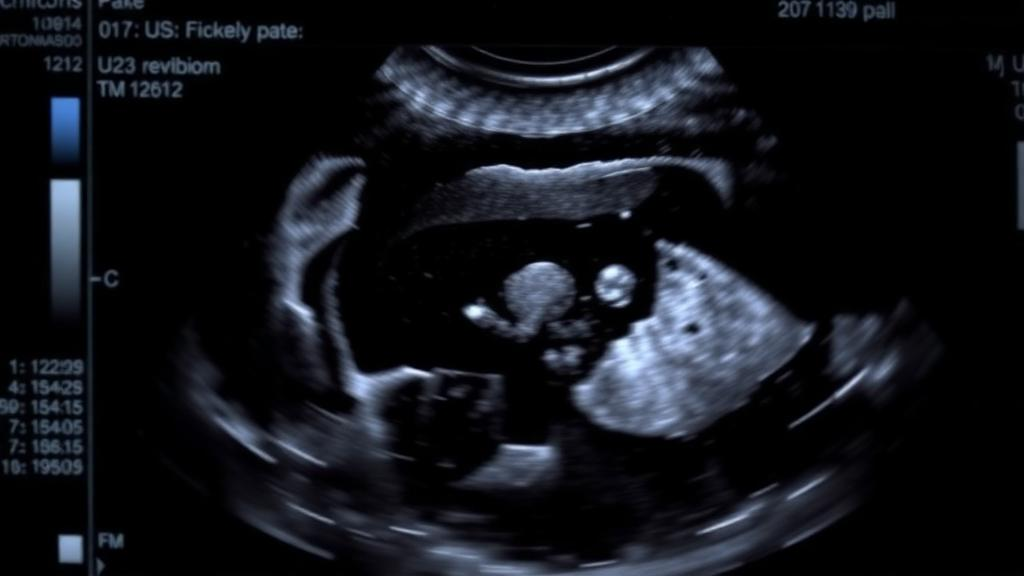
Ultrasound is one of the most widely used medical imaging tools in the world, prized for being safe, portable, and inexpensive. Yet anyone who has looked at an ultrasound scan knows its Achilles heel: the images are noisy, grainy, and often obscure the very anatomical details clinicians need to see. A research team in South Korea now reports a hybrid artificial intelligence framework that combines two rival architectures of modern computer vision — the Vision Transformer and the convolutional neural network — to clean up ultrasound images while protecting the delicate structures around pathological regions. The work, published in Biomedical Engineering Letters, was led by Yongheon Choi and Minha Yoo, with Jinwan Park and Chi Young Ahn, drawing on expertise from Kongju National University and the National Institute for Mathematical Sciences.
The central challenge the researchers tackled is speckle, the granular noise that plagues every ultrasound acquisition. Speckle arises from interference between scattered sound waves as they bounce off tissue structures smaller than the wavelength of the ultrasound beam. Traditional denoising filters, such as speckle-reducing anisotropic diffusion, have long been applied to suppress this noise, but they often smooth away fine boundaries — exactly the edges and textures that distinguish healthy tissue from a lesion. Deep learning approaches have improved matters considerably, but a new problem emerged: generative models trained without proper ground truth can hallucinate anatomical features that were never present in the patient, a dangerous failure mode in a clinical setting.
The Korean team’s answer rests on a careful architectural marriage. Their generative framework uses a Vision Transformer (ViT) as the encoder and a convolutional neural network (CNN) as the decoder. The ViT, first popularized by the landmark 2021 paper ‘An image is worth 16×16 words,’ breaks an image into patches and lets self-attention mechanisms model relationships between every pair of patches, no matter how far apart they sit. This gives the encoder a view of global context — how one region of the scan relates to another across the entire frame. CNNs, by contrast, excel at local feature extraction, using stacked filters to reconstruct fine edges and textures. By splitting the labor, the hybrid model captures both the big picture and the fine print.
What makes the design particularly elegant is how the attention information is reused. Rather than treating self-attention purely as an internal mechanism, the framework converts the attention patterns computed inside the ViT encoder into spatial weighting signals that reweight the decoder’s convolutional features. In practical terms, the attention map tells the decoder where to be careful — especially around boundaries and anatomically sensitive regions — reducing the boundary artifacts that tend to appear during local reconstruction. Notably, the authors emphasize that this weighting signal is derived without any anatomical annotation, meaning the system does not require hand-drawn labels of organs or lesions to know where to focus. The attention itself, learned during training, becomes a free byproduct that guides restoration.
Training such a model demands data of a kind that is surprisingly hard to obtain. In most image enhancement tasks, you need pairs of low-quality and high-quality images of the exact same scene. In medical imaging, this is nearly impossible to collect retrospectively, because a patient cannot be scanned twice under identical conditions. The researchers sidestepped this by building a paired dataset in which both the low-quality and high-quality versions come from the same acquisition, ensuring that any reference image genuinely corresponds to the degraded input. Their dataset comprises 803 paired images of 512 by 512 pixels, of which 751 pairs were used for training and 52 held out for testing. This paired supervision is critical: it allows the model’s output to be compared against a reference formed from the very same acquisition, avoiding the distribution-matching pitfalls that can cause hallucinated features in medical image translation.
The results were evaluated with three standard image quality metrics, each capturing a different aspect of fidelity. Peak signal-to-noise ratio (PSNR) measures pixel-level accuracy against the reference. Structural similarity index measure (SSIM) assesses whether perceptually important structures — edges, contrast, luminance relationships — are preserved. Learned Perceptual Image Patch Similarity (LPIPS) goes further, using deep neural network features to approximate how the human visual system judges similarity. On the test set, the proposed ViT–CNN hybrid achieved a PSNR of 23.7204, an SSIM of 0.8837, and an LPIPS of 0.1634 — the best values among all compared methods in the study. Lower LPIPS is better, so the model’s outputs were perceptually the closest to the high-quality references.
These numbers place the work within a rapidly evolving field of transformer-based image restoration. Systems like SwinIR, Restormer, and Uformer have shown that attention architectures can outperform pure CNN pipelines on general image restoration tasks. However, the Korean team’s contribution lies in the specific combination of ideas: attention-guided feature reweighting flowing from a ViT encoder into a CNN decoder, paired with a rigorously curated paired ultrasound dataset. Previous work by members of the same group had explored divide-and-conquer U-Net architectures and comparative studies of GAN-based models for ultrasound quality enhancement, and this new framework extends that research line into the transformer era while keeping the hallucination risks of adversarial training at arm’s length.
The practical implications could be significant. Better ultrasound images mean better diagnostic confidence, particularly in settings where the technology is the only imaging option available — rural clinics, emergency rooms, bedside examinations in intensive care, and much of the developing world. If an AI enhancement layer can reliably sharpen scans without inventing structures that are not there, it could help clinicians detect subtle lesions earlier and reduce repeat examinations. The fact that the attention-guided weighting requires no anatomical annotation is especially attractive for deployment, because building labeled medical datasets is one of the costliest bottlenecks in medical AI.
There are, of course, caveats worth noting. The dataset was modest in scale and acquired with an E-CUBE 12R research platform at the National Institute for Mathematical Sciences, with the scanned volunteers being the study authors themselves. The study did not undergo institutional review, which the authors note was because the institute operates no review board and no person outside the author list was scanned. Scaling to larger, more diverse patient populations, different ultrasound machines, and genuinely pathological cases will be the necessary next step before such systems enter clinical workflows. Regulatory bodies will also want to see rigorous evidence that enhancement does not alter diagnostic interpretation.
Still, the study offers a compelling demonstration that the great architectural debate of modern computer vision — transformers versus convolutions — is best settled with cooperation rather than competition. By letting a Vision Transformer supply global context and attention-guided spatial weights while a convolutional decoder handles local detail reconstruction, the researchers achieved state-of-the-art ultrasound enhancement without annotations, hallucination-prone losses, or unpaired training tricks. As medical imaging leans further into artificial intelligence, hybrid designs of this kind may become the template for restoring clarity to the noisiest corners of the clinic, one ultrasound frame at a time.
Subject of Research: A hybrid Vision Transformer–CNN generative framework for enhancing ultrasound image quality under paired supervision
Article Title: A ViT–CNN hybrid generative framework for ultrasound image enhancement with paired supervision
Article References: A ViT–CNN hybrid generative framework for ultrasound image enhancement with paired supervision. (n.d.). https://doi.org/10.1007/s13534-026-00621-9
Image Credits: AI Generated
DOI: 10.1007/s13534-026-00621-9
Keywords: ultrasound imaging, Vision Transformer, CNN, image enhancement, deep learning, generative model, attention mechanism, paired dataset, speckle noise, PSNR, SSIM, medical imaging
News Source: Denise Maddox. (October 14, 2026). Vision Transformers Team Up With CNNs to Sharpen Blurry Ultrasound Images. Scienmag.