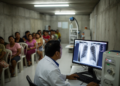
Tuberculosis still kills more people each year than almost any other infectious disease, and one of the most stubborn obstacles to ending the epidemic is a simple accounting problem: millions of people with TB symptoms seek care from private doctors, pharmacies, and clinics that never report their diagnoses to national health authorities. In countries with large, fragmented private health sectors, a substantial share of patients is treated—or misdiagnosed—entirely outside the public tuberculosis program, leaving national notification figures artificially low and treatment coverage gaps invisible. A new quasi-experimental study from Viet Nam, published in PLOS Medicine, offers some of the strongest population-level evidence yet that a carefully structured bridge between the public and private sectors can close that gap at scale, adding thousands of detected TB cases per year at a modest cost per additional notification.
The research team, led by investigators working with Viet Nam’s national tuberculosis program and international partners, evaluated a large-scale public–private mix, or PPM, intervention that ran from 2020 to 2023 across 15 provinces covering roughly 40.6 million people—about 40 percent of the country’s population. Rather than building new clinics, the intervention recruited 3,154 healthcare providers who operated outside the national TB program, including private physicians and other out-of-network facilities, and linked them to the public system through systematic screening, referral, and reporting mechanisms. The model leaned on several reinforcing components: active case finding among people with suggestive symptoms, financial incentives for providers who completed referrals, patient support to keep people moving through the care cascade, and integrated data systems that made private-sector activity visible to program managers in near real time.
The central analytical challenge was that the intervention was not rolled out uniformly. Provinces joined at different times, and the intensity of activity—measured by the volume of verbal symptom assessments conducted—varied widely from place to place and quarter to quarter. Classic evaluation methods, such as a simple before-and-after comparison or a basic difference-in-differences model, can be badly biased in this situation, particularly when treatment effects emerge gradually and vary across units. The researchers therefore used a heterogeneity-robust extension of the two-way fixed-effects framework, a family of estimators designed to handle staggered adoption and dynamic treatment effects without the negative-weighting problems that have plagued conventional approaches. Their estimand was the average treatment effect on the treated: how much the intervention changed notifications in the provinces that actually received it.
The data backbone was a province-level quarterly panel of TB notifications spanning 2016 to 2025, giving the team nine years of pre-intervention history and two years of post-intervention follow-up. All models adjusted for province fixed effects and calendar-quarter fixed effects, absorbing both time-invariant local differences and national seasonal and secular trends. Because the COVID-19 pandemic disrupted TB services worldwide—Viet Nam saw sharp notification drops during lockdown periods—the analysis explicitly accounted for these disruptions rather than letting them contaminate the intervention effect estimates. The primary outcome was the total number of TB cases notified per province per quarter.
The headline result was statistically clear. The intervention was associated with an additional 316.8 notifications per province per quarter, with a 95 percent confidence interval of 23.4 to 610.2 and a p-value of 0.034. Aggregated across 15 provinces and multiple quarters, that per-province effect translates into a substantial national contribution. National-level models, triangulated through an interrupted time-series analysis of aggregate notifications, suggested approximately 3,206 additional notifications annually, with a confidence interval of 1,658 to 4,763 and a p-value below 0.001. In other words, the intervention plausibly accounted for thousands of TB cases each year that would otherwise have gone unreported to the national program—and, critically, untreated or treated without standard support.
One of the study’s most policy-relevant features is its dose–response analysis. Using Poisson pseudo-maximum-likelihood fixed-effects models, the researchers examined whether notification rates rose in proportion to the intensity of intervention activity. They found that every 100 verbal assessments per 100,000 population was associated with a 1.4 percent increase in notifications, expressed as an incidence rate ratio of 1.00014 (95 percent CI 1.00002 to 1.00025; p = 0.018). National models showed a steeper gradient, with a 3.5 percent intensity-associated increase (IRR = 1.00035; 95 percent CI 1.00018 to 1.00052; p < 0.001). This graded relationship matters because it suggests a biological-plausibility analogue for program design: more screening activity produced proportionally more detected cases, which is what one would expect if the intervention itself, rather than some unmeasured confounder, was driving the effect.
The authors went to considerable lengths to stress-test the finding. They repeated the entire analysis using PPM-specific notifications—the subset of cases reported through the intervention channel—as the outcome, and obtained concordant results, which is reassuring because this intermediate outcome is closer to the mechanism of action and less vulnerable to unrelated shifts in public-sector reporting. They also triangulated across the extended two-way fixed-effects estimates and an interrupted time-series analysis of national data, two methods with different assumptions and different vulnerability profiles. Convergence across these approaches substantially strengthens the causal interpretation compared with any single estimate.
Cost is where the findings become genuinely striking for funders. From a funder perspective, the marginal cost per additional notification ranged from US$166 to US$458, depending on the assumptions and estimation approach. In the global TB financing landscape, where donor budgets are flat or shrinking and countries are being pushed toward sustainability, that price point compares favorably with many alternative case-finding strategies. The economic logic is that the intervention does not purchase new infrastructure; it activates existing provider networks that patients already visit, converting latent private-sector demand into notified, program-supported treatment. Each additional notification represents a person connected to quality-assured diagnosis and care, with downstream transmission benefits that the cost figures do not even capture.
The study is not without limitations, and the authors are candid about the most important one: the design was non-randomized, and high-burden provinces were purposively selected as intervention areas. Provinces chosen precisely because they have more TB might have experienced different notification trajectories regardless of the intervention. The team mitigated this risk through conservative control selection and the multi-method triangulation described above, but some residual uncertainty is unavoidable in any quasi-experimental design. The staggered deployment, which complicated the analysis, also turned out to be an analytical asset, because it created natural variation that allowed the dose–response and dynamic-effect models to be estimated at all.
The implications extend well beyond Viet Nam. Intermediary agencies—organizations that sit between national TB programs and thousands of dispersed private providers—have long been recognized as a promising way to operationalize public–private mix, but the evidence base has mostly consisted of pilot projects, small geographies, or uncontrolled before-and-after studies. This study demonstrates that the model can be evaluated rigorously at population scale and that it delivers measurable, dose-responsive gains in notifications when implemented across an entire health system. For the dozens of high-burden countries with dominant private sectors, the message is that engaging private providers through a structured intermediary is not merely a pilot-worthy idea but an affordable, scalable strategy with quantified returns. In an era of constrained global health financing, leveraging networks that already exist may be one of the most efficient paths toward closing the TB treatment coverage gap that stands between the world and its end-TB targets.
Subject of Research: Population-level evaluation of an intermediary-facilitated public–private mix intervention on tuberculosis notifications in Viet Nam
Article Title: Evaluation of the tuberculosis notification impact from an intermediary-facilitated public–private mix intervention in Viet Nam: A population-level quasi-experimental study
Article References: Vo, L. N. Q., Dong, T. T. T., Huynh, H. B., Luong, B. A., Mo, H. T. L., Codlin, A. J., Forse, R., Mai, T. D. T., Nguyen, L. P., Creswell, J., Dinh, L. V., Nguyen, H. B., Vu, P. X., Nguyen, T. D., Nguyen, L. H., Dang, T. M. H., Van Luu, S., Do, N. H., Truong, H. T., … Lönnroth, K. (2026). Evaluation of the tuberculosis notification impact from an intermediary-facilitated public–private mix intervention in Viet Nam: A population-level quasi-experimental study. PLOS Medicine, 23(9), e1005144. https://doi.org/10.1371/journal.pmed.1005144
Image Credits: AI Generated
DOI: 10.1371/journal.pmed.1005144
Keywords: tuberculosis, public–private mix, Viet Nam, TB notification, quasi-experimental study, intermediary agency, active case finding, health systems, PLOS Medicine, treatment coverage, global health financing, epidemiology
News Source: Ophelia Keating. (October 9, 2026). Viet Nam’s Private-Sector TB Bridge Added Thousands of Cases to National Notifications. Scienmag.