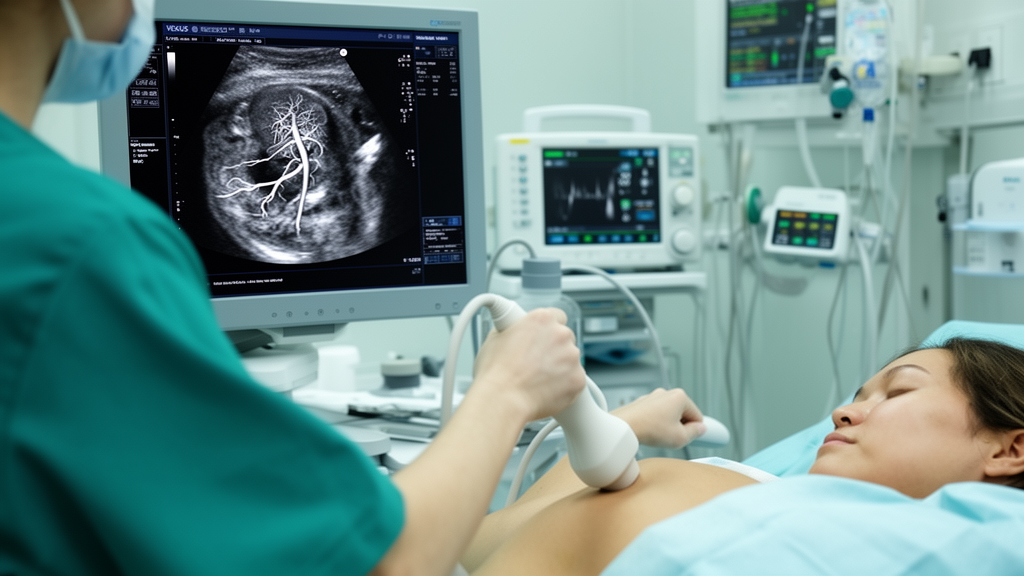
In an evaluation of ultrasound monitoring in surgical intensive care, researchers emphasize that the reported lack of association between venous excess ultrasound scores and worsening renal function cannot be definitively interpreted without rigorous construct validation. The clinical critique, presented in a letter by Sajid Kadir and Travis Murphy published in Intensive Care Medicine Experimental, examines recent findings from a cardiovascular intensive care cohort investigated by Evezard and colleagues. While that study reported no statistically significant relationship between venous excess ultrasound indications of congestion and adverse kidney outcomes, the authors argue that classification fidelity must be verified before drawing clinical conclusions.
The underlying investigation by Evezard and colleagues assessed whether venous congestion identified through the Venous Excess Ultrasound, or VExUS, score correlated with worsening renal function during loop diuretic therapy. Within that cardiovascular intensive care cohort, patients exhibiting congestive states defined by a VExUS score of two or higher showed no significant association with worsening renal function, diuretic responsiveness, or hemoconcentration. While commending the original authors for transparency regarding study limitations, Kadir and Murphy note that an apparent null result is expected if the ultrasound grading did not reliably isolate the physiological state it was designed to detect.
Physiologically, the VExUS scoring system quantifies the downstream organ-level hemodynamic consequences driven by elevated right atrial pressure, the primary upstream cause of systemic venous congestion. Elevated right atrial pressure transmits backward force through hepatic, portal, and renal venous beds, producing distinctive Doppler flow abnormalities. This physiological relationship has been demonstrated empirically by Douglas and colleagues, who showed that VExUS strongly correlates with invasively measured right atrial pressure, yielding an area under the curve of 0.99 with a 95 percent confidence interval of 0.96 to 1.00 for predicting pressures of at least 12 millimeters of mercury. Additionally, meta-analytic evidence confirms significant links between elevated VExUS grades and acute kidney injury across observational cohorts.
Despite this documented foundation, Kadir and Murphy identified substantial discordance between ultrasound classifications and standard clinical markers of congestion in the cardiovascular intensive care cohort. Invasively measured central venous pressure did not differ significantly between congestive and non-congestive groups defined by VExUS thresholds, recording median values of 14 millimeters of mercury with an interquartile range of 12 to 16 versus 14 millimeters of mercury with an interquartile range of 9 to 16, with a p-value of 0.130. Similarly, circulating concentrations of N-terminal pro-B-type natriuretic peptide did not differ significantly, showing 3540 picograms per milliliter with an interquartile range of 1468 to 6818 in congestive patients compared to 2489 picograms per milliliter with an interquartile range of 693 to 5134 in non-congestive patients, yielding a p-value of 0.147.
Neither the invasive hemodynamic marker of venous congestion nor the established heart failure biomarker validated the ultrasound-based group assignments. The authors also highlight that the original study did not report the methodology used to measure central venous pressure, omitting whether values were recorded simultaneously with ultrasound examinations, captured at end-expiration, or aligned with standardized transducer positioning. In mechanically ventilated post-surgical patients, unstandardized central venous pressure measurements represent a recognized source of error, meaning concordance between ultrasound assessments and pressure readings cannot be assumed.
Cardiac rhythm represents another major factor that may have compromised ultrasound reliability in the evaluated cohort. The original VExUS grading framework was established and validated in post-cardiac surgery patients in sinus rhythm, relying on Doppler waveform criteria that presume regular cardiac cycling. Within the cardiovascular intensive care cohort, 73 percent of patients had undergone cardiac surgery, a setting where new-onset postoperative atrial fibrillation occurs in 20 to 40 percent of cases, typically within the first 72 hours. While permanent atrial fibrillation was an exclusion criterion, paroxysmal atrial fibrillation was not excluded, and patient cardiac rhythm during ultrasound assessments was not reported.
Atrial fibrillation diminishes the hepatic vein systolic wave and abolishes the atrial reversal wave, producing a pattern where systolic velocity is lower than diastolic velocity. This pattern mimics venous congestion even in the absence of elevated right atrial pressure and is classified as mildly abnormal under the VExUS system. Furthermore, irregular R-R intervals undermine the reliability of intrarenal and portal venous Doppler measurements, which require averaging across consistent cardiac cycles. Consequently, an unknown proportion of ultrasound scores in the cohort may have reflected rhythm-related artifacts rather than true venous congestion, potentially misclassifying patients between groups.
Kadir and Murphy also cite significant temporal separation between exposure measurement and renal outcome assessment. The study evaluated VExUS serially at inclusion, two hours, and 24 hours, categorizing patients by their maximum score across those points. Notably, two of the three examinations occurred after loop diuretic therapy had already started, meaning the measured congestion profile may have already been altered by medical intervention. Additionally, worsening renal function was evaluated only at intensive care unit discharge, representing a median stay of 5 days with an interquartile range of 3 to 10 days, during which ongoing care influenced renal trajectory.
To address these methodological limitations, Kadir and Murphy recommend that future investigations of ultrasound-guided diuretic therapy incorporate concurrent invasive hemodynamic validation of ultrasound group assignments. The commentators also call for verifying and documenting cardiac rhythm at each ultrasound scan and ensuring closer temporal alignment between congestion monitoring and renal outcomes, ideally through serial ultrasound examinations coupled with longitudinal renal biomarker assessments.
Subject of Research: Construct validation of venous excess ultrasound scoring for predicting renal outcomes in surgical intensive care patients
Article Title: Interpreting VExUS and renal outcomes: the importance of construct validation in surgical ICU cohorts
Article References: Kadir, S., & Murphy, T. (2026). Interpreting VExUS and renal outcomes: the importance of construct validation in surgical ICU cohorts. Intensive Care Medicine Experimental, 14(1), Article 106. https://doi.org/10.1186/s40635-026-00959-5
Image Credits: AI Generated
DOI: 10.1186/s40635-026-00959-5
Keywords: VExUS score, Venous Excess Ultrasound, systemic venous congestion, worsening renal function, cardiovascular intensive care, central venous pressure, NT-pro-BNP, right atrial pressure, loop diuretic therapy, postoperative atrial fibrillation, hepatic vein Doppler, portal vein Doppler, intrarenal venous Doppler, construct validation, cardiac surgery, acute kidney injury, mechanical ventilation
News Source: Ophelia Keating. (November 19, 2026). VExUS Congestion Classification Requires Construct Validation in Surgical ICU Renal Studies. Scienmag.