Wiley has published Diagnostic Imaging of Zoo and Wild Mammals, establishing the first comprehensive reference textbook dedicated specifically to diagnostic imaging in nondomestic mammals. Developed through an international collaboration of experts, the publication directly addresses longstanding diagnostic gaps in the medical literature available to zoo and wildlife clinicians, researchers, and trainees.
The volume was co-edited by Dr. Mike Adkesson, president and CEO of Brookfield Zoo Chicago; Dr. Eric Hostnik, associate professor at The Ohio State University College of Veterinary Medicine and primary radiologist for the Brookfield Zoo Chicago Radiology Consulting Service; and Dr. Matthew Kinney, director of veterinary services at the San Diego Zoo Safari Park.
In total, the comprehensive project synthesizes direct contributions from 58 veterinarians and radiologists situated around the world. The editorial team intentionally paired board-certified specialists in zoological medicine with diagnostic imaging specialists to bridge frontline clinical experience with advanced radiological interpretation across diverse mammalian taxa.
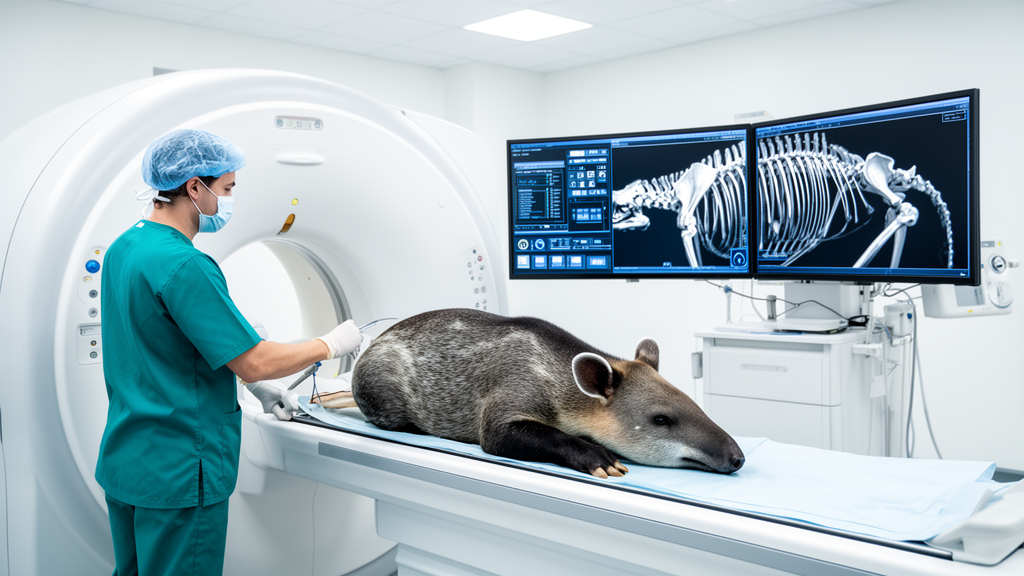
Zoological veterinarians routinely depend on diagnostic imaging modalities including X-rays, computed tomography scans, magnetic resonance imaging, and ultrasound to examine internal structures and evaluate medical conditions. However, clinicians have historically faced severe interpretive obstacles because baseline reference materials for nondomestic species have remained limited and scattered across disparate sources.
Extreme anatomical divergence across nondomestic mammals—spanning from large species such as rhinoceroses to anatomically distinct species such as pangolins—creates formidable challenges when reviewing medical scans. Clinicians must establish a rigorous understanding of baseline normal anatomy before they can reliably recognize pathological changes, traumatic injuries, or underlying diseases.
To resolve these diagnostic challenges, the textbook provides hundreds of annotated diagnostic images and clinical photographs documenting normal anatomical structures, common diseases, and recognized abnormalities. The taxonomic scope encompasses primates, elephants, rhinoceroses, marine mammals, marsupials, pangolins, and various other nondomestic mammalian orders.
Beyond anatomical interpretation, the book incorporates practical guidance on obtaining images and applying different imaging techniques. Key operational chapters address veterinary anesthesia, behavioral training techniques that allow animals to participate voluntarily in imaging evaluations, and strict protocols for radiation exposure and safety to protect both patients and human staff.
A dedicated companion website provides digital access to high-resolution images from the volume to assist detailed comparative review. The educational framework is structured to serve veterinary students, interns, and residents entering the discipline, alongside established wildlife clinicians, zoo veterinarians, and veterinary radiologists.
The textbook also illustrates how individual patient care can spur broader methodological advancements across the profession, featuring on its cover a computed tomography scan of Layla, an eastern black rhinoceros formerly housed at Brookfield Zoo Chicago. Safely positioning and imaging an anesthetized 2,000-pound rhinoceros posed major logistical complexities, followed by the challenge of interpreting scans with few comparative studies available.
Layla’s medical evaluation inspired wider collaborative efforts to expand veterinary imaging archives, contributing to the creation of the Zoo & Aquarium Radiology Database launched in 2024 by an institutional cohort that includes Brookfield Zoo Chicago, The Ohio State University, and San Diego Zoo Safari Park.
According to the project collaborators, the fundamental motivation behind the comprehensive volume was overcoming the historic fragmentation of reference materials that has long complicated zoological medical practice.
Co-editor Dr. Mike Adkesson emphasized that mastering image interpretation requires foundational familiarity with physiological baselines before pathological deviations can be accurately distinguished.
The multi-year development process prioritized synthesizing frontline clinical care with academic radiology expertise. Chapters were deliberately organized as collaborative partnerships pairing board-certified veterinary radiologists with zoological medicine specialists. As Dr. Eric Hostnik noted, zoological clinicians and academic radiologists approach a medical scan with complementary perspectives. Hostnik noted that bringing those areas of expertise together gives veterinarians a new resource to learn not only how to interpret an image, but what those findings mean for an animal's care.
Operational safety protocols detailed in the volume further emphasize the management of radiation exposure risks for both veterinary personnel and animal patients.
The scope of species coverage reflects the extraordinary morphological diversity encountered across nondomestic mammalian taxa.
Co-editor Dr. Matthew Kinney highlighted the broader clinical value of consolidating these diverse clinical insights into an accessible, lasting resource. Kinney noted that caring for such a wide range of species means veterinarians are often faced with questions that do not have an easy answer. Providing early-career interns, residents, and veterinary students with a structured evidentiary foundation assists in building systematic clinical reasoning skills, while established practitioners gain an enduring clinical benchmark to guide difficult patient care decisions across their entire professional careers.
The editors also emphasized how the individual diagnostic journey of Layla, an eastern black rhinoceros formerly resident at Brookfield Zoo Chicago, demonstrated the vital relationship between individual patient management and collective professional advancement.
That clinical challenge directly inspired broader institutional efforts to democratize access to veterinary imaging data, leading to the establishment of the Zoo & Aquarium Radiology Database in 2024.
Subject of Research: Diagnostic imaging reference standards for nondomestic mammalian veterinary medicine
Article Title: First-of-its-kind textbook fills longstanding gap in zoo and wildlife veterinary medicine
Article References: First-of-its-kind textbook fills longstanding gap in zoo and wildlife veterinary medicine. Original publication (Bibliographic details unavailable.)
Image Credits: AI Generated
DOI: Not provided
Keywords: zoo veterinary medicine, wildlife veterinary medicine, diagnostic imaging, nondomestic mammals, veterinary radiology, computed tomography, radiography, magnetic resonance imaging, veterinary ultrasonography, Brookfield Zoo Chicago, San Diego Zoo Safari Park, Ohio State University, wildlife anatomy, rhinoceros imaging, pangolin anatomy, veterinary anesthesia, radiation safety, Zoo and Aquarium Radiology Database
News Source: William Thompson. (November 20, 2026). Veterinary Specialists Release First Comprehensive Diagnostic Imaging Reference for Nondomestic Mammals. Scienmag.