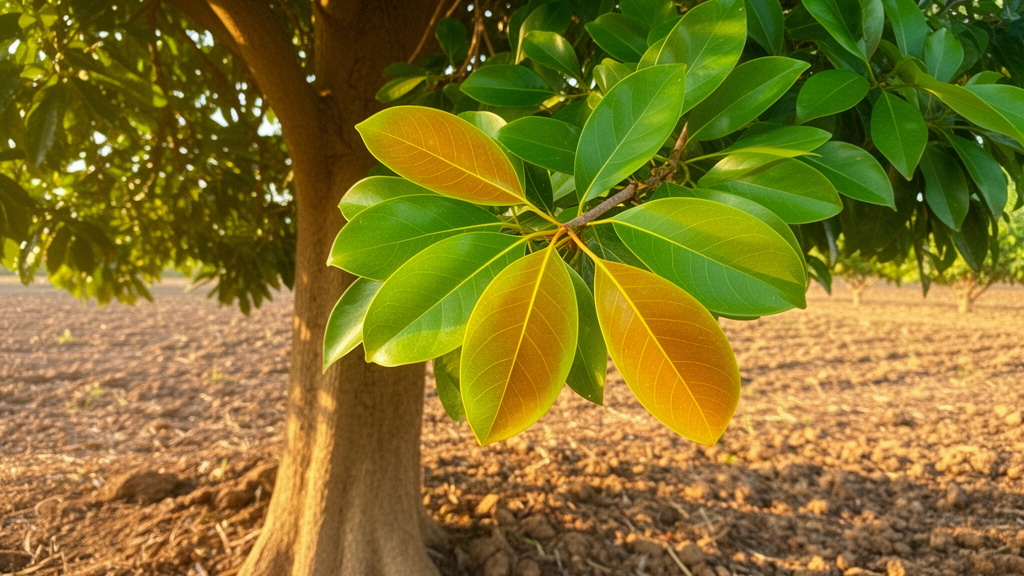
Adult camphor trees (Cinnamomum camphora (L.) J. Presl) exhibit high tolerance to moderate water deficit through coordinated physiological and biochemical plasticity, maintaining normal vegetative development while conserving nursery irrigation water. In a new study, researchers established that reducing irrigation to a moderate stress level of sixty percent of control watering induced only temporary declines in stomatal conductance and photosynthetic activity. These functional reductions proved to be entirely reversible after rewatering and caused no adverse effects on overall plant growth. The plants successfully coped with reduced moisture through the activation of internal photoprotective mechanisms paired with a marked reconfiguration of flavonoid metabolism.
The investigation addressed an urgent challenge facing horticultural production, as freshwater resources become increasingly scarce and improving water-use efficiency in nursery irrigation emerges as a critical priority. Meeting this objective requires establishing precision irrigation strategies founded on a detailed understanding of species-specific responses to water deficit. Cinnamomum camphora is widely cultivated in nursery settings for its ornamental value and its high content of bioactive secondary metabolites, yet its biochemical responses to water limitation have remained underexplored. To resolve these unknown factors, the researchers evaluated adult plants under controlled moderate and severe drought treatments, followed by recovery upon rewatering, while testing an advanced leaf monitoring tool.
The experimental design evaluated two distinct deficit levels alongside full control watering to determine the boundary between tolerable stress and physiological breakdown. Under moderate water stress, designated as WS1 and maintained at sixty percent of control irrigation, adult camphor trees demonstrated notable functional resilience. Although stomatal conductance and photosynthetic rates decreased during the deficit period, the photosynthetic apparatus suffered no lasting impairment. Following rehydration, both stomatal opening and carbon assimilation returned to baseline levels, ensuring that moderate deficit irrigation did not compromise growth parameters or overall tree vitality.
A key finding of the research was the qualitative reconfiguration of secondary metabolism under moderate water stress, particularly within the plant’s flavonoid pathway. The chemical profile of the moderately stressed trees showed a distinct rise in chlorogenic acid content alongside an increase in acetylated forms of kaempferols. The authors identified this kaempferol acetylation as a specialized adaptive strategy that enhances antioxidant defense under drought stress. This coordinated biochemical adjustment protected leaf tissues from oxidative strain during moderate water shortages, underscoring how metabolic plasticity operates in concert with photoprotective responses to maintain plant health.
In contrast to the reversibility observed under moderate deficit, severe water stress provoked lasting structural and functional damage. The severe stress treatment, designated as WS2 and set at thirty percent of control irrigation, caused irreversible damage to the photosynthetic apparatus as reflected in depressed chlorophyll fluorescence (Fv/Fm) measurements. Furthermore, severe water restriction altered leaf pigment composition and inhibited secondary metabolism rather than fostering protective chemical adjustments. Deprived of sufficient moisture and biochemical defenses, the severely stressed trees ultimately experienced significant reductions in plant height and shoot growth, revealing the strict physiological limits of the species.
Alongside physiological profiling, the study validated the pocket Leaf Water Meter, known as the pocketLWM, as an effective non-destructive tool for monitoring plant water status and tracking leaf dehydration dynamics in nursery management. The pocketLWM sensor demonstrated higher sensitivity in detecting early stress signals when compared to traditional relative water content (RWC) measurements. The authors concluded that using pocketLWM sensor technology to guide a moderate deficit irrigation regime provides a sustainable nursery production strategy, allowing growers to identify tolerable water stress thresholds and optimize water use without compromising the growth of Cinnamomum camphora.
Subject of Research: Physiological and biochemical water stress responses in Cinnamomum camphora nursery production
Article Title: Integrating plant physiological and biochemical responses with leaf water status monitoring for precise irrigation of camphor tree (Cinnamomum camphora (L.) J. Presl) in nursery settings
Article References: Detti, C., Beltrami, S., Azzini, L., Nicese, F. P., Stella, C., Righele, M., Ferrini, F., Gori, A., & Brunetti, C. (2026). Integrating plant physiological and biochemical responses with leaf water status monitoring for precise irrigation of camphor tree (Cinnamomum camphora (L.) J. Presl) in nursery settings. BMC Plant Biology. https://doi.org/10.1186/s12870-026-10404-0
Image Credits: AI Generated
DOI: 10.1186/s12870-026-10404-0
Keywords: Cinnamomum camphora, camphor tree, precision irrigation, deficit irrigation, nursery production, pocket leaf water meter, pocketLWM, flavonoid metabolism, kaempferol acetylation, chlorogenic acid, photoprotective mechanisms, stomatal conductance, photosynthetic activity, chlorophyll fluorescence, relative water content, drought tolerance
News Source: Drew Townsend. (November 20, 2026). Camphor Trees Tolerate Moderate Deficit Irrigation Through Dynamic Flavonoid Reconfiguration. Scienmag.