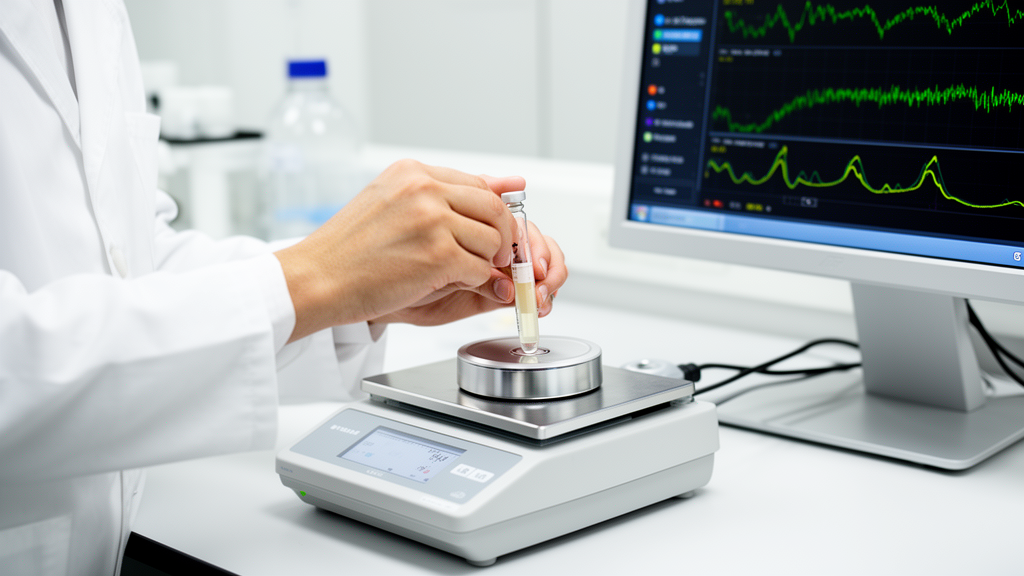
Researchers evaluating the MX3 Hydration Testing System have clarified key methodological factors governing its performance in adults assessed at rest and following exercise in the heat. In a formal response to correspondence regarding their published evaluation, the investigators addressed the interpretation of saliva osmolality readings and the comparative utility of non-invasive field hydration measures. The team emphasized that their initial study was structured to evaluate practical classification performance relative to standard field indicators rather than to establish definitive diagnostic validity for the device.
A primary point of discussion involved the selection of comparator measures used to gauge hydration status. The researchers utilized spot urine specific gravity to categorize pre-exercise hydration and measured exercise-induced body mass loss to evaluate post-exercise hypohydration. While acknowledging that urine specific gravity has inherent limitations when determined from spot samples that can be influenced by recent fluid intake, the authors noted that spot urine specific gravity has routinely served as a comparator in previous assessments of saliva-based measurements. They highlighted that no single physiological indicator, including plasma osmolality, fully captures hydration status across all conditions.
The exchange also evaluated saliva sampling procedures and the physiological plausibility of low saliva osmolality readings below 25 milliosmoles per kilogram. The investigators noted that historical investigations have reported unstimulated saliva osmolality values spanning 16 to 88 milliosmoles per liter in healthy young adult males, with other studies documenting ranges extending from approximately 20 to 300 milliosmoles per kilogram among older adults. While acknowledging that technical issues such as contamination, air bubbles, or insufficient sample volume can influence measurements, the authors stated that low readings alone do not demonstrate the occurrence of procedural errors without direct confirmatory evidence.
Addressing the distinction between analytical repeatability and biological variability, the researchers examined differences observed across separate testing days. Previous studies evaluating repeated measurements of the same collected saliva samples have reported intraclass correlation coefficients of 0.93 and 0.991, while independently collected samples taken three to five minutes apart demonstrated an intraclass correlation coefficient of 0.75. The investigators explained that their protocol assessed measurements taken across separate days under matched experimental conditions, meaning their results reflect the combined influences of biological fluctuations, sampling factors, and analytical variability rather than standalone instrument precision.
The evaluation of dehydration classification was constrained by the small number of trials that fulfilled the predefined hypohydration criteria. Across 40 experimental trials, only six met the urine specific gravity threshold of greater than 1.020, and five met the criterion of at least 2 percent exercise-induced body mass loss. Because of this small sample, the authors underscored that the resulting sensitivity and specificity calculations remain exploratory estimates rather than definitive diagnostic thresholds for operational environments.
The researchers noted that independent evaluations have similarly observed limited discriminatory capability when comparing saliva osmolality from the testing system against urine specific gravity. In an external investigation analyzing 230 paired saliva and urine samples from 118 elite athletes, researchers recorded an area under the receiver operating characteristic curve between 0.40 and 0.49. Despite differences in testing populations and protocols, these external findings align with the observation of constrained classification agreement between saliva osmolality and urine specific gravity.
Ultimately, the authors stressed the necessity of distinguishing between analytical agreement, measurement repeatability, and diagnostic classification performance when investigating portable hydration technologies. They concluded that their findings supply preliminary baseline evidence regarding saliva-based hydration assessments under heated exercise and resting conditions.
Subject of Research: Methodological evaluation of the MX3 saliva hydration testing system
Article Title: Response to Chana et al.: Methodological considerations in the assessment of the MX3 hydration testing system
Article References: Zhao, X., McKenna, Z. J., Perez, R. I., Wierick, S. C., Allen, B. M., & McDermott, B. P. (2026). Response to Chana et al.: Methodological considerations in the assessment of the MX3 hydration testing system. Physiological Reports, 14(22), Article e71215. https://doi.org/10.14814/phy2.71215
Image Credits: AI Generated
DOI: 10.14814/phy2.71215
Keywords: MX3 Hydration Testing System, saliva osmolality, hydration assessment, urine specific gravity, exercise in the heat, body mass loss, hypohydration, biological variability, test-retest reliability, intraclass correlation coefficient, diagnostic performance, field hydration indicators, spot urine sampling, exercise physiology, sports science
News Source: Drew Townsend. (November 20, 2026). Researchers Clarify Methodological Limits of Saliva Hydration Testing System. Scienmag.