In an investigation evaluating alternative curing agents for camel meat, researchers found that vegetable-derived formulations successfully lowered microbial counts in raw camel sausages during refrigerated storage, though none could fully reproduce the oxidative stability and color profile achieved by conventional sodium nitrite. The study examined the performance of whole pre-converted radish and beetroot across a ten-day refrigerated storage period, highlighting both the practical antimicrobial potential and the functional limitations of substituting synthetic curing salts with fermented plant matrices.
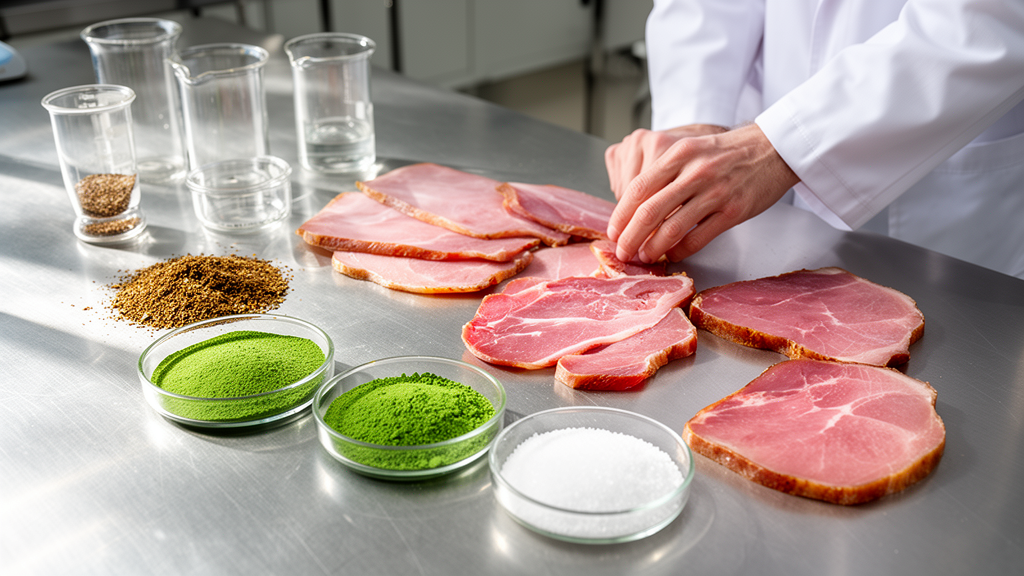
The experimental setup assessed raw camel sausages stuffed into 18-millimeter cellulose casings and sealed within resealable ziplock bags held at 4 ± 1 °C. The researchers structured six distinct treatment groups to compare standard and experimental curing regimens. A negative control formulation was prepared with no added sodium nitrite, while a positive control was cured with 156 milligrams per kilogram of conventional sodium nitrite. The remaining four test formulations incorporated pre-converted plant ingredients: fermented radish was added at concentrations of 3 percent and 6 percent in batches designated R3 and R6, respectively, while fermented beetroot was incorporated at 3 percent and 6 percent in batches designated B3 and B6, respectively.
To capture early quality shifts and longer-term changes, the investigative team measured several physical, chemical, and microbiological parameters across days 0, 5, and 10 of storage. The testing evaluated residual nitrite concentrations, total phenolic content, DPPH free-radical inhibition, thiobarbituric acid reactive substances denoting lipid oxidation, proximate composition, instrumental color, total viable microbial counts, pH levels, texture attributes, and sensory profiles. Day 5 served as the primary operational assessment following an initial recommended three-day refrigerated period, while day 10 provided an evaluation of extended storage stability.
By day 5 of refrigeration, the positive control maintained clear advantages in lipid stability and visual presentation. It exhibited the lowest thiobarbituric acid reactive substances value at 0.09 milligrams of malondialdehyde equivalents per kilogram, alongside the highest sensory color score of 8.40 among all groups. However, the 3 percent radish treatment demonstrated notable sensory parity with the positive control across most sensory metrics. Except for color, sensory scores for the 3 percent radish formulation did not differ significantly from the positive control, showing overall acceptability ratings of 7.40 compared to 7.75. Furthermore, total viable counts in sausages prepared with 6 percent radish, 3 percent beetroot, and 6 percent beetroot were lower than counts observed in both the positive and negative control formulations.
At the conclusion of the ten-day storage trial, all four vegetable-based treatments maintained lower total viable counts than the negative control, which reached 6.57 log10 colony-forming units per gram, and the positive control, which measured 6.88 log10 colony-forming units per gram. The 3 percent beetroot formulation recorded a total viable count of 5.39 log10 colony-forming units per gram and exhibited the lowest oxidation measurement among all vegetable groups at 0.30 milligrams of malondialdehyde equivalents per kilogram. In sensory testing on day 10, the taste, texture, tenderness, and overall acceptability of the 3 percent beetroot formulation did not differ significantly from the positive control, receiving an overall score of 7.15 versus 7.70, even though its color remained less acceptable and its oxidation level remained higher than both controls.
The higher beetroot concentration, B6, demonstrated the strongest antimicrobial suppression at day 10 with the lowest total viable count of 5.24 log10 colony-forming units per gram. However, this treatment also showed notable oxidative vulnerability, recording the highest oxidation measurement of 1.56 milligrams of malondialdehyde equivalents per kilogram and the lowest DPPH radical inhibition at 22.52 percent. Despite these oxidative indicators, the taste, flavor, and overall acceptability of the 6 percent beetroot sausage did not differ significantly from the positive control formulation at day 10.
The findings indicate that while fermented radish and beetroot introduce meaningful microbial control and acceptable eating qualities with reduced initial nitrite inputs, their inability to replicate the color and oxidative protection of synthetic sodium nitrite remains a core constraint. Overall, the 3 percent fermented beetroot formulation demonstrated the most balanced potential as a partial nitrite substitute over ten days of refrigerated storage.
The research underscores that the efficacy of vegetable-derived curing alternatives remains closely linked to the specific meat matrix under examination. The authors noted that although plant treatments sharply reduced ingoing nitrite requirements while preserving critical microbial suppression, the persistence of lipid oxidation and compromised visual appeal illustrate ongoing technological hurdles in matching the multifunctional performance of traditional curing salts.
Consequently, the experimental evidence indicates that plant-based ingredients such as fermented beetroot function most effectively as partial rather than complete replacements for synthetic nitrite in refrigerated camel sausage products.
Subject of Research: Pre-converted vegetable matrices as partial nitrite alternatives in camel sausages
Article Title: Pre-converted radish and beetroot matrices for curing camel sausage: residual nitrite and quality changes during refrigerated storage
Article References: Almohaimeed, S. A., Al Juhaimi, F. Y., Babiker, E. E., & Mohamed Ahmed, I. A. (2026). Pre-converted radish and beetroot matrices for curing camel sausage: residual nitrite and quality changes during refrigerated storage. Frontiers in Nutrition, 13, Article 2001329. https://doi.org/10.3389/fnut.2026.2001329
Image Credits: AI Generated
DOI: 10.3389/fnut.2026.2001329
Keywords: Camel meat, Camel sausage, Natural curing, Sodium nitrite, Fermented radish, Fermented beetroot, Residual nitrite, Refrigerated storage, Lipid oxidation, TBARS, Total viable count, Food science, Sensory evaluation, Antioxidant activity, DPPH inhibition, Meat preservation
News Source: Ophelia Keating. (November 13, 2026). Vegetable Curing Matrices Show Promise but Cannot Fully Match Synthetic Nitrite. Scienmag.