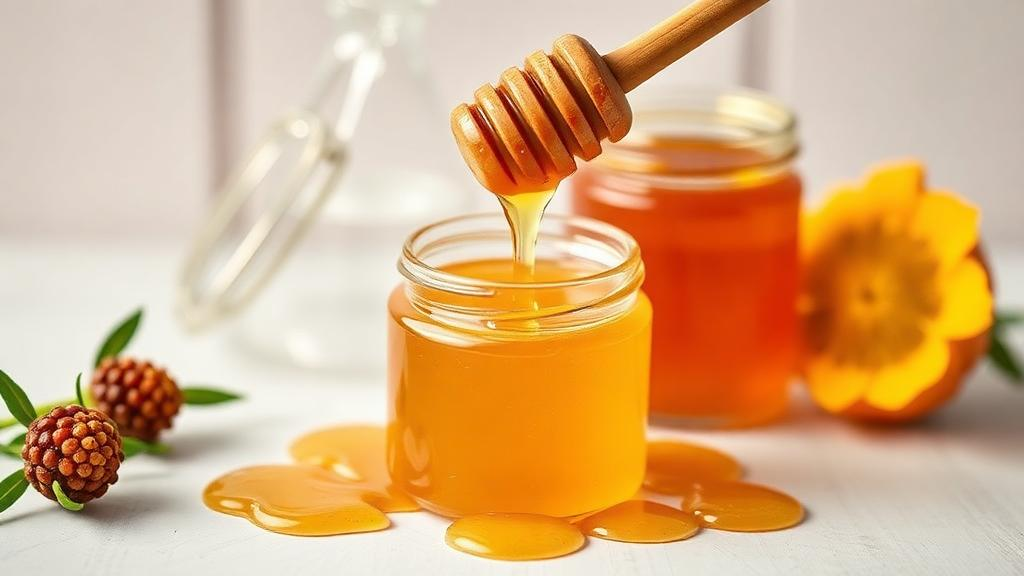
A spoonful of honey that never passed through a bee could one day fight some of the most stubborn bacteria in medicine. Researchers at Aston University in the United Kingdom have shown that carefully engineered vegan honey alternatives, built entirely from sugar-based ingredients, can be formulated to attack a notoriously drug-resistant bacterium with an effectiveness that approaches the celebrated antimicrobial power of mānuka honey. The study, published in PLOS One, offers a tantalising glimpse of a future where the healing properties of medical honey no longer depend on hives, harvests or the fortunes of declining bee populations.
The research was led by Dr Jonathan Cox, senior lecturer in biosciences at Aston University, whose laboratory has spent years probing why mānuka honey, produced by bees that pollinate the mānuka bush of New Zealand, behaves so differently from ordinary sweeteners. Mānuka honey commands premium prices precisely because of its unusual antibacterial activity, but as a natural product it varies from batch to batch, and global supplies are constrained by pressures on honeybee populations. Cox wanted to know whether the key antimicrobial components of medical-grade honey could be recreated in a fully vegan, synthetic formulation, and, in doing so, identify which of honey’s many constituents contribute most strongly to its ability to kill bacteria.
The vegan honeys at the heart of the study are not simply flavoured syrups. They are designed to mimic the natural consistency, carbohydrate structure and taste of real honey while containing no bee-derived components at all. The formulations combine sugars with inulin, a plant-derived carbohydrate that helps reproduce the texture and sweetness profile that consumers expect. Such products are already gaining popularity as veganism spreads and as shrinking honeybee numbers place pressure on honey supplies worldwide. What the Aston team set out to test was whether these culinary imitations could be upgraded into genuine antimicrobial agents.
The target organism was chosen with clinical urgency in mind. Mycobacterium abscessus is a highly drug-resistant bacterium that can cause difficult-to-treat infections of the lungs, skin and soft tissue. It is a particular menace for people with cystic fibrosis and other pre-existing lung conditions, and infections can require months or years of multidrug therapy with limited success. Previous research from Cox’s group had already demonstrated that mānuka honey is active against this bacterium, making it a natural benchmark for any synthetic alternative. With new treatment options urgently needed, the researchers tested their vegan honey formulations against laboratory cultures of the organism, measuring both the ability to halt bacterial growth and the ability to kill bacteria outright.
The results pointed to two ingredients as the stars of the show. Methylglyoxal, often abbreviated to MGO, is the small reactive molecule long credited with much of mānuka honey’s distinctive antibacterial punch. Alongside it, the team found that enzyme-based systems capable of generating hydrogen peroxide within the honey were equally critical. Hydrogen peroxide is a familiar antiseptic, and in real honey it is produced slowly by an enzyme introduced by bees; in the vegan formulations, the researchers engineered comparable peroxide-generating chemistry directly into the sugar matrix. When MGO and these peroxide-producing systems were combined, the formulations reached their peak performance.
Strikingly, the most effective vegan honey preparations against M. abscessus were those containing combinations of MGO and the enzyme-based peroxide systems, and the best of these formulations did not merely slow the bacterium down. They could kill it. That distinction matters, because bactericidal activity against a pathogen as resilient as M. abscessus is a demanding benchmark. The finding suggests that the two antimicrobial mechanisms do not simply add together but appear to work in concert, a synergy that mirrors what clinicians and food scientists have long suspected about natural honey’s potency.
For Cox, the implications run in two directions. On one front, the work demonstrates that some of the beneficial antimicrobial properties of medical honey can potentially be reproduced without using any bee-derived products, opening the door to sustainable, reproducible alternatives whose composition can be standardised in a way that natural honey never can. On the other, by building honey from the ground up, ingredient by ingredient, the researchers gain a powerful experimental tool for understanding how natural honey functions. Removing or adding individual components in a controlled background reveals which factors carry the antimicrobial load, knowledge that may help guide the design of next-generation antimicrobial therapies.
The next steps, Cox says, will be to optimise the formulations and to better understand how the different antimicrobial components work together. Future work could also test the efficacy of the vegan honeys against other clinically important disease-causing bacteria, extending the analysis beyond M. abscessus to a broader panel of pathogens. Each additional organism tested will help map the boundaries of the approach and clarify which infections might realistically be treated with honey-inspired products.
Looking further ahead, Cox suggests that the research could support the development of sustainable honey-inspired antimicrobial products for wound care or other topical applications, without relying on bee-derived ingredients. Honey has been used on wounds for millennia, and modern medical-grade honeys are already approved dressings in some clinical settings. A synthetic equivalent whose active ingredients are defined, standardised and free of agricultural variability could make such treatments cheaper, more consistent and more widely available, while sidestepping the ethical and ecological concerns of the beekeeping industry.
The broader context gives the work particular resonance. Antibiotic resistance is steadily eroding the effectiveness of conventional drugs, and bacteria such as M. abscessus sit at the difficult end of that spectrum, resistant to many of the agents clinicians would normally reach for. At the same time, honeybee declines are threatening not only pollination services but also the supply of the natural products that have inspired this line of research. A vegan honey that captures the antimicrobial essence of mānuka without the hive addresses both pressures at once. The Aston study, published as ‘Modifications to a vegan artificial honey result in inhibitory activity against Mycobacterium abscessus’, is an early step rather than a finished therapy, but it demonstrates that the chemistry of one of nature’s most prized remedies can be rebuilt in a laboratory, one sugar and one enzyme at a time.
Subject of Research: Engineering vegan honey alternatives with antimicrobial activity against Mycobacterium abscessus
Article Title: Aston University research finds vegan honey could be made with similar antimicrobial properties to mānuka honey
Article References: Aston University research finds vegan honey could be made with similar antimicrobial properties to mānuka honey. (n.d.). Original publication
Image Credits: AI Generated
DOI: Not provided
Keywords: vegan honey, mānuka honey, antimicrobial, Mycobacterium abscessus, methylglyoxal, hydrogen peroxide, antibiotic resistance, wound care, Aston University, PLOS One, honeybees, inulin
News Source: Ophelia Keating. (October 15, 2026). Vegan honey engineered to match mānuka’s bacteria-killing power. Scienmag.