A 12-week variable dual-task training program led to immediate gains in functional lower-limb strength alongside delayed improvements in mobility, inhibitory control, and short-term memory among community-dwelling older adults, according to a randomized waitlist-controlled trial published in BMC Geriatrics. The study evaluated both the immediate and longer-term adaptations to an intervention combining concurrent cognitive and motor demands, testing whether functional benefits generalize beyond specifically practiced tasks and persist over time.
The investigation enrolled 50 community-dwelling adults aged 65 years and older, including participants meeting diagnostic criteria for mild cognitive impairment. Participants were randomly allocated to either an intervention group of 30 individuals or a waitlist control group of 20 individuals. The researchers noted that while progressive declines in physical and cognitive function accompany aging, evidence demonstrating that the benefits of dual-task exercise extend beyond trained activities or endure over follow-up periods has remained limited.
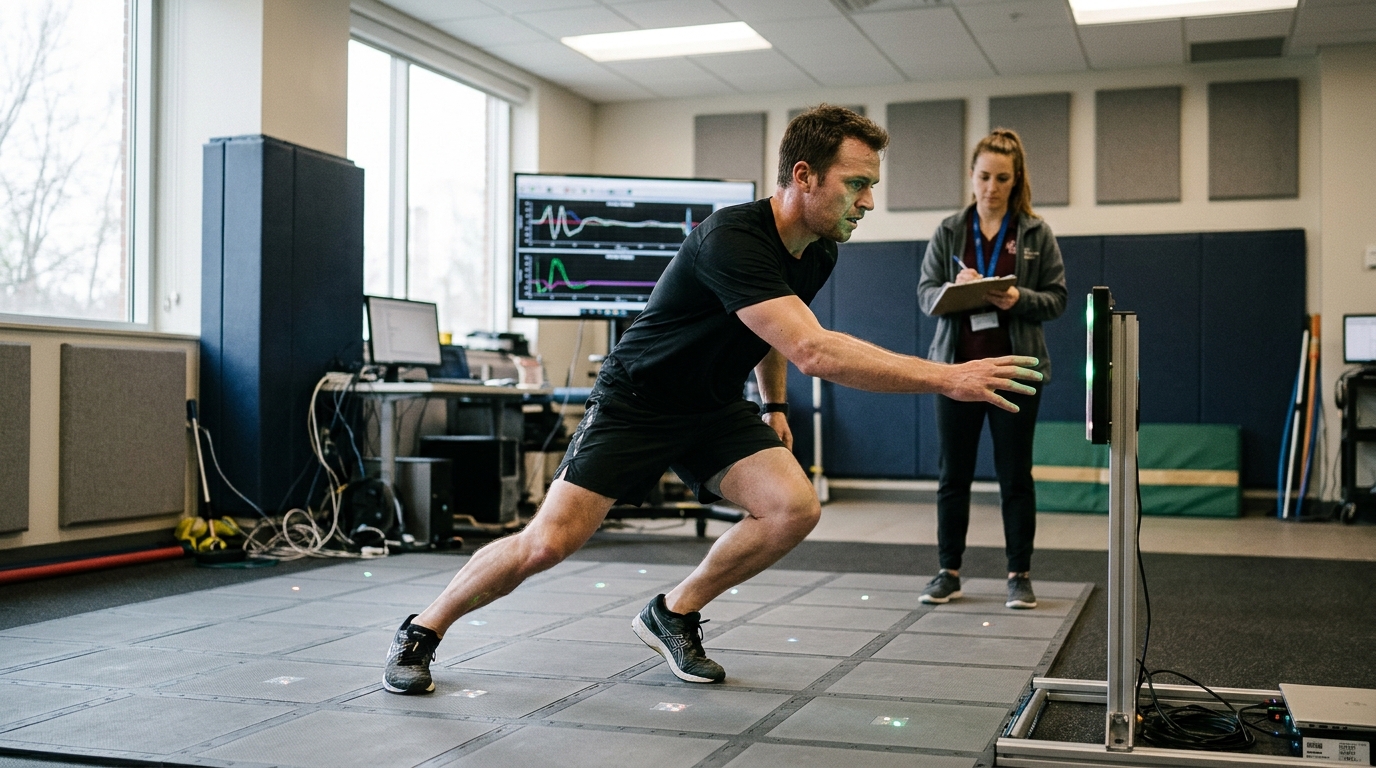
Participants assigned to the intervention group completed a 12-week program consisting of two 60-minute sessions per week, amounting to 24 total sessions. The exercise protocol was structured to be highly variable across cognitive and motor demands in order to minimize task-specific learning and foster adaptable performance. Outcome assessments took place across three intervals: baseline, immediately post-intervention, and at a three-month follow-up.
To evaluate physical and cognitive function, the researchers administered a test battery comprising the Five Times Sit-to-Stand Test, the Timed Up and Go Test, the Eriksen Flanker Test, the Trail Making Test, and the Digit Span Test. Between-group effects and longitudinal trajectories within the intervention cohort were analyzed using linear and generalized linear mixed models under an intention-to-treat approach.
Immediately following the 12-week intervention, participants in the training group demonstrated a statistically significant improvement in functional lower-limb strength relative to the waitlist control group on the Five Times Sit-to-Stand Test, showing a significant Group by Time interaction (p = 0.005) and a standardized mean difference of 0.54. This lower-limb strength gain was maintained within the intervention group at the three-month follow-up assessment. In contrast, no statistically significant between-group differences were observed immediately post-intervention for the remaining motor or cognitive measures.
Delayed adaptations emerged within the intervention group during the subsequent three-month follow-up window. Improvements in functional mobility on the Timed Up and Go Test (standardized mean difference = 0.28), inhibitory control on the Eriksen Flanker Test reaction time (standardized mean difference = 0.40 to 0.42), and short-term memory on the forward Digit Span Test (standardized mean difference = 0.62) were absent immediately post-intervention and appeared only at follow-up. The authors concluded that these findings point to two complementary pathways: task-specific overlap between training and testing explains immediate physical gains, whereas variable practice supports a post-training consolidation process that yields broader cognitive and mobility improvements over time.
Subject of Research: Effects of variable dual-task training on motor and cognitive function in older adults
Article Title: Immediate task-specific and delayed generalized adaptations to variable dual-task training in community-dwelling older adults: a randomized waitlist-controlled trial
Article References: Escalona N., J. A., Schmidt, D., Strohbach, M., & Germano, A. M. C. (2026). Immediate task-specific and delayed generalized adaptations to variable dual-task training in community-dwelling older adults: a randomized waitlist-controlled trial. BMC Geriatrics. https://doi.org/10.1186/s12877-026-08667-1
Image Credits: AI Generated
DOI: 10.1186/s12877-026-08667-1
Keywords: dual-task training, older adults, cognitive function, motor function, randomized controlled trial, geriatrics, inhibitory control, functional mobility, Immediate, task-specific, delayed, generalized
News Source: Ophelia Keating. (November 8, 2026). Variable Dual-Task Training Sparks Immediate Physical and Delayed Cognitive Gains. Scienmag.