

• HOME
  • NEWS
  • EXPLORE
    • CAREER
      • Companies
      • Jobs
    • EVENTS
    • iGEM
      • News
      • Team
    • PHOTOS
    • VIDEO
    • WIKI
  • BLOG
  • COMMUNITY
    • FACEBOOK
    • INSTAGRAM
    • TWITTER
Saturday, February 7, 2026
BIOENGINEER.ORG
No Result
View All Result
  • Login
  • HOME
  • NEWS
  • EXPLORE
    • CAREER
      • Companies
      • Jobs
        • Lecturer
        • PhD Studentship
        • Postdoc
        • Research Assistant
    • EVENTS
    • iGEM
      • News
      • Team
    • PHOTOS
    • VIDEO
    • WIKI
  • BLOG
  • COMMUNITY
    • FACEBOOK
    • INSTAGRAM
    • TWITTER
  • HOME
  • NEWS
  • EXPLORE
    • CAREER
      • Companies
      • Jobs
        • Lecturer
        • PhD Studentship
        • Postdoc
        • Research Assistant
    • EVENTS
    • iGEM
      • News
      • Team
    • PHOTOS
    • VIDEO
    • WIKI
  • BLOG
  • COMMUNITY
    • FACEBOOK
    • INSTAGRAM
    • TWITTER
No Result
View All Result
Bioengineer.org
No Result
View All Result
Home NEWS Science News Biology

Vapor harvesting gets the edge

Bioengineer by Bioengineer
August 14, 2017
in Biology
Reading Time: 2 mins read
0
Share on FacebookShare on TwitterShare on LinkedinShare on RedditShare on Telegram
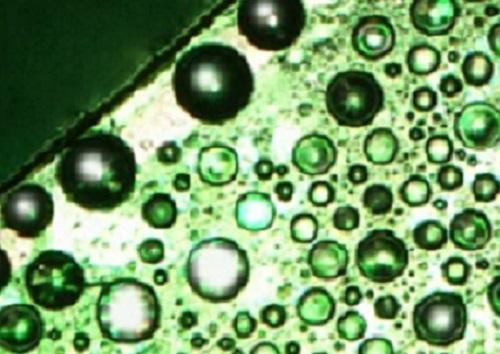
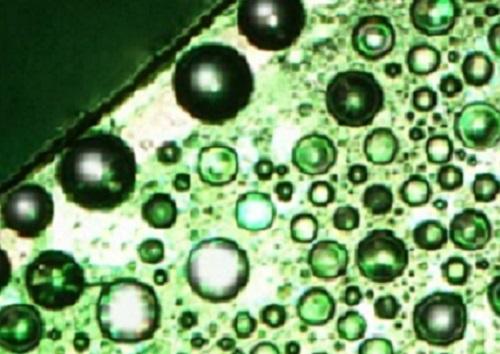
IMAGE

Credit: © 2017 KAUST

Water harvesting is an age-old technique of collecting atmospheric water vapor. Researchers are looking to nature to learn about the efficiency of surfaces used to collect the vapor.

Scientists have long assumed that the capacity of water-harvesting surfaces to interact with water–their wettability–should be a crucial factor in their performance, but this latest research at KAUST reveals a surprise.

"Whether a surface 'loves' or 'hates' water does not matter that much for its final water-harvesting performance," says Peng Wang of the KAUST Water Desalination and Reuse Center. Wang's use of the terms love and hate reflects the technical distinction between surfaces that are hydrophilic (water loving) and hydrophobic (water hating).

Research at KAUST aims to improve the efficiency of collection methods for water harvesting–an important source of drinking water in regions with little rainfall but high humidity–through considering the influence of attributes of different surfaces, including wettability and edge effect. Wang performed experimental and theoretical studies on the effect of surface wettability, edge structures and wettability hysteresis working with his Ph.D. student Yong Jin and Lianbin Zhang, a former researcher from his KAUST lab, who is now at Huazhong University in China.

Rather than the surface's wettability properties being paramount, the team's research showed that variation in the edge of the surface structures significantly affects water-droplet formation, and that rough-edged structures mimicking some found in nature are highly effective.

"Trying to develop artificial surfaces like the surface of a cactus seems a good way to go," says Wang. His earlier work also explored the water-catching power of the exoskeleton of desert beetles.

Water harvesting can be achieved passively by either exposing a surface to humid air or actively, for example, by cooling the surface to encourage water condensation–similar to the operation of a domestic dehumidifier. Passive harvesting has a long history, with suspended fabrics used in several cultures to gather water from the air.

"The field of water harvesting is both mature and primitive at the same time," explains Wang. "It is mature because of its ancient origins yet primitive because of the limited understanding of the efficiency of different surfaces."

The team's future plans in this field will complement their related interest in using solar energy to evaporate seawater and wastewater to then condense purified liquid water from the resulting vapor. "The knowledge we are obtaining from studying atmospheric water harvesting will definitely be a help for other research," says Wang.

###

Media Contact

Michelle D'Antoni
[email protected]

http://kaust.edu.sa/

Original Source

https://discovery.kaust.edu.sa/en/article/392/vapor-harvesting-gets-the-edge http://dx.doi.org/10.1002/gch2.201700019


Share12Tweet8Share2ShareShareShare2

Related Posts

New Study Uncovers Mechanism Behind Burn Pit Particulate Matter–Induced Lung Inflammation

New Study Uncovers Mechanism Behind Burn Pit Particulate Matter–Induced Lung Inflammation

February 6, 2026

DeepBlastoid: Advancing Automated and Efficient Evaluation of Human Blastoids with Deep Learning

February 6, 2026

Navigating the Gut: The Role of Formic Acid in the Microbiome

February 6, 2026

AI-Enhanced Optical Coherence Photoacoustic Microscopy Revolutionizes 3D Cancer Model Imaging

February 6, 2026
Please login to join discussion

POPULAR NEWS

  • Robotic Ureteral Reconstruction: A Novel Approach

    Robotic Ureteral Reconstruction: A Novel Approach

    82 shares
    Share 33 Tweet 21
  • Digital Privacy: Health Data Control in Incarceration

    63 shares
    Share 25 Tweet 16
  • Study Reveals Lipid Accumulation in ME/CFS Cells

    57 shares
    Share 23 Tweet 14
  • Breakthrough in RNA Research Accelerates Medical Innovations Timeline

    53 shares
    Share 21 Tweet 13

About

We bring you the latest biotechnology news from best research centers and universities around the world. Check our website.

Follow us

Recent News

Palmitoylation of Tfr1 Drives Platelet Ferroptosis and Exacerbates Liver Damage in Heat Stroke

Oxygen-Enhanced Dual-Section Microneedle Patch Improves Drug Delivery and Boosts Photodynamic and Anti-Inflammatory Treatment for Psoriasis

Scientists Identify SARS-CoV-2 PLpro and RIPK1 Inhibitors Showing Potent Synergistic Antiviral Effects in Mouse COVID-19 Model

Subscribe to Blog via Email

Enter your email address to subscribe to this blog and receive notifications of new posts by email.

Join 73 other subscribers
  • Contact Us

Bioengineer.org © Copyright 2023 All Rights Reserved.

Welcome Back!

Login to your account below

Forgotten Password?

Retrieve your password

Please enter your username or email address to reset your password.

Log In
No Result
View All Result
  • Homepages
    • Home Page 1
    • Home Page 2
  • News
  • National
  • Business
  • Health
  • Lifestyle
  • Science

Bioengineer.org © Copyright 2023 All Rights Reserved.
