


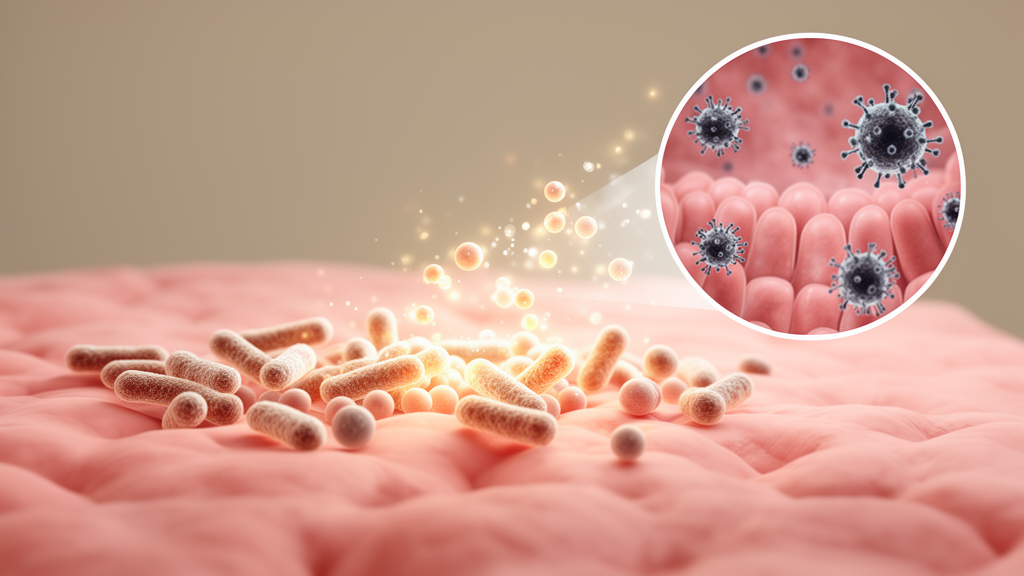
A prospective study of 76 HPV-positive Chinese women has linked the composition of the vaginal microbiome and its metabolic output to whether an infection clears on its own or persists and progresses toward cervical lesions. The research, published in Annals of Clinical Microbiology and Antimicrobials, stratified participants into three clinical outcome groups: 18 women whose HPV infection cleared naturally, 20 who showed persistence with low-grade cervical intraepithelial neoplasia (CIN1), and 38 who developed CIN2 or more severe lesions.
Vaginal swabs collected from the participants were analyzed with an integrated approach combining microbiome profiling, metabolomics, and Bayesian network analysis. The results showed that communities dominated by Lactobacillus bacteria were associated with HPV clearance and lower CIN grade. These Lactobacillus-dominant communities fell mainly into two community state types: one dominated by Lactobacillus crispatus and another dominated by Lactobacillus iners.
The metabolic dimension of the findings proved particularly informative. Community state type was the most significant factor shaping the vaginal metabolomic profile, with a statistical significance of p < 0.0001. Samples dominated by Lactobacillus showed enrichment of metabolites involved in amino acid metabolism, while samples not dominated by Lactobacillus exhibited elevated levels of metabolites involved in pyrimidine metabolism and biogenic amines.
Species-level differences also emerged. Communities dominated by Lactobacillus crispatus were enriched in amino acid metabolism and in certain other metabolites, such as indole-3-lactic acid, compared with communities dominated by Lactobacillus iners. Notably, the metabolomic differences between Lactobacillus-dominant and non-Lactobacillus-dominant samples were more pronounced than the differences observed across the clinical groupings, suggesting that the microbial environment itself may be a stronger driver of metabolic variation than disease stage alone.
The Bayesian network analysis pointed to a bidirectional relationship between the microbiome and HPV outcomes. In one direction, the community state type appeared to influence metabolites, which in turn were linked to clinical group, a pathway the authors describe as microbiome affecting HPV outcomes through metabolic mediators. In the other direction, HPV persistence appeared potentially capable of modulating the microbiome, which then altered the metabolite profile.
The authors conclude that these interplays may establish a feedback loop in which the vaginal microbiome influences HPV persistence through metabolic mediators, while HPV infection in turn potentially reshapes the microbiome, thereby further promoting HPV persistence and progression of cervical intraepithelial neoplasia. They emphasize that metabolic differences exist both between Lactobacillus-dominant and non-dominant environments and between different Lactobacillus species.
The study addresses a recognized gap in the literature. Prior work had associated the vaginal microbiome with the risk of persistent HPV infection and with progression of cervical intraepithelial neoplasia, but prospective studies examining these associations, particularly from a functional or metabolic perspective, have been lacking. By following women with known clinical outcomes of their HPV infection and measuring both microbial communities and metabolite profiles, the study offers a functional view of how the vaginal environment may relate to infection outcomes.
As with any observational study of this size, the findings describe associations and proposed network relationships rather than established causal mechanisms, and the modest group sizes, particularly the 18 women in the clearance group, warrant cautious interpretation. The article was published as open access on 10 September 2026 and is being shared early as a peer-reviewed accepted version that remains citable and carries a permanent DOI, subject to further edits before the final version of record.
Subject of Research: Associations between the vaginal microbiome, vaginal metabolome, and HPV persistence or clearance in Chinese women
Article Title: Vaginal microbiome and metabolome associated with HPV persistence in Chinese women: a prospective study
Article References: Yang, Q., Wu, D., Li, C., Wu, R., Du, H., & Dai, W. (2026). Vaginal microbiome and metabolome associated with HPV persistence in Chinese women: a prospective study. Annals of Clinical Microbiology and Antimicrobials. https://doi.org/10.1186/s12941-026-00885-0
Image Credits: AI Generated
DOI: 10.1186/s12941-026-00885-0
Keywords: HPV, vaginal microbiome, metabolome, Lactobacillus, cervical intraepithelial neoplasia, CIN, Bayesian network, Lactobacillus crispatus, Lactobacillus iners, prospective study, amino acid metabolism, women's health
News Source: Morgan Morrow. (October 29, 2026). Vaginal Microbiome and Metabolome Linked to HPV Persistence in Chinese Women. Scienmag.



