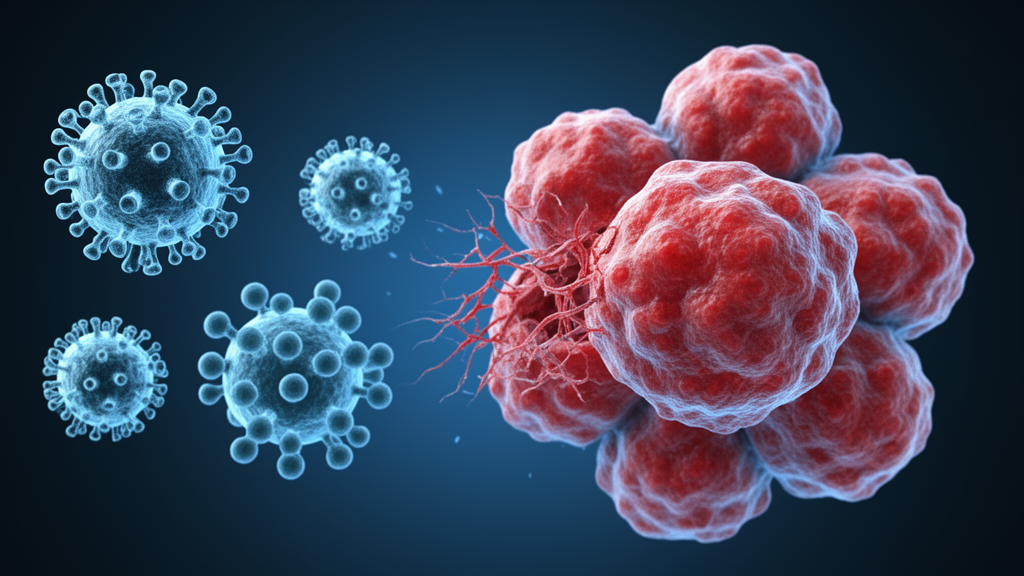
Colorectal cancer remains one of the most common and deadly malignancies worldwide, and the search for therapies that go beyond surgery, chemotherapy, and radiotherapy has led researchers to an unexpected ally: childhood vaccine viruses. A new experimental study published in Molecular Biology Reports has evaluated whether a combination of vaccine-strain measles virus and mumps virus can act as a potent oncolytic agent against colorectal cancer cells, both in laboratory cultures and in a mouse xenograft model. The findings suggest that pairing these two attenuated viruses produces a synergistic killing effect that neither virus achieves alone.
Oncolytic virotherapy rests on a deceptively simple principle: certain viruses preferentially infect and destroy cancer cells while sparing normal tissue. Vaccine strains are particularly attractive for this purpose because they have been attenuated through decades of use in immunization programs, meaning their safety profiles in humans are already well characterized. Measles virus, for instance, enters cells through receptors such as CD46 and PVRL4 (nectin-4), both of which are overexpressed on many tumor types, and high CD46 receptor density has been shown to determine preferential killing of tumor cells by oncolytic measles virus. Mumps virus, meanwhile, uses sialic acid-containing receptors and its matrix protein has been shown to activate apoptotic pathways in human colorectal cell lines.
The research team, led by investigators at 108 Military Central Hospital and Vietnam Military Medical University in Hanoi, focused on HT-29 cells, a well-established human colorectal cancer cell line. The cells were cultured in Dulbecco’s Modified Eagle Medium and infected with measles virus alone, mumps virus alone, or a one-to-one combination of the two viruses, referred to as MM. Cell viability was measured using the MTT assay, while apoptosis was quantified by flow cytometry. The combination was assessed at 48, 72, and 96 hours after infection to determine whether the two viruses interacted synergistically rather than simply adding their effects.
The results were striking. Using the Chou-Talalay combination index method, a standard quantitative framework for evaluating drug and treatment interactions, the researchers found that the MM combination demonstrated synergistic effects at all three time points, with combination index values of 0.473 at 48 hours, 0.692 at 72 hours, and 0.633 at 96 hours. A combination index below 1.0 indicates synergy, meaning the combined treatment kills more cancer cells than would be expected from the sum of the two viruses acting independently. The MM-treated group also showed significantly lower cell viability compared with groups infected with a single virus.
Beyond simply reducing viability, the combination markedly increased the rate of apoptosis, the programmed cell death pathway that viruses can trigger in infected tumor cells. Flow cytometry revealed a significantly higher apoptotic rate in the MM-treated group compared with single-virus-infected groups. This is consistent with prior work showing that measles virus nucleoprotein induces apoptosis and modulates diverse functional proteins in cultured mammalian cells, while mumps virus matrix protein activates apoptotic pathways in colorectal cell lines. The two viruses appear to converge on cell death machinery from different angles, overwhelming the tumor cell’s survival mechanisms.
To translate these in vitro findings into a living system, the team established a nude mouse xenograft model, in which HT-29 colorectal cancer cells were implanted to form tumors that could be treated with the viral combinations. Nude mice lack a functional adaptive immune system, which allows human tumor xenografts to grow and permits researchers to evaluate direct oncolytic effects without the confounding influence of a full immune response. The animals were treated with measles virus alone, mumps virus alone, or the MM combination, and tumor growth, survival, and mortality were monitored over time.
The in vivo results reinforced the laboratory findings. The MM-treated group exhibited significantly slower tumor growth compared with single-virus-treated groups, with a p value of 0.001 or less. Survival was significantly prolonged in the combination group, and mortality was reduced. Perhaps most intriguingly, the researchers observed increased proportions of innate immune cell populations in the spleen of MM-treated animals. Although nude mice cannot mount a complete adaptive immune response, the innate immune compartment, including natural killer cells and other populations, can still be engaged by viral infection and tumor cell death, and this engagement may contribute to the overall antitumor effect.
The concept of combining vaccine-strain measles and mumps viruses is not entirely new. Previous studies by overlapping research groups have shown that this combination enhances oncolytic activity against a wide range of human solid malignancies and synergistically kills hematological cancer cells, with particular focus on acute myeloid leukemia. The current study extends this approach specifically to colorectal cancer, a disease for which oncolytic virotherapy has been explored but remains far from clinical application. Prior work has demonstrated natural oncolytic activity of live-attenuated measles virus against human lung and colorectal adenocarcinomas, and recombinant measles viruses blind to certain receptors have been engineered to target colorectal cancer cells.
The mechanistic rationale for synergy between these two paramyxoviruses is grounded in their distinct receptor usage and intracellular effects. Measles virus, a morbillivirus, exploits CD46, PVRL4, and signaling lymphocyte activation molecule receptors, while mumps virus uses α2,3-linked sialic acid trisaccharides. This receptor divergence means the two viruses can enter tumor cells through different molecular doorways, potentially infecting subpopulations of cells that might be resistant to one virus alone. Once inside, both viruses can trigger apoptosis through overlapping and complementary pathways, and the resulting tumor cell lysis releases damage-associated molecular patterns that can stimulate innate immune responses.
The study’s authors conclude that the MM combination demonstrated synergistic and superior oncolytic efficacy against HT-29 colorectal cancer cells compared with single-virus therapies in both in vitro and in vivo xenograft models. While these findings are encouraging, the research remains at the experimental stage, and the leap from nude mouse xenografts to human patients involves substantial hurdles, including the development of antiviral immunity in immunocompetent individuals, delivery of sufficient viral doses to tumor sites, and the need to demonstrate safety and efficacy in clinical trials. Nevertheless, the work adds to a growing body of evidence that common childhood vaccine viruses, long celebrated for preventing disease, may also hold therapeutic promise against one of the world’s most prevalent cancers.
Subject of Research: Oncolytic virotherapy
Article Title: Anti-cancer efficacy of combined vaccine-strain measles and mumps viruses against colorectal cancer: an experimental study
Article References: Hung, T. X., Tung, N. D., Huong, N. T., Hoa, D. T., & Cuong, L. D. (2026). Anti-cancer efficacy of combined vaccine-strain measles and mumps viruses against colorectal cancer: an experimental study. Molecular Biology Reports, 53(1), Article 1537. https://doi.org/10.1007/s11033-026-12724-8
Image Credits: AI Generated
DOI: 10.1007/s11033-026-12724-8
Keywords: measles virus, mumps virus, colorectal cancer, oncolytic virotherapy, HT-29 cells, apoptosis, xenograft model, vaccine strains, Anti-cancer, efficacy, combined, vaccine-strain
News Source: Kristina Jarvis. (October 19, 2026). Vaccine-Strain Measles and Mumps Viruses Team Up to Kill Colorectal Cancer Cells. Scienmag.