• HOME
  • NEWS
  • EXPLORE
    • CAREER
      • Companies
      • Jobs
    • EVENTS
    • iGEM
      • News
      • Team
    • PHOTOS
    • VIDEO
    • WIKI
  • BLOG
  • COMMUNITY
    • FACEBOOK
    • INSTAGRAM
    • TWITTER
Monday, October 5, 2026
BIOENGINEER.ORG
No Result
View All Result
  • Login
  • HOME
  • NEWS
  • EXPLORE
    • CAREER
      • Companies
      • Jobs
        • Lecturer
        • PhD Studentship
        • Postdoc
        • Research Assistant
    • EVENTS
    • iGEM
      • News
      • Team
    • PHOTOS
    • VIDEO
    • WIKI
  • BLOG
  • COMMUNITY
    • FACEBOOK
    • INSTAGRAM
    • TWITTER
  • HOME
  • NEWS
  • EXPLORE
    • CAREER
      • Companies
      • Jobs
        • Lecturer
        • PhD Studentship
        • Postdoc
        • Research Assistant
    • EVENTS
    • iGEM
      • News
      • Team
    • PHOTOS
    • VIDEO
    • WIKI
  • BLOG
  • COMMUNITY
    • FACEBOOK
    • INSTAGRAM
    • TWITTER
No Result
View All Result
Bioengineer.org
No Result
View All Result
Home Headlines

UTSA researcher receives $670,000 grant to fight malaria

Bioengineer.org by Bioengineer.org
January 29, 2018
in Headlines, Health, Science News
Reading Time: 2 mins read
0
Share on FacebookShare on TwitterShare on LinkedinShare on RedditShare on Telegram
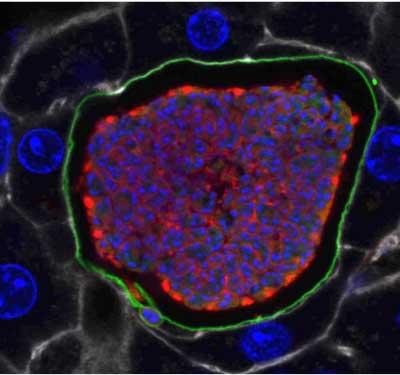
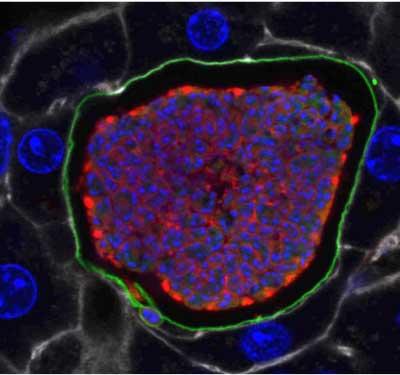
IMAGE

IMAGE: This is an immunofluorescence image of a mature Plasmodium berghei liver stage parasite in murine liver.

Credit: Kirsten Hanson

Kirsten Hanson, assistant professor of biology at the University of Texas at San Antonio (UTSA), is the principal investigator for a $670,000 grant from the Bill & Melinda Gates Foundation to develop novel liver-stage antimalarial treatments to stop the parasite that causes malaria before the disease is able to take hold.

Despite great progress in malaria control in recent years, close to half a million people still die annually from malaria, many of them in sub-Saharan Africa. Past efforts to eradicate the disease have been hindered by the lack of quality, affordable preventative measures in the region and because malaria, quite simply, is a very tricky disease. In the context of current efforts to eradicate malaria, new prophylactic drugs will be needed to protect people living in areas that currently have a substantial malaria burden.

"An American traveling in a place like Gabon, in West Africa, would need to take a prophylactic drug to prevent malaria," Hanson said. "On the other hand, a Gabonese woman, who has lived there her entire life would usually have built up a degree of immunity to malaria, which would prevent her from becoming seriously ill despite being infected with the malaria parasite. If she moved away to an area with little or no disease, though, she would lose her immunity to malaria."

Losing that immunity can be catastrophic. After a massive and initially successful push to eliminate malaria in Madagascar, for instance, most people lost their natural resistance to the disease. But malaria was not completely wiped out on the island nation, and it came back with a vengeance in the 1980s, causing tens of thousands of deaths.

"On the path to eradication, we will need new tools, including medicines that can be taken prophylactically to protect people from malaria " she said.

Hanson's top-tier research focuses on the liver stage of the malaria parasite, lifecycle, which is absolutely essential for the parasite, but causes no disease at all. After a person is infected through a mosquito bite, the parasite travels to the liver, where it multiplies rapidly and then proceeds to infect the blood.

"If we can target the parasites before they reach the blood, then people would not become ill with malaria, and they wouldn't be able to transmit the disease," she said. "Additionally, if we can find compounds that kill the parasite as late as possible in its development in the liver, we may be able to harness these "failed" liver stages to provide some immune protection against future encounters with the parasite."

Hanson's BMGF grant will support her group's efforts to find these types of antimalarial compounds, working in collaboration with the Center for Innovative Drug Discovery at UTSA and the UT Health and Science Center. The new grant was awarded as part of the Foundation's Grand Challenges Explorations program, which issues specific challenges to solicit and fund key advances in preventing, treating and curing diseases of the developing world.

###

Media Contact

Joanna Carver
[email protected]
210-243-4557
@utsa

http://www.utsa.edu

Share12Tweet8Share2ShareShareShare2

Related Posts

MIND Diet Boosts Antioxidant Defenses and Mood in Diabetic Women with Insomnia

MIND Diet Boosts Antioxidant Defenses and Mood in Diabetic Women with Insomnia

October 5, 2026
Carbon Dots and Molecular Metal Clusters Team Up to Split Light into Hydrogen

Carbon Dots and Molecular Metal Clusters Team Up to Split Light into Hydrogen

October 5, 2026

Ethiopian Sesame Trial Finds a Champion Variety That Wins Almost Everywhere

October 5, 2026

Tiny Field-Driven Particles Are Being Recast as Distributed Micromachines

October 5, 2026
Please login to join discussion

POPULAR NEWS

  • Alloys That Shrink Their Own Grains: New PIX Mechanism Refines Metals With Heat Alone

    Alloys That Shrink Their Own Grains: New PIX Mechanism Refines Metals With Heat Alone

    29 shares
    Share 12 Tweet 7
  • Endurance Exercise Reshapes the Liver in Males and Females Through Distinct Molecular Routes

    29 shares
    Share 12 Tweet 7
  • Single Transcription Factor PU.1 Rapidly Converts Fibroblasts into Macrophage-Lineage Cells

    29 shares
    Share 12 Tweet 7
  • New Scale Measures How Ready Nurse Educators Really Are for the AI Era

    29 shares
    Share 12 Tweet 7

About

We bring you the latest biotechnology news from best research centers and universities around the world. Check our website.

Follow us

Recent News

Alloys That Shrink Their Own Grains: New PIX Mechanism Refines Metals With Heat Alone

Endurance Exercise Reshapes the Liver in Males and Females Through Distinct Molecular Routes

Single Transcription Factor PU.1 Rapidly Converts Fibroblasts into Macrophage-Lineage Cells

Subscribe to Blog via Email

Success! An email was just sent to confirm your subscription. Please find the email now and click 'Confirm' to start subscribing.

Join 85 other subscribers
  • Contact Us

Bioengineer.org © Copyright 2023 All Rights Reserved.

Welcome Back!

Login to your account below

Forgotten Password?

Retrieve your password

Please enter your username or email address to reset your password.

Log In
No Result
View All Result
  • Homepages
    • Home Page 1
    • Home Page 2
  • News
  • National
  • Business
  • Health
  • Lifestyle
  • Science

Bioengineer.org © Copyright 2023 All Rights Reserved.