New program to train the next generation of diverse researchers in the biomedical sciences
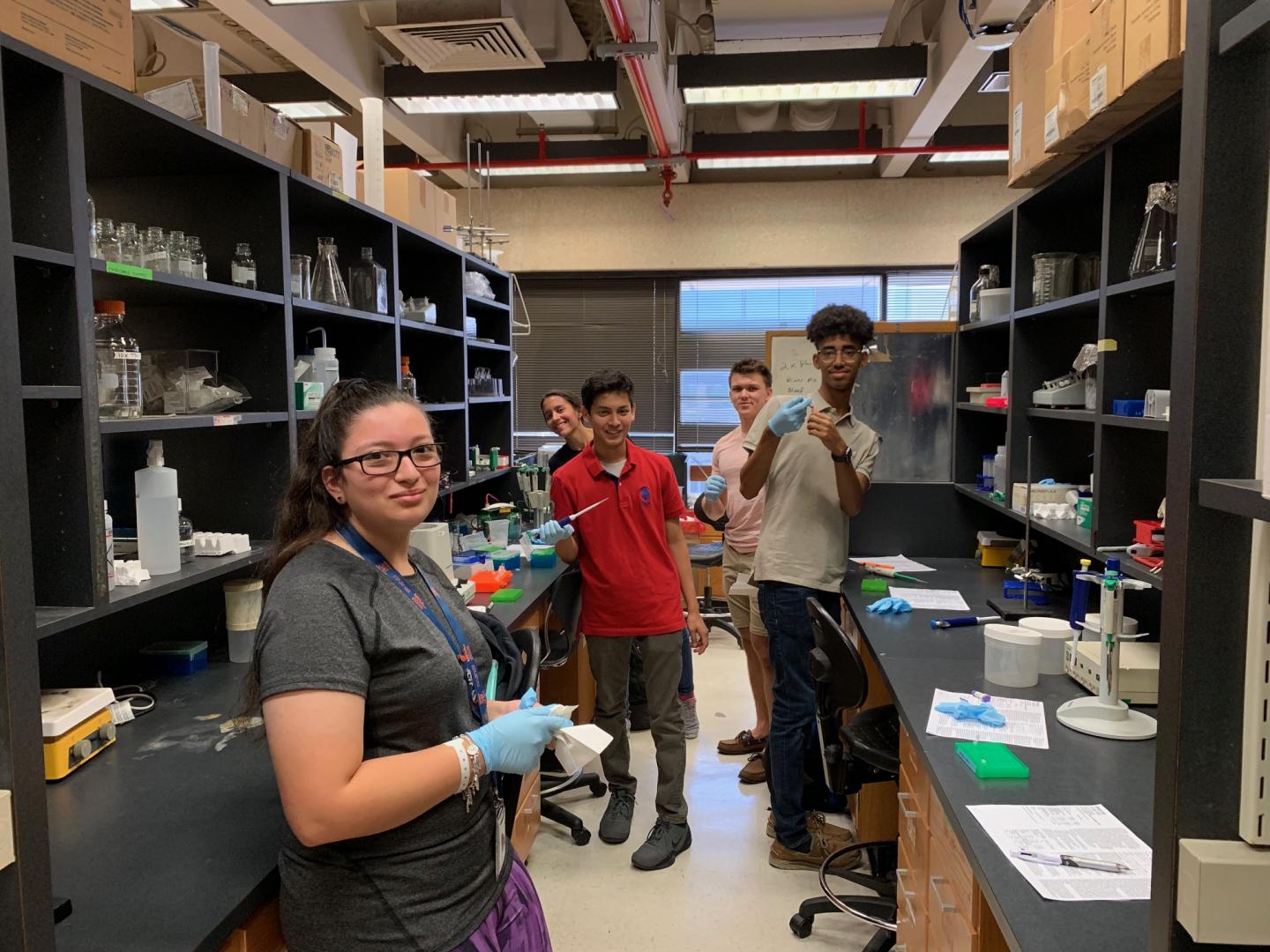
Credit: UTSA
Oct. 10, 2019 — To support student success, UTSA is offering a new program to train the next generation of diverse researchers in the biomedical sciences.
The National Institutes of Health’s National Institute of Biomedical Imaging and Bioengineering has awarded UTSA a five-year, nearly $1.3 million grant to create the Enhancing Science, Technology, Engineering, and Math Educational Diversity (ESTEEMED) Program.
ESTEEMED is designed to ensure that talented minority or disadvantaged students obtain the experience and skills they need to succeed in doctoral programs and research-intensive careers in the biomedical sciences.
The participation of underrepresented racial and ethnic minorities in the science and engineering workforce has been a concern of policymakers who are interested in solving emerging challenges in health care.
UTSA is diversifying the pipeline of scientists and engineers entering the workforce by offering this program to undergraduates from populations underrepresented racially, economically or through disability.
The majority of UTSA students identify as Hispanic (56%), contributing to a 64% underrepresented minority student population. Nearly 45% of UTSA undergraduates are first-generation students whose parents or guardians have not earned a four-year degree.
“ESTEEMED is a comprehensive training program that will enable highly talented underrepresented students to pursue their dreams of becoming biomedical researchers,” says Gail P. Taylor, ESTEEMED program director. “The UTSA research environment, which is highly inclusive for undergraduates, is an exceptional training ground for these future researchers. Our first-year trainees have exceeded our expectations, and we are now seeking our second cohort for fall 2020.”
High-achieving students will be recruited from South Texas high schools and many freshmen will be preadmitted to the UTSA Honors College majoring in biology, microbiology/immunology, chemistry, biochemistry, physics, psychology and biomedical engineering.
UTSA freshman and sophomore trainees develop their skills as scholars and scientists through faculty and peer mentoring and training in biomedical research laboratories.
Students are offered a cohesive training program that fulfills these specific aims:
- Support academic achievement through activities such as prefreshman summertime academic remediation, study skills assessment and training, mentoring and monitoring, study halls and tutoring.
- Support growth as a scientist and science communicator through progressively intense training and experience in research with oral and written communication of the research findings and development of supply, conference and summer program applications.
- Instruct trainees about career options and diverse fields through exposure to role model scientists, research institutions and career path education with an emphasis placed on medical informatics/genomics, biomedical imaging and mathematical modeling and simulation.
- Promote leadership development and address known barriers to doctoral degree attainment in underrepresented populations through direct training in leadership as well as promotion of leadership experiences.
ESTEEMED has seven training positions for high-achieving freshmen in its first year and 14 training positions (seven freshmen, seven sophomores) thereafter over the course of the five-year grant.
ESTEEMED scholars who develop strong academic and research credentials will be given priority consideration for entry into the junior/senior-level UTSA Maximizing Access to Research Centers program as well as other funded training opportunities at UTSA.
Trainees in MARC and other student research programs at UTSA have very strong placement records into some of the top biomedical research programs in the country.
Media Contact
Kara Soria
kara.soria@utsa.edu
Original Source
http://www.