• HOME
  • NEWS
  • EXPLORE
    • CAREER
      • Companies
      • Jobs
    • EVENTS
    • iGEM
      • News
      • Team
    • PHOTOS
    • VIDEO
    • WIKI
  • BLOG
  • COMMUNITY
    • FACEBOOK
    • INSTAGRAM
    • TWITTER
Monday, June 29, 2026
BIOENGINEER.ORG
No Result
View All Result
  • Login
  • HOME
  • NEWS
  • EXPLORE
    • CAREER
      • Companies
      • Jobs
        • Lecturer
        • PhD Studentship
        • Postdoc
        • Research Assistant
    • EVENTS
    • iGEM
      • News
      • Team
    • PHOTOS
    • VIDEO
    • WIKI
  • BLOG
  • COMMUNITY
    • FACEBOOK
    • INSTAGRAM
    • TWITTER
  • HOME
  • NEWS
  • EXPLORE
    • CAREER
      • Companies
      • Jobs
        • Lecturer
        • PhD Studentship
        • Postdoc
        • Research Assistant
    • EVENTS
    • iGEM
      • News
      • Team
    • PHOTOS
    • VIDEO
    • WIKI
  • BLOG
  • COMMUNITY
    • FACEBOOK
    • INSTAGRAM
    • TWITTER
No Result
View All Result
Bioengineer.org
No Result
View All Result
Home Headlines

UTHealth receives $3.3 million grant to reduce re-arrest rates among…

Bioengineer.org by Bioengineer.org
January 19, 2018
in Headlines, Health, Science News
Reading Time: 2 mins read
0
Share on FacebookShare on TwitterShare on LinkedinShare on RedditShare on Telegram
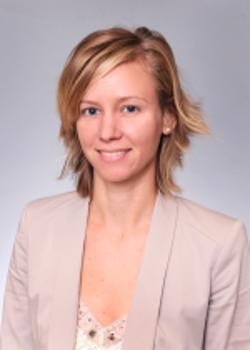
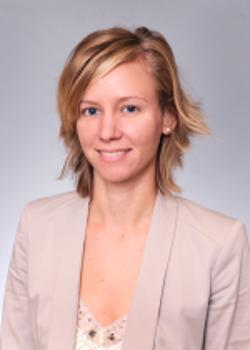
IMAGE

Credit: UTHealth

HOUSTON – (Oct. 6, 2017) – Researchers from The University of Texas Health Science Center at Houston (UTHealth) hope to put a dent in the cycle of re-arrest and release among homeless adults with research on a smartphone app funded by a $3.3 million grant from the National Institutes of Health (NIH).

An estimated 3.5 million people experience homelessness each year in the U.S. and 6.2 percent of U.S. adults have been homeless at some point in their lifetime. Homeless adults are more likely to spend time in jail and more likely to return to jail after incarceration than adults who are not homeless, according to Jennifer M. Gonzalez, Ph.D., associate professor in the Department of Epidemiology, Human Genetics and Environmental Sciences at UTHealth School of Public Health in Dallas and one of the principal investigators on the project.

The study will assess whether a smartphone app designed to assess and modify health behaviors among low-income and homeless adults will help reduce re-arrest rates. One group of participants will receive the app pre-loaded on a smartphone plus usual shelter-based case management; another group will receive a smartphone without the app and case management; and a third group will only receive case management services.

Case managers work to meet the needs of their clients and help them find housing, job training, medical care, social support and various other services after they are released from jail. Homeless adults who receive case management experience fewer mental health and substance use problems, are more likely to obtain stable housing and are less likely to be re-incarcerated. The app will address barriers to accessing case management such as limited transportation, inability to schedule appointments and limited knowledge of available services.

"We're hoping that our app encourages homeless adults to seek treatment for substance use and behavioral health needs, and as a result, helps them obtain stable housing and terminate this cycle of re-arrest. If the app is successful, it will be very easy for other cities and counties to implement this program among homeless adults in their areas. We are hoping that in the future, our app can help homeless people across the country," said Gonzalez.

The study includes researchers from the University of Oklahoma Health Sciences Center, UT Southwestern Medical Center, the University of Kentucky and The Bridge Homeless Recovery Center in Dallas.

The five-year study will enroll 432 participants from the Dallas-based Homeless Recovery Program. Funding was granted through the NIH's National Institute on Minority Health and Health Disparities (1R01MD010733-01A1).

###

Media Contact

Hannah Rhodes
[email protected]
713-500-3053

http://www.uthouston.edu

Original Source

https://www.uth.edu/media/story.htm?id=f9a3a266-39ab-4856-9c6d-56e0a2c93ef7
Share12Tweet8Share2ShareShareShare2

Related Posts

Tracking Lanthanide-Labeled Microplastics in Plants

June 25, 2026

POSTECH Researchers Slash Cost of Reconstituted Cell-Free Systems by 95%

June 25, 2026

AI and Physics Collaborate to Design Advanced Hydrogen Storage Materials

June 25, 2026

Natural Hallucinogens: Evolution’s Ecological Tools, Not Mere Chemical Byproducts

June 25, 2026
Please login to join discussion

POPULAR NEWS

  • Saying Goodbye to PGY-6: Pediatric Fellowship Realities

    103 shares
    Share 41 Tweet 26
  • Multi-Hospital Study Reveals Long Covid Burden Is Twice as High as Current Estimates

    92 shares
    Share 36 Tweet 23
  • Detection of EDCs in Breast Milk and Infant Urine Up to Six Months Highlights Early Exposure Risks

    77 shares
    Share 31 Tweet 19
  • New Drug Candidate Developed at McMaster Shows Potential for Treating Brain Cancer

    58 shares
    Share 23 Tweet 15

About

We bring you the latest biotechnology news from best research centers and universities around the world. Check our website.

Follow us

Recent News

Tracking Lanthanide-Labeled Microplastics in Plants

POSTECH Researchers Slash Cost of Reconstituted Cell-Free Systems by 95%

AI and Physics Collaborate to Design Advanced Hydrogen Storage Materials

Subscribe to Blog via Email

Success! An email was just sent to confirm your subscription. Please find the email now and click 'Confirm' to start subscribing.

Join 82 other subscribers
  • Contact Us

Bioengineer.org © Copyright 2023 All Rights Reserved.

Welcome Back!

Login to your account below

Forgotten Password?

Retrieve your password

Please enter your username or email address to reset your password.

Log In
No Result
View All Result
  • Homepages
    • Home Page 1
    • Home Page 2
  • News
  • National
  • Business
  • Health
  • Lifestyle
  • Science

Bioengineer.org © Copyright 2023 All Rights Reserved.