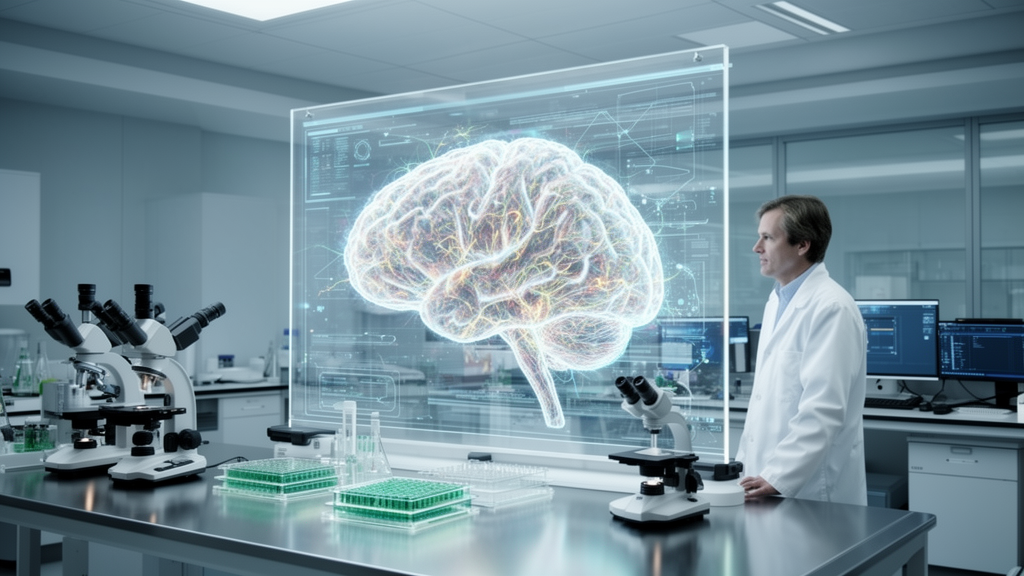
Researchers at UTHealth Houston have developed a specialized data platform designed to act as a digital twin of neuroscientific research workflows, enabling scientists to track brain health research continuously from physical tissue collection to downstream analytical data. Published in the journal Cell Genomics, the study describes a system that mirrors the complex sequence of laboratory actions required to study human brain samples. By establishing a rigorous tracking architecture across multi-institution collaborative pipelines, the platform addresses a longstanding challenge in neuroscience where scarce human brain tissue must be distributed among numerous research facilities that historically lacked unified mechanisms for coordinating and integrating findings.
The study was led by corresponding author GQ Zhang, PhD, vice president and chief data scientist at UTHealth Houston, professor in the McWilliams School of Biomedical Informatics Department of Health Data Science and Artificial Intelligence, co-director of the Texas Institute for Restorative Neurotechnologies, and Distinguished Chair in Digital Innovation at McGovern Medical School. Because neurotypical human brain tissue is remarkably scarce, a single donated brain is often sectioned and shared across multiple independent entities. Each entity generates substantial volumes of experimental data, but without a synchronized provenance system, combining, reusing, and tracing the origin of these distinct datasets across laboratories has represented a persistent operational hurdle.
To overcome this obstacle, Zhang and his colleagues engineered the Neuroanatomy-anchored Information Management Platform, abbreviated as NIMP. The technology operates within the National Institutes of Health’s BRAIN Initiative Cell Atlas Network, known as BICAN, which is a major collaborative research network. The platform captures both physical laboratory workflows and computational data streams, managing the entire 15 distinct steps that link raw tissue processing to final digitized datasets across a dozen or more participating physical laboratories.
In describing the platform’s architectural role, Zhang explained that while laboratories physically handle brain tissue and transform it into data across multiple facilities, the digital twin mirrors precisely what occurs during each physical handoff. The tracking encompasses specific details, including which researcher or facility received a tissue section, what experimental interventions were performed on that sample, which sequencing facility processed it, and where the resulting sequenced datasets were deposited. Zhang compared the operational discipline of NIMP to a financial banking network, noting that just as financial ledgers, wire transfer records, and transaction histories prevent financial accounts from becoming disorganized, the digital twin maintains systematic accounting for research activities across the NIH BRAIN Initiative.
Beyond procedural workflows, NIMP documents critical contextual metadata associated with biological specimens, including demographic characteristics of tissue donors and the exact neuroanatomical brain regions from which samples were dissected. The platform currently focuses on human specimens alongside comparative non-human species, integrating data and metadata derived from 762 human donors and more than 8,000 discrete brain tissue samples. Within this framework, more than 18 million cells located in the basal ganglia are systematically tracked through NIMP.
The basal ganglia represent a major clinical and structural focus within the tracked dataset, constituting a critical neural system involved in motor control, cognition, motivation, and reward processing. Circuit dysfunction across the basal ganglia is known to be implicated in a wide range of neurological and neuropsychiatric conditions, such as Parkinson’s disease, Huntington’s disease, obsessive-compulsive disorder, and addiction. The new findings were released alongside a coordinated collection of more than two dozen research papers dedicated to mapping the basal ganglia.
This publication package reflects three years of foundational work conducted through BICAN, establishing standardized methodologies intended to guide how researchers map remaining regions of the brain. Alongside the Cell Genomics paper detailing NIMP, Zhang and collaborators co-authored a flagship paper in Cell that outlines the broader collaborative scope of the BICAN consortium. BICAN brings together scientists across nine countries and 55 academic and research institutions, including UTHealth Houston, the Allen Institute, the Broad Institute of MIT and Harvard, the Salk Institute, Harvard University, UT Southwestern Medical Center, and the University of California campuses in San Francisco and Los Angeles, aiming to build an evolving atlas of cell types across human, macaque, marmoset, and mouse brains.
Co-authors from UTHealth Houston contributing to the NIMP digital twin project include Shiqiang Tao, Xiaojin Li, Yan Huang, Rashmie Abeysinghe, Ling Tong, Erge Edgu-Fry, Wei-Chun Chou, Licong Cui, and Shiwei Lin, collaborating alongside Kimberly A. Smith and Lydia Ng of the Allen Institute. According to the research team, integrating tissue provenance and experimental tracking provides foundational data infrastructure that could potentially transform scientific understanding of the human brain in a manner comparable to how the Human Genome Project transformed genetics and precision medicine.
Subject of Research: Digital twin data management platform for tracking brain tissue research workflows
Article Title: UTHealth Houston researchers pioneer new technology to track brain tissue from laboratory to data
Article References: UTHealth Houston researchers pioneer new technology to track brain tissue from laboratory to data. Original publication (Bibliographic details unavailable.)
Image Credits: AI Generated
DOI: Not provided
Keywords: UTHealth Houston, digital twin, brain tissue, Neuroanatomy-anchored Information Management Platform, NIMP, Cell Genomics, GQ Zhang, BRAIN Initiative Cell Atlas Network, BICAN, basal ganglia, neuroanatomy, cell atlas, National Institutes of Health, workflow tracking, neuroinformatics, data infrastructure, tissue banking
News Source: Cassandra Pierce. (November 13, 2026). UTHealth Houston Develops Digital Twin Platform to Track Brain Tissue Research Workflows. Scienmag.