• HOME
  • NEWS
  • EXPLORE
    • CAREER
      • Companies
      • Jobs
    • EVENTS
    • iGEM
      • News
      • Team
    • PHOTOS
    • VIDEO
    • WIKI
  • BLOG
  • COMMUNITY
    • FACEBOOK
    • INSTAGRAM
    • TWITTER
Thursday, February 5, 2026
BIOENGINEER.ORG
No Result
View All Result
  • Login
  • HOME
  • NEWS
  • EXPLORE
    • CAREER
      • Companies
      • Jobs
        • Lecturer
        • PhD Studentship
        • Postdoc
        • Research Assistant
    • EVENTS
    • iGEM
      • News
      • Team
    • PHOTOS
    • VIDEO
    • WIKI
  • BLOG
  • COMMUNITY
    • FACEBOOK
    • INSTAGRAM
    • TWITTER
  • HOME
  • NEWS
  • EXPLORE
    • CAREER
      • Companies
      • Jobs
        • Lecturer
        • PhD Studentship
        • Postdoc
        • Research Assistant
    • EVENTS
    • iGEM
      • News
      • Team
    • PHOTOS
    • VIDEO
    • WIKI
  • BLOG
  • COMMUNITY
    • FACEBOOK
    • INSTAGRAM
    • TWITTER
No Result
View All Result
Bioengineer.org
No Result
View All Result
Home NEWS Science News

UTA researchers develop geothermal de-icing technique for bridges at Arlington test site

Bioengineer by Bioengineer
October 26, 2020
in Science News
Reading Time: 2 mins read
0
IMAGE
Share on FacebookShare on TwitterShare on LinkedinShare on RedditShare on Telegram

A new way to de-ice bridges
IMAGE

Credit: UT Arlington

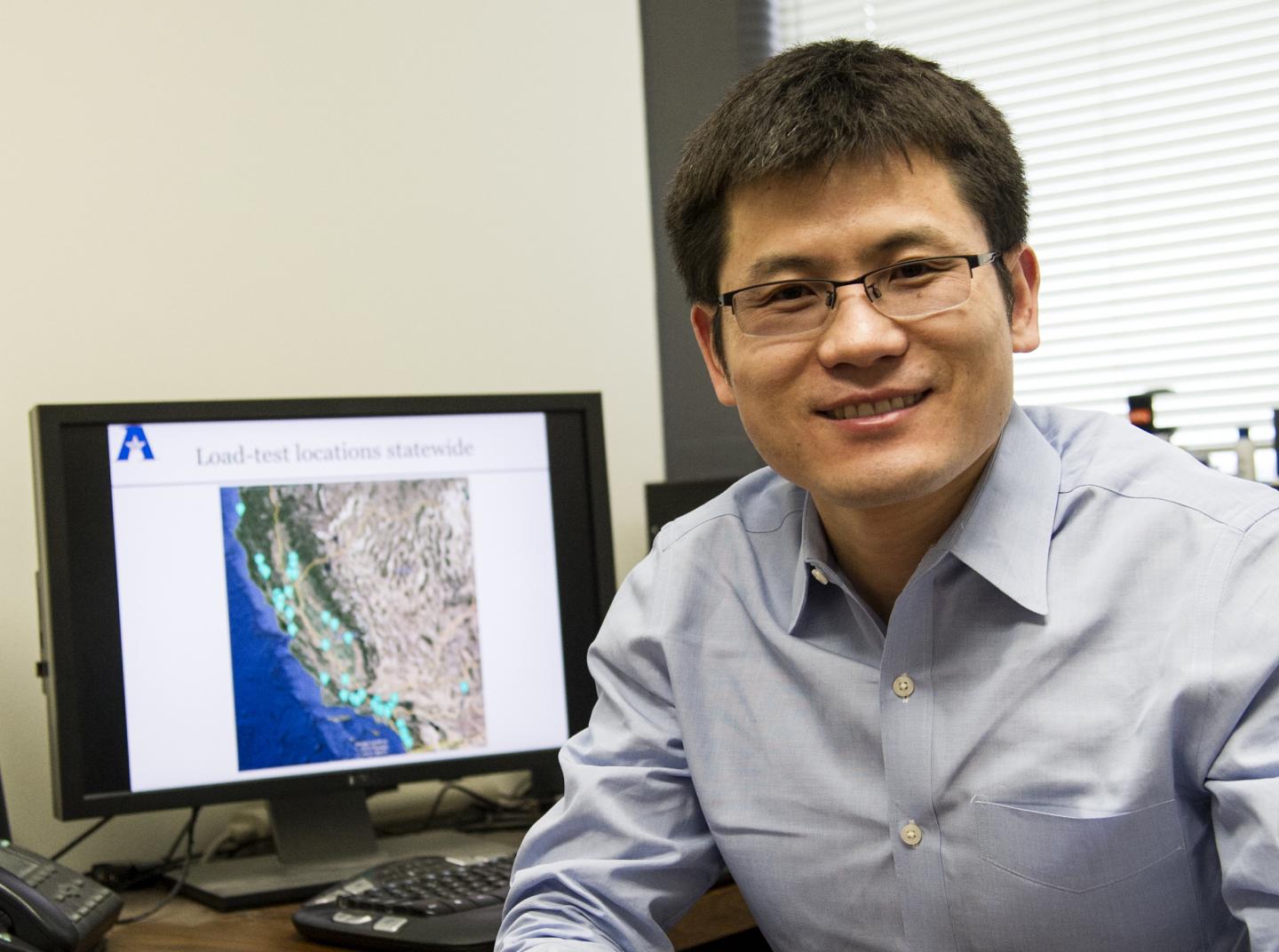
A team of researchers at The University of Texas at Arlington has earned funding to further test whether geothermal energy can make Texas bridges and overpasses safer during winter weather.

Thanks to $100,000 in funding from the Texas Department of Transportation (TxDOT), Xinbao Yu, associate professor of civil engineering, will test a new design for geothermal loops beneath the bridge deck and perform a cost/benefit analysis and environmental impact survey at the test site, located off Division Street near Dottie Lynn Parkway in Arlington.

Anand Puppala, a former UTA civil engineering professor who is now at Texas A&M University, is co-principal investigator on the project.

When geothermal de-icing systems are installed in new bridges, groundwater is pumped through a circulation pipe to bring thermal energy from the ground to the surface. One end of the circulation pipe is embedded into the bridge deck, which warms to the point where ice and snow melt instead of sticking to the surface.

Installing a similar system on the underside of existing bridges adds challenges, because the heat-transfer efficiency must be large enough that the heat goes to the bridge deck, not to the air.

Yu and Puppala have focused on creating new technology to accomplish this goal. Their original concept involved using panels that contained circulation pipes, but that hindered TxDOT’s ability to inspect the bridge deck from below. So the researchers created a system that left open spaces between the pipes.

“We have had excellent results in our tests so far, and I’m very confident that our system will work,” Yu said. “This additional funding will allow us to further test our concepts and ensure that it is environmentally safe and fiscally responsible.”

UTA Civil Engineering Department Chair Ali Abolmaali said Yu’s work is an example of how UTA faculty successfully collaborate with state agencies to provide solutions to infrastructure problems.

“We have a long history of working with TxDOT to test materials and solutions to the unique issues the agency faces in maintaining Texas roads,” Abolmaali said. “Dr. Yu’s work could help TxDOT keep bridges and overpasses safer during extreme winter weather in a way that is better for the environment than using salt and sand–and that will be well worth the cost.”

###

– Written by Jeremy Agor, College of Engineering

Media Contact
Herb Booth
[email protected]

Original Source

https://www.uta.edu/news/news-releases/2020/10/23/de-ice-bridges

Tags: Algorithms/ModelsCivil EngineeringMultimedia/Networking/Interface DesignSoftware EngineeringTechnology/Engineering/Computer Science
Share12Tweet8Share2ShareShareShare2

Related Posts

University of Maryland School of Medicine Scientists Find Vaginal Bacteria Exhibit Variable Behavior

February 5, 2026

NEO-STIM Advances Personalized Neoantigen T Cell Therapy

February 5, 2026

New Triplet Therapies for Relapsed Follicular Lymphoma

February 5, 2026

Austrian Neuropathology Expert Professor Adelheid Wöhrer Delivers Lecture at Korea University College of Medicine

February 5, 2026
Please login to join discussion

POPULAR NEWS

  • Robotic Ureteral Reconstruction: A Novel Approach

    Robotic Ureteral Reconstruction: A Novel Approach

    81 shares
    Share 32 Tweet 20
  • Digital Privacy: Health Data Control in Incarceration

    63 shares
    Share 25 Tweet 16
  • Study Reveals Lipid Accumulation in ME/CFS Cells

    57 shares
    Share 23 Tweet 14
  • Breakthrough in RNA Research Accelerates Medical Innovations Timeline

    53 shares
    Share 21 Tweet 13

About

We bring you the latest biotechnology news from best research centers and universities around the world. Check our website.

Follow us

Recent News

University of Maryland School of Medicine Scientists Find Vaginal Bacteria Exhibit Variable Behavior

NEO-STIM Advances Personalized Neoantigen T Cell Therapy

New Triplet Therapies for Relapsed Follicular Lymphoma

Subscribe to Blog via Email

Enter your email address to subscribe to this blog and receive notifications of new posts by email.

Join 73 other subscribers
  • Contact Us

Bioengineer.org © Copyright 2023 All Rights Reserved.

Welcome Back!

Login to your account below

Forgotten Password?

Retrieve your password

Please enter your username or email address to reset your password.

Log In
No Result
View All Result
  • Homepages
    • Home Page 1
    • Home Page 2
  • News
  • National
  • Business
  • Health
  • Lifestyle
  • Science

Bioengineer.org © Copyright 2023 All Rights Reserved.