• HOME
  • NEWS
  • EXPLORE
    • CAREER
      • Companies
      • Jobs
    • EVENTS
    • iGEM
      • News
      • Team
    • PHOTOS
    • VIDEO
    • WIKI
  • BLOG
  • COMMUNITY
    • FACEBOOK
    • INSTAGRAM
    • TWITTER
Saturday, February 7, 2026
BIOENGINEER.ORG
No Result
View All Result
  • Login
  • HOME
  • NEWS
  • EXPLORE
    • CAREER
      • Companies
      • Jobs
        • Lecturer
        • PhD Studentship
        • Postdoc
        • Research Assistant
    • EVENTS
    • iGEM
      • News
      • Team
    • PHOTOS
    • VIDEO
    • WIKI
  • BLOG
  • COMMUNITY
    • FACEBOOK
    • INSTAGRAM
    • TWITTER
  • HOME
  • NEWS
  • EXPLORE
    • CAREER
      • Companies
      • Jobs
        • Lecturer
        • PhD Studentship
        • Postdoc
        • Research Assistant
    • EVENTS
    • iGEM
      • News
      • Team
    • PHOTOS
    • VIDEO
    • WIKI
  • BLOG
  • COMMUNITY
    • FACEBOOK
    • INSTAGRAM
    • TWITTER
No Result
View All Result
Bioengineer.org
No Result
View All Result
Home NEWS Science News

UTA computer scientists investigating framework for sharing sensor data

Bioengineer by Bioengineer
September 25, 2020
in Science News
Reading Time: 2 mins read
0
IMAGE
Share on FacebookShare on TwitterShare on LinkedinShare on RedditShare on Telegram

Business model would share sensor data
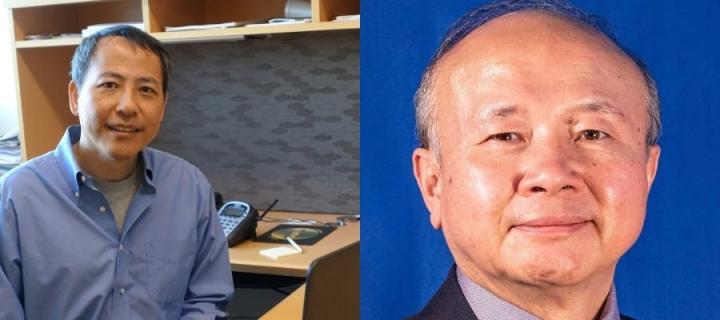
IMAGE

Credit: UT Arlington

Sensors are everywhere, collecting data in nearly every part of society and growing continuously as individuals, companies and agencies add more.

A pair of computer scientists at The University of Texas at Arlington is working to create a framework for businesses that would encourage the owners of existing sensors to share their data through the cloud, reducing the cost for everyone.

Hong Jiang, professor and chair of UTA’s Computer Science and Engineering Department, and computer science Professor Hao Che have received a three-year, $499,658 grant from the National Science Foundation for their research. Under their sensing-as-a-service model, users could pay to gain access to data from existing sensors through sensing edge nodes–computers that act as end-user portals in computing clusters–with sensor owners voluntarily making the data available in exchange for a share of the subscription payments.

“With the proliferation of Internet of Things with diverse sensing capabilities, the proposed sensing infrastructure could be used by many entities and reduce the cost of sensing,” Che said. “Previously, single parties had to purchase and deploy devices that only they used, which was very expensive.”

The concept of sensing-as-a-service isn’t new, but Jiang and Che’s model could be deployable as a business model, allowing a company to invest in technology and benefit from democratized use. Different stakeholders buying in and participating would allow flexibility and preserve the anonymity of the sensor owners.

The model relies on providing incentives for data holders to participate, but Jiang is confident those incentives are achievable.

“As a user, I’d pay a certain amount to get what I want, which could cost more or less depending on the amount or type of data,” Jiang said. “Our framework is designed to guarantee that if you pay for a certain level of service, we’ll deliver it. Given the proper incentives, people could deposit sensing data into a local node to be shared in the cloud, and then the data becomes a commodity that has value depending on type, precision and time.”

Che and Jiang received a $1.05 million grant in 2017 to determine how best to meet the diverse quality-of-experience requirements of individual users while allowing for optimized and fair computing and networking resource-sharing among users for data center applications.

They also received a $799,950 grant in 2016 with computer science Professor Jeff Lei to create a model that allows mapping of user service-level objectives into precise computing resource requirements at individual computing servers.

###

– Written by Jeremy Agor, College of Engineering

Media Contact
Herb Booth
[email protected]

Original Source

https://www.uta.edu/news/news-releases/2020/09/24/sensor-jiang-che

Tags: Computer ScienceMultimedia/Networking/Interface DesignSoftware EngineeringTechnology/Engineering/Computer Science
Share12Tweet8Share2ShareShareShare2

Related Posts

Evaluating Pediatric Emergency Care Quality in Ethiopia

February 7, 2026

TPMT Expression Predictions Linked to Azathioprine Side Effects

February 7, 2026

Improving Dementia Care with Enhanced Activity Kits

February 7, 2026

Decoding Prostate Cancer Origins via snFLARE-seq, mxFRIZNGRND

February 7, 2026
Please login to join discussion

POPULAR NEWS

  • Robotic Ureteral Reconstruction: A Novel Approach

    Robotic Ureteral Reconstruction: A Novel Approach

    82 shares
    Share 33 Tweet 21
  • Digital Privacy: Health Data Control in Incarceration

    63 shares
    Share 25 Tweet 16
  • Study Reveals Lipid Accumulation in ME/CFS Cells

    57 shares
    Share 23 Tweet 14
  • Breakthrough in RNA Research Accelerates Medical Innovations Timeline

    53 shares
    Share 21 Tweet 13

About

We bring you the latest biotechnology news from best research centers and universities around the world. Check our website.

Follow us

Recent News

Evaluating Pediatric Emergency Care Quality in Ethiopia

TPMT Expression Predictions Linked to Azathioprine Side Effects

Improving Dementia Care with Enhanced Activity Kits

Subscribe to Blog via Email

Success! An email was just sent to confirm your subscription. Please find the email now and click 'Confirm' to start subscribing.

Join 73 other subscribers
  • Contact Us

Bioengineer.org © Copyright 2023 All Rights Reserved.

Welcome Back!

Login to your account below

Forgotten Password?

Retrieve your password

Please enter your username or email address to reset your password.

Log In
No Result
View All Result
  • Homepages
    • Home Page 1
    • Home Page 2
  • News
  • National
  • Business
  • Health
  • Lifestyle
  • Science

Bioengineer.org © Copyright 2023 All Rights Reserved.