• HOME
  • NEWS
  • EXPLORE
    • CAREER
      • Companies
      • Jobs
    • EVENTS
    • iGEM
      • News
      • Team
    • PHOTOS
    • VIDEO
    • WIKI
  • BLOG
  • COMMUNITY
    • FACEBOOK
    • INSTAGRAM
    • TWITTER
Tuesday, July 7, 2026
BIOENGINEER.ORG
No Result
View All Result
  • Login
  • HOME
  • NEWS
  • EXPLORE
    • CAREER
      • Companies
      • Jobs
        • Lecturer
        • PhD Studentship
        • Postdoc
        • Research Assistant
    • EVENTS
    • iGEM
      • News
      • Team
    • PHOTOS
    • VIDEO
    • WIKI
  • BLOG
  • COMMUNITY
    • FACEBOOK
    • INSTAGRAM
    • TWITTER
  • HOME
  • NEWS
  • EXPLORE
    • CAREER
      • Companies
      • Jobs
        • Lecturer
        • PhD Studentship
        • Postdoc
        • Research Assistant
    • EVENTS
    • iGEM
      • News
      • Team
    • PHOTOS
    • VIDEO
    • WIKI
  • BLOG
  • COMMUNITY
    • FACEBOOK
    • INSTAGRAM
    • TWITTER
No Result
View All Result
Bioengineer.org
No Result
View All Result
Home NEWS Science News Biology

Using science to combat illegal wildlife trade

Bioengineer by Bioengineer
July 28, 2017
in Biology
Reading Time: 2 mins read
0
Share on FacebookShare on TwitterShare on LinkedinShare on RedditShare on Telegram
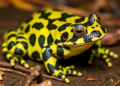
IMAGE

Credit: Courtesy of MSU

EAST LANSING, Mich. – Leading scientists from around the world convened this week at the International Congress for Conservation Biology in Cartagena, Colombia, to discuss how to better leverage science to combat illegal wildlife trade — both within countries and across international borders.

"The scope and scale of illegal wildlife trafficking today is unprecedented," said Meredith Gore, an associate professor of fisheries and wildlife at Michigan State University and Jefferson Science Fellow at the U.S. Department of State. "Illegal wildlife trafficking is a crime that can converge with other serious crimes, such as drug trafficking."

Gore joined other researchers from universities, conservation NGOs, international organizations and national governments to identify new opportunities to bring the full spectrum of scientific knowledge to bear on the problem.

Illegal exploitation and trade of wildlife is a globally recognized problem posing risks to plants, animals and humans. Illegal wildlife trade threatens the security and prosperity of people. Poor inspection processes at border crossings allow the spread of animal diseases. Park rangers are killed by organized criminals linked to global illegal markets, and local communities see their livelihoods threatened by the disappearance of natural resources, according to Gore.

Reductions in biodiversity from illegal wildlife trade can have other substantial negative human health impacts, including the loss of potential sources of pharmaceuticals, experimental models for studying disease, crop pollination and micronutrients for humans lacking alternative sources of protein.

Globally, illegal wildlife trade is often framed as a security issue that converges with other serious and often transnational crimes such as drug, gun and human trafficking. The United States, Peru, China, Mozambique and United Kingdom have passed new, or bolstered existing, legislation designed to enhance efforts to combat illegal wildlife trade and reduce risks to security.

Criminologists, computer scientists, geographers and social marketers voiced a willingness to share data, collaborate on problem solving and use new methods for communicating science with decision makers.

"Tackling the illegal wildlife trade will require a deep understanding of human behavior, of the poachers that engage in the supply side of the trade, and the consumers that drive the demand for wildlife products," said Diogo Verissimo, David H. Smith Conservation Fellow, Johns Hopkins University.

Science can help measure the scope, scale and impact of illegal wildlife trade, map illicit networks and assess the effect of social marketing and other interventions designed to reduce demand.

"If we are going to fight organized crime, we have to be organized in our response," said Adrian Reuter, Latin America Wildlife Trafficking Coordinator for the Wildlife Conservation Society.

###

Michigan State University has been working to advance the common good in uncommon ways for more than 150 years. One of the top research universities in the world, MSU focuses its vast resources on creating solutions to some of the world's most pressing challenges, while providing life-changing opportunities to a diverse and inclusive academic community through more than 200 programs of study in 17 degree-granting colleges.

For MSU news on the Web, go to MSUToday. Follow MSU News on Twitter at twitter.com/MSUnews.

Media Contact

Layne Cameron
[email protected]
517-353-8819
@MSUnews

http://msutoday.msu.edu/journalists/

Original Source

http://go.msu.edu/kCz
Share12Tweet8Share2ShareShareShare2

Related Posts

Here are a few rewritten headlines for a science magazine post, each with a slightly different tone: Intriguing & poetic: How do organs sculpt themselves? Sea stars hold the secret Direct & research-focused: Sea stars reveal the hidden rules of organ formation Metaphorical & inviting: Tiny architects beneath the waves: What sea stars teach us about building organs Short & punchy: Star-shaped clues to how our organs take shape Question-led: Could a sea star show us how organs form? Elegant & feature-style: The body’s blueprint, glimpsed in a sea star’s arm

July 6, 2026
Bacteria evolve faster with unconventional gene copies — Biology

Bacteria evolve faster with unconventional gene copies

July 6, 2026

Neighbours rewire soil feedback via root microbiome shifts

July 6, 2026

Evolution-Inspired Biosensors Revolutionize Lipid Tracking in Real Time

July 2, 2026
Please login to join discussion

POPULAR NEWS

  • Detection of EDCs in Breast Milk and Infant Urine Up to Six Months Highlights Early Exposure Risks

    77 shares
    Share 31 Tweet 19
  • New Drug Candidate Developed at McMaster Shows Potential for Treating Brain Cancer

    58 shares
    Share 23 Tweet 15
  • Saying Goodbye to PGY-6: Pediatric Fellowship Realities

    103 shares
    Share 41 Tweet 26
  • KTU Researchers Explore Ultrasound’s Role in Enhancing Blood Flow Beyond Diagnostics

    53 shares
    Share 21 Tweet 13

About

We bring you the latest biotechnology news from best research centers and universities around the world. Check our website.

Follow us

Recent News

Flame retardant BDE-209 targets molecularly linked to ulcerative colitis

Ultra-high frequency particle impacts mimic rockbursts to shatter hard rock

Kidney transplant outcomes in older adults studied by German researchers

Subscribe to Blog via Email

Enter your email address to subscribe to this blog and receive notifications of new posts by email.

Join 83 other subscribers
  • Contact Us

Bioengineer.org © Copyright 2023 All Rights Reserved.

Welcome Back!

Login to your account below

Forgotten Password?

Retrieve your password

Please enter your username or email address to reset your password.

Log In
No Result
View All Result
  • Homepages
    • Home Page 1
    • Home Page 2
  • News
  • National
  • Business
  • Health
  • Lifestyle
  • Science

Bioengineer.org © Copyright 2023 All Rights Reserved.