• HOME
  • NEWS
  • EXPLORE
    • CAREER
      • Companies
      • Jobs
    • EVENTS
    • iGEM
      • News
      • Team
    • PHOTOS
    • VIDEO
    • WIKI
  • BLOG
  • COMMUNITY
    • FACEBOOK
    • INSTAGRAM
    • TWITTER
Thursday, September 24, 2026
BIOENGINEER.ORG
No Result
View All Result
  • Login
  • HOME
  • NEWS
  • EXPLORE
    • CAREER
      • Companies
      • Jobs
        • Lecturer
        • PhD Studentship
        • Postdoc
        • Research Assistant
    • EVENTS
    • iGEM
      • News
      • Team
    • PHOTOS
    • VIDEO
    • WIKI
  • BLOG
  • COMMUNITY
    • FACEBOOK
    • INSTAGRAM
    • TWITTER
  • HOME
  • NEWS
  • EXPLORE
    • CAREER
      • Companies
      • Jobs
        • Lecturer
        • PhD Studentship
        • Postdoc
        • Research Assistant
    • EVENTS
    • iGEM
      • News
      • Team
    • PHOTOS
    • VIDEO
    • WIKI
  • BLOG
  • COMMUNITY
    • FACEBOOK
    • INSTAGRAM
    • TWITTER
No Result
View All Result
Bioengineer.org
No Result
View All Result
Home NEWS Science News Health

Using prevalent technologies and ‘Internet of Things’ data for atmospheric science

Bioengineer by Bioengineer
June 14, 2019
in Health
Reading Time: 3 mins read
0
IMAGE
Share on FacebookShare on TwitterShare on LinkedinShare on RedditShare on Telegram

IMAGE

Credit: Noam David

The use of prevalent technologies and crowdsourced data may benefit weather forecasting and atmospheric research, according to a new paper authored by Dr. Noam David, a Visiting Scientist at the Laboratory of Associate Professor Yoshihide Sekimoto at the Institute of Industrial Science, The University of Tokyo, Japan. The paper, published in Advances in Atmospheric Sciences, reviews a number of research works on the subject and points to the potential of this innovative approach.

Specialized instruments for environmental monitoring are often limited as a result of technical and practical constraints. Existing technologies, including remote sensing systems and ground-level tools, may suffer from obstacles such as low spatial representativity (in situ sensors, for example) or lack of accuracy when measuring near the Earth’s surface (satellites). These constraints often limit the ability to carry out representative observations and, as a result, the capacity to deepen our existing understanding of atmospheric processes. Multi-systems and IoT (Internet of Things) technologies have become increasingly distributed as they are embedded into our environment. As they become more widely deployed, these technologies generate unprecedented data volumes with immense coverage, immediacy and availability. As a result, a growing opportunity is emerging to complement state-of-the-art monitoring techniques with the large streams of data produced. Notably, these resources were originally designed for purposes other than environmental monitoring and are naturally not as precise as dedicated sensors. Therefore, they should be treated as complementary tools and not as a substitute. However, in the many cases where dedicated instruments are not deployed in the field, these newly available ‘environmental sensors’ can provide some response which is often invaluable.

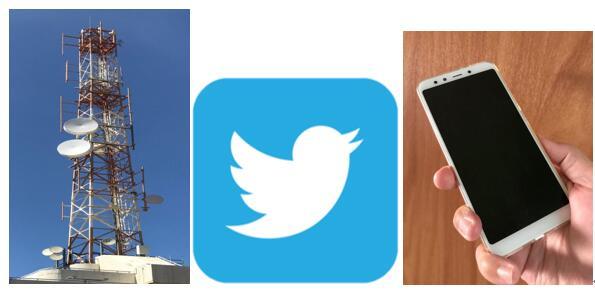
Smartphones, for example, contain weather-sensitive sensors and recent works indicate the ability to use the data collected by these devices on a multisource basis to monitor atmospheric pressure and temperature. Data shared as an open source in social networks can provide vital environmental information reported by thousands of ‘human observers’ directly from an area of interest. Wireless communication links that form the basis for transmitting data between cellular communication base stations serve as an additional example. Weather conditions affect the signal strength on these links and this effect can be measured. As a result the links can be utilized as an environmental monitoring facility. A variety of studies on the subject point to the ability to monitor rainfall and other hydrometeors including fog, water vapor, dew and even the precursors of air pollution using the data generated by these systems.

Notably, the data from these new ‘sensors’ could be assimilated into high-resolution numerical prediction models, and thus may lead to improvements in forecasting capabilities. Put to use, this novel approach could provide the groundwork for developing new early-warning systems against natural hazards, and generate a variety of products necessary for a wide range of fields. The contribution to public health and safety as a result of these could potentially be of significant value.

###

Media Contact
Zheng Lin
[email protected]

Original Source

https://link.springer.com/article/10.1007/s00376-019-9022-0

Related Journal Article

http://dx.doi.org/10.1007/s00376-019-9022-0

Tags: Atmospheric ScienceClimate ChangeClimate ScienceEarth ScienceEnvironmental HealthHealth CareInternetScience/Health and the LawTechnology/Engineering/Computer Science
Share12Tweet8Share2ShareShareShare2

Related Posts

Swedish Birth Cohort Turns Its Lens on Mothers to Trace Breast Cancer’s Environmental Roots

September 24, 2026

New Risk Model Predicts Kidney Disease Years Before It Strikes People With Prediabetes

September 24, 2026

Hand-Sewn Suture Technique Achieves Coupler-Level Vessel Results in Head and Neck Rebuilds

September 24, 2026

Stigma in the Clinic Strongly Predicts HIV Treatment Interruption in Kenya

September 24, 2026
Please login to join discussion

POPULAR NEWS

  • Staphylococcal Protein Reprograms Liver Tumor Macrophages to Boost Immunotherapy

    29 shares
    Share 12 Tweet 7
  • Hidden Microbes Inside Mung Bean Show Striking Stress Tolerance and Fungal-Fighting Power

    29 shares
    Share 12 Tweet 7
  • Noisy Gates Put Gate Teleportation to the Test

    29 shares
    Share 12 Tweet 7
  • Prenatal BPA Exposure Rewires the Cerebellum Differently in Male and Female Rat Offspring

    29 shares
    Share 12 Tweet 7

About

BIOENGINEER.ORG

We bring you the latest biotechnology news from best research centers and universities around the world. Check our website.

Follow us

Recent News

Staphylococcal Protein Reprograms Liver Tumor Macrophages to Boost Immunotherapy

Hidden Microbes Inside Mung Bean Show Striking Stress Tolerance and Fungal-Fighting Power

Noisy Gates Put Gate Teleportation to the Test

Subscribe to Blog via Email

Enter your email address to subscribe to this blog and receive notifications of new posts by email.

Join 85 other subscribers
  • Contact Us

Bioengineer.org © Copyright 2023 All Rights Reserved.

Welcome Back!

Login to your account below

Forgotten Password?

Retrieve your password

Please enter your username or email address to reset your password.

Log In
No Result
View All Result
  • Homepages
    • Home Page 1
    • Home Page 2
  • News
  • National
  • Business
  • Health
  • Lifestyle
  • Science

Bioengineer.org © Copyright 2023 All Rights Reserved.