• HOME
  • NEWS
  • EXPLORE
    • CAREER
      • Companies
      • Jobs
    • EVENTS
    • iGEM
      • News
      • Team
    • PHOTOS
    • VIDEO
    • WIKI
  • BLOG
  • COMMUNITY
    • FACEBOOK
    • INSTAGRAM
    • TWITTER
Tuesday, September 1, 2026
BIOENGINEER.ORG
No Result
View All Result
  • Login
  • HOME
  • NEWS
  • EXPLORE
    • CAREER
      • Companies
      • Jobs
        • Lecturer
        • PhD Studentship
        • Postdoc
        • Research Assistant
    • EVENTS
    • iGEM
      • News
      • Team
    • PHOTOS
    • VIDEO
    • WIKI
  • BLOG
  • COMMUNITY
    • FACEBOOK
    • INSTAGRAM
    • TWITTER
  • HOME
  • NEWS
  • EXPLORE
    • CAREER
      • Companies
      • Jobs
        • Lecturer
        • PhD Studentship
        • Postdoc
        • Research Assistant
    • EVENTS
    • iGEM
      • News
      • Team
    • PHOTOS
    • VIDEO
    • WIKI
  • BLOG
  • COMMUNITY
    • FACEBOOK
    • INSTAGRAM
    • TWITTER
No Result
View All Result
Bioengineer.org
No Result
View All Result
Home NEWS Science News Biology

Using AI to save species from extinction cascades

Bioengineer by Bioengineer
July 11, 2023
in Biology
Reading Time: 3 mins read
0
Desert Park
Share on FacebookShare on TwitterShare on LinkedinShare on RedditShare on Telegram

Algorithms can predict what movies or songs you might like, but they can also predict which species a predator would most likely eat.
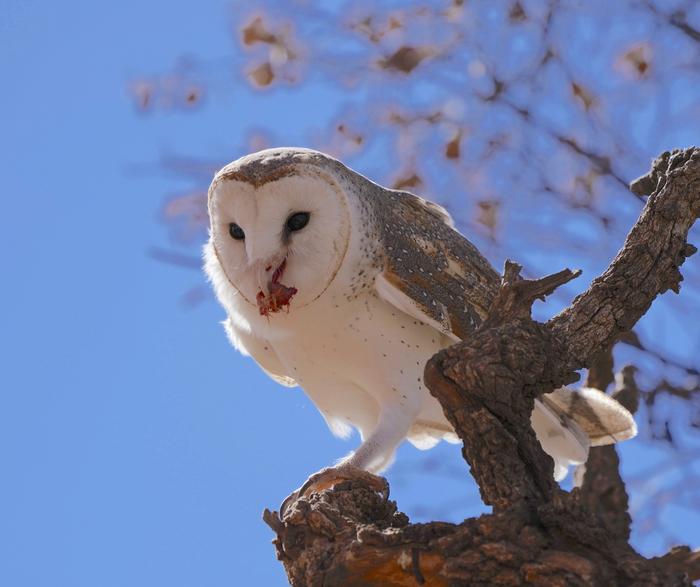
Desert Park

Credit: Mike Lee, Flinders University.

Algorithms can predict what movies or songs you might like, but they can also predict which species a predator would most likely eat.

Researchers at Flinders University’s Global Ecology Laboratory have been using machine learning to identify species interactions, and can predict which species are most likely to go extinct, so that intervention can be planned before this happens.

“The planet is facing an environmental crisis, with climate change, invasive species, habitat loss, and other human-related activities causing a multitude of extinctions,” says Dr John Llewelyn, Research Fellow at Flinders University’s College of Science and Engineering.

“Many of these extinctions are mediated by species interactions, triggered by the loss or gain of interactions with other species, and we have found that machine learning can predict who eats whom in a world of connected species.”

Dr Llewelyn says ‘co-extinctions’ are extinctions caused by declines or extinctions in other, interacting species, such as a predator going extinct following the loss of its prey.

Conversely, invasive predators such as cats, foxes and brown tree snakes can cause extinctions in naïve native prey that have not dealt with similar predators in the past.

“These are extinctions resulting from vulnerable species gaining interactions with new predators, so knowing which species interact is essential for predicting and avoiding future extinctions,” adds Dr Llewelyn. “However, at present we only know a tiny fraction of the species interactions that occur — or that could occur, in the case of invasive species — and this makes predicting extinctions difficult.”

The Flinders team’s new research found that machine learning techniques can use a species’ traits to predict predator-prey interactions accurately for birds and mammals. By identifying species that interact, machine learning can then help to predict and hopefully avoid extinctions before they happen.

The algorithm learns how traits are related to species interactions from information on which species interact, which species don’t interact, and the traits of the species involved. This type of AI can then be provided with a list of species and traits to predict which of the species in the new list interact.

“We can use this method to fill in the many gaps we have in our knowledge of species interactions,” says Dr Llewelyn.

These gaps include undocumented interactions that are happening today, interactions between ancient, long-extinct species, and interactions invasive species would have if they were introduced to a new area.

“By knowing which species interact, we can identify how environmental disturbances — such as climate change and introduced species — can have cascading effects in ecological communities, allowing us to understand how extinctions happen.”

Species interactions play a fundamental role in ecosystems, although few ecological communities have complete data describing such interactions, which is an obstacle to predict how ecosystems function and respond to perturbations.

“Humans depend utterly on biodiversity and healthy ecosystems, so we have a responsibility to maintain biodiversity for its own sake as well as for the benefits it provides human societies,” says Dr Llewelyn.


Journal

Ecography

DOI

10.1111/ecog.06619

Method of Research

Computational simulation/modeling

Subject of Research

Animals

Article Publication Date

10-Jul-2023

Share12Tweet8Share2ShareShareShare2

Related Posts

Methylation puts parasites in motion

Methylation puts parasites in motion

August 31, 2026
Desiccation promotes DNA damage and rifampin resistance in Mycobacterium tuberculosis

Desiccation promotes DNA damage and rifampin resistance in Mycobacterium tuberculosis

August 31, 2026

Gastrointestinal Parasitism in Cattle and Water Buffaloes in Pakistan: Prevalence and Associated Risk Factors

August 31, 2026

Development of HPLC–PDA method for steviol glycosides analysis in food matrices

August 31, 2026

POPULAR NEWS

  • β-Sitosterol from Ipomoea carnea Jacq. As a promising anti-inflammatory agent: Evidence from in silico modeling and in vitro validation

    29 shares
    Share 12 Tweet 7
  • Design, fabrication and characterization of a wearable Fiber Bragg grating sensor for cardiorespiratory monitoring using finger plethysmography

    29 shares
    Share 12 Tweet 7
  • KAIST opens the era of industrial-scale microbial foods, proposing growth strategies for the next-generation protein market

    29 shares
    Share 12 Tweet 7
  • Virologist awarded $2 million NIH grant to investigate how virus-infected cells live and die

    29 shares
    Share 12 Tweet 7

About

We bring you the latest biotechnology news from best research centers and universities around the world. Check our website.

Follow us

Recent News

β-Sitosterol from Ipomoea carnea Jacq. As a promising anti-inflammatory agent: Evidence from in silico modeling and in vitro validation

Design, fabrication and characterization of a wearable Fiber Bragg grating sensor for cardiorespiratory monitoring using finger plethysmography

KAIST opens the era of industrial-scale microbial foods, proposing growth strategies for the next-generation protein market

Subscribe to Blog via Email

Success! An email was just sent to confirm your subscription. Please find the email now and click 'Confirm' to start subscribing.

Join 85 other subscribers
  • Contact Us

Bioengineer.org © Copyright 2023 All Rights Reserved.

Welcome Back!

Login to your account below

Forgotten Password?

Retrieve your password

Please enter your username or email address to reset your password.

Log In
No Result
View All Result
  • Homepages
    • Home Page 1
    • Home Page 2
  • News
  • National
  • Business
  • Health
  • Lifestyle
  • Science

Bioengineer.org © Copyright 2023 All Rights Reserved.