A United States Geological Survey grant is continuing to open the doors of fisheries research stations across New York State to undergraduate students, offering them paid summer internships that combine original scientific research, professional networking and intensive field and laboratory training. The program, led by SUNY Cortland in partnership with SUNY Oswego, has now supported four consecutive summers of credit-earning internships and is expected to run one final year in 2027, giving a growing cohort of undergraduates an early and substantive taste of careers in aquatic science.
The grant was first secured in 2023 by Andrea Dávalos, associate professor of biological sciences at SUNY Cortland, and Li Jin, professor of geology, with Mary Beth Voltura, associate professor of biological sciences, joining them to help develop the project. What began as a component of the Coregonine Restoration Framework, a binational plan representing eight U.S. states, three U.S. intertribal organizations and the Canadian province of Ontario to restore and conserve the coregonine subfamily of freshwater fish, has since expanded into wider opportunities for students, while keeping its focus firmly on aquatic life and the ecosystems that sustain it.
This year, the Cortland portion of the grant totaled 73,315 dollars, enough to support five Cortland students and two Oswego students in research placements across the state. Although the budget is modest by the standards of large research programs, the faculty behind the initiative argue that its impact is disproportionate to its size. Jin emphasized that the paid structure of the internships matters as much as the science itself, because it allows students to pursue valuable professional opportunities without the burden of financial stress that often forces undergraduates to choose between earning money and gaining research experience.
The internships are designed to immerse students in the full workflow of professional fisheries science. According to Dávalos, participants engage in original research, hone their communication skills and learn a variety of field and laboratory techniques used in fisheries work. Just as importantly, they interact daily with professionals, graduate students and professors, building the kind of networks that frequently shape career trajectories long before graduation. She described networking as one of the great aspects of the internship, noting that these relationships expose undergraduates to career paths they might never otherwise encounter.
Among this year’s participants, the placements spanned some of New York’s most important aquatic research institutions. Jonathan Hall worked at the Cornell Biological Field Station at Shackelton Point, Isabella Impellizzeri was based at SUNY Oswego, Minju Kim conducted her research at the New York State Water Resources Institute at Cornell University, Vinoj Ramachandran worked with the Department of Environmental Conservation in Cortland, and Ava Schiff was placed at the SUNY College of Environmental Science and Forestry’s Thousand Islands Biological Station. Each site offered a distinct window into the practice of fisheries and water-resources science.
Kim, a senior chemistry major with a minor in geographic information systems, spent her summer studying the effects of dam removal, a topic of growing importance as managers weigh the ecological benefits of restoring free-flowing rivers against the practical realities of aging infrastructure. Her work combined fieldwork, laboratory analysis and data processing, including bioindicator sampling, a technique that uses living organisms to assess environmental conditions over time. She said that participating in an active field research project provided invaluable insight into professional workflows and project execution, giving her a realistic picture of how environmental science is conducted outside the classroom.
The experience has already shaped Kim’s plans for life after graduation. She intends to pursue a career in environmental chemistry that applies environmental monitoring and sustainable ecosystem management, with a particular focus on water quality. Reflecting on the summer, she noted that the internship provided practical, professional skills in fieldwork and laboratory analysis that go beyond standard classroom theory, a distinction that many undergraduates only encounter for the first time in graduate school or their first job.
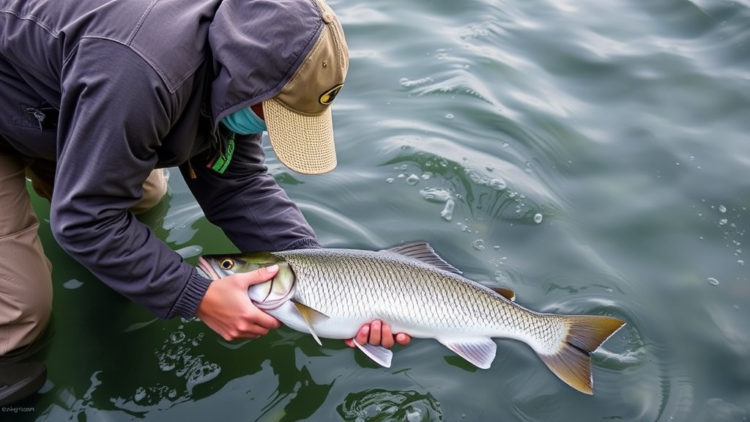
For Impellizzeri, a senior conservation biology major, the eight weeks at SUNY Oswego delivered a different but equally valuable set of skills centered on boat-based fieldwork. Her research contributed to weekly tows for larval fish at four sites, with the collected samples subsequently tested and identified in the laboratory. Along the way she completed New York boater safety training and drove a boat for the first time, and learned how to manage sample collection and water profile measurements on the water. She described the hands-on experience as invaluable, particularly the multitude of skills she acquired regarding boat procedures and safety.
The internship has also helped Impellizzeri clarify her next steps. Still weighing her career options after graduation, she said that working near the water proved highly interesting, and that she is now considering a job at one of the Great Lakes, whether conservation based or nature based in general. Her trajectory illustrates one of the central aims of the program: to give undergraduates enough direct exposure to fisheries science that they can make informed decisions about graduate study and employment in the field.
Faculty involved in the program say the combination of paid positions, covered housing costs and credit-earning placements has been central to its success, removing financial barriers while ensuring the experience carries formal academic weight. Applications for the Summer 2027 internships, the final year currently funded under the USGS grant, will open in the spring semester. As the Coregonine Restoration Framework continues its multi-state, multi-national effort to conserve a vulnerable subfamily of freshwater fish, the program’s graduates carry with them the field techniques, laboratory skills and professional connections that the next generation of fisheries scientists will need.
Subject of Research: Paid undergraduate fisheries research internships in New York funded by a USGS grant tied to the Coregonine Restoration Framework
Article Title: Students land research internships at fisheries across New York
Article References: Students land research internships at fisheries across New York. (n.d.). Original publication
Image Credits: AI Generated
DOI: Not provided
Keywords: USGS grant, SUNY Cortland, SUNY Oswego, fisheries internships, undergraduate research, Coregonine Restoration Framework, dam removal, larval fish, water quality, New York State, aquatic science, fieldwork
Cite Scienmag News
APA
MLA
Chicago
Alan Morgan. (September 12, 2026). USGS Grant Places New York Undergraduates in Paid Fisheries Research Internships. Scienmag. https://scienmag.com/usgs-grant-places-new-york-undergraduates-in-paid-fisheries-research-internships/
Alan Morgan. “USGS Grant Places New York Undergraduates in Paid Fisheries Research Internships.” Scienmag, 12 September 2026, https://scienmag.com/usgs-grant-places-new-york-undergraduates-in-paid-fisheries-research-internships/. Accessed 12 September 2026.
Alan Morgan. “USGS Grant Places New York Undergraduates in Paid Fisheries Research Internships.” Scienmag. September 12, 2026. https://scienmag.com/usgs-grant-places-new-york-undergraduates-in-paid-fisheries-research-internships/
Copy citation
Download RIS
Tags: aquatic sciencebinational conservation projectsCoregonine Restoration Frameworkdam removalexperiential learning in aquatic sciencesfieldworkfisheries internshipsfisheries research internshipsfreshwater fish restoration initiativesinterdisciplinary fisheries research collaborationlarval fishNew York StateNew York State fisheries conservation programspaid summer internships in fisheries biologyprofessional development in aquatic ecosystemsSUNY CortlandSUNY Cortland fisheries internshipsSUNY Oswegoundergraduate aquatic science researchundergraduate researchundergraduate training in fisheries fieldworkUSGS grantUSGS grant for student researchwater quality