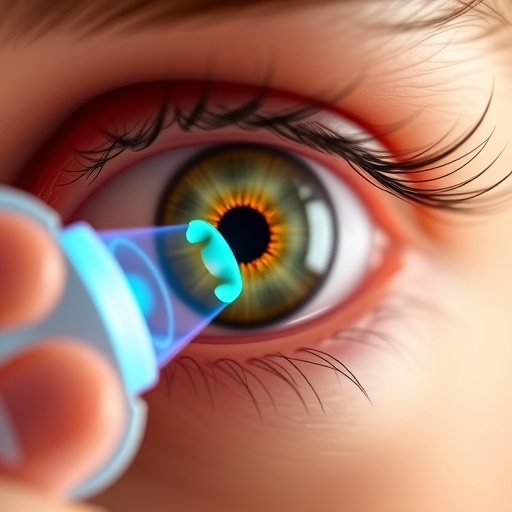
A pioneering collaboration between the University of Southern California (USC) and the California Institute of Technology (Caltech) marks a transformative leap in medical device innovation, with a project poised to revolutionize diagnosis and treatment modalities for multiple health conditions. Supported by roughly $7.8 million in funding from the Advanced Research Projects Agency for Health (ARPA-H), the team is developing an implantable medical system designed to continuously monitor and treat dry eye disease (DED) by analyzing biomarkers in tears. This groundbreaking initiative, known as Personalized Automated Continuous Treatment for Eye Plus Systemic Disease (PACE+), seeks to harness cutting-edge technology that blends biosensing, remote data transmission, and automated drug delivery, promising to redefine patient care paradigms for DED and potentially a spectrum of systemic diseases including cancer, diabetes, and neurological disorders.
The development of PACE+ stems from ARPA-H’s mission to accelerate innovation addressing critical healthcare challenges. Under the guidance of ARPA-H program manager Dr. Calvin Roberts, the Ocular Laboratory for Analysis of Biomarkers (OCULAB) program focuses on technologies utilizing tears as a novel, minimally invasive diagnostic fluid. Historically, biomedical diagnostics have relied heavily on blood-based biomarker detection, but tears possess many overlapping biomarkers with the advantage of easier, more frequent, and pain-free collection. This unique property positions tears as an ideal medium for continuous monitoring, offering rich biochemical data with significantly less patient discomfort compared to traditional blood sampling methods.
Dry eye disease, a prevalent condition affecting over 20 million individuals in the U.S. alone, manifests through insufficient tear production or poor tear quality, leading to ocular surface dryness, inflammation, and discomfort. Conventional treatments, such as periodic clinical evaluations and eye drop applications, often suffer from compliance challenges and lack real-time adaptability to symptom fluctuations. The PACE+ implant aims to overhaul this approach by creating a closed-loop monitoring and treatment system, analogous to the way medical insulin pumps regulate glucose. Such a system promises dynamic, personalized therapy that adjusts medication delivery based on live biomarker readings, all without requiring patient intervention.
Comprised of a microscale implant approximately the size of a grain of rice, the device is engineered for minimally invasive insertion through a small, pre-existing anatomical opening at the eye’s corner, a procedure designed to be swift and painless. Embedded within the implant is an advanced biosensor chip capable of detecting relevant DED biomarkers at concentrations typically lower than those found in blood. These biosensors must exhibit exceptional sensitivity and longevity, with the ambitious goal of sustaining continuous operation for up to six months. This longevity requirement presents substantial engineering challenges, as most existing biosensors function effectively only for days or weeks.
The implant will wirelessly transmit biometric data to the patient’s smartphone, which acts as a control hub. Utilizing this real-time data, an accompanying secondary device—strategically positioned between the eye and lower eyelid—delivers precise medication dosages tailored to the patient’s current condition. This automated feedback loop ensures optimal therapeutic management throughout the day and night, significantly improving patient comfort and treatment efficacy. Such integration of biosensing and drug delivery exemplifies next-generation personalized medicine, coupling continuous health monitoring with immediate intervention.
Powering the tiny implant in a sustainable manner presents another critical hurdle. Researchers are investigating biofuel cells capable of harnessing energy from human body chemistry, thereby eliminating the need for bulky batteries. Alternatively, near-field communication (NFC) technology may enable wireless power transfer from the patient’s smartphone or other external devices. NFC can also facilitate secure, seamless data exchange between the implant and the smartphone, minimizing the implant’s power and computational demands while maintaining robust connectivity.
Over the forthcoming eighteen months, the multidisciplinary research team will prioritize the system’s engineering refinement and validation through rigorous laboratory experiments and preclinical testing models. Key milestones include demonstrating the sensor’s accuracy in detecting tear biomarkers of DED, assessing the implant’s biocompatibility and safety in ocular placement, and validating the efficacy of the automated drug delivery mechanism. Successful achievement of these objectives will unlock eligibility for an additional $9.3 million in funding, advancing the project closer to clinical translation.
Beyond its initial focus on dry eye disease, the PACE+ platform harbors potential to revolutionize diagnostics and therapeutics across a spectrum of systemic diseases. The team will explore the implant’s capability to measure biomarkers linked to psychiatric conditions such as depression, including neurotransmitters like serotonin, and extend its utility to oncological monitoring for breast and prostate cancers. Furthermore, neurological disorders such as Alzheimer’s disease and multiple sclerosis, as well as infertility, represent promising arenas for this sophisticated sensor-delivery system, broadening its impact on personalized medicine and public health.
Leading this ambitious endeavor is Dr. Mark S. Humayun, a multifaceted scholar and clinician at USC with appointments in ophthalmology, biomedical engineering, and stem cell biology. Dr. Humayun’s expertise in ocular therapeutics and implantable devices is complemented by a consortium of specialists in dry eye disease, drug development, bioelectromagnetics, microelectromechanical systems, biosensor design, and artificial intelligence. The collaborative nature of this project, bridging clinical insight with pioneering engineering and data science, epitomizes modern translational research.
This project stands out for its originality and disruptive potential. By unlocking the untapped diagnostic capabilities of tears and integrating this with cutting-edge implantable sensor technology and automated personalized drug delivery, PACE+ aims to overcome longstanding barriers in managing chronic diseases. Its closed-loop system holds promise for improving patient adherence, reducing healthcare burdens, and enhancing disease outcome predictions through continuous, real-time physiological monitoring.
While the project’s technical demands are substantial, the convergence of bioengineering advances, wireless communication, energy harvesting technologies, and AI-driven data analytics creates a fertile landscape for innovation. The PACE+ model anticipates a future where monitoring systems are seamlessly integrated with therapeutic interventions, reducing invasiveness while enhancing precision and patient quality of life.
Funding from ARPA-H underlines the U.S. government’s commitment to pioneering health technologies that can rapidly translate from bench to bedside. Although the views expressed by the researchers are independent, the agency’s support reinforces the strategic importance of breakthrough projects like PACE+ as potential game-changers in global healthcare.
In sum, the PACE+ initiative exemplifies a bold, visionary stride towards leveraging minimally invasive bio-sensing at the ocular interface, transforming how chronic conditions, starting with dry eye disease, are diagnosed, monitored, and treated. This multi-institutional effort, combining advanced biomedical engineering with clinical expertise, not only addresses an unmet medical need but also heralds a paradigm shift in the future of personalized, continuous healthcare.
Subject of Research: Implantable biosensor systems for tear-based biomarker monitoring and automated treatment of dry eye disease and systemic diseases
Article Title: Implantable Tear Biosensor System Aims to Revolutionize Dry Eye Disease Management and Beyond
News Publication Date: Not provided
Web References:
– Advanced Research Projects Agency for Health (ARPA-H): https://arpa-h.gov/
– OCULAB Program: https://arpa-h.gov/explore-funding/programs/oculab
– USC Roski Eye Institute: https://eye.keckmedicine.org/
– Keck School of Medicine of USC: https://keck.usc.edu/
– USC Dr. Allen and Charlotte Ginsburg Institute for Biomedical Therapeutics: http://ibt.usc.edu/
References: Not provided
Image Credits: Not provided
Keywords: Eye; Eye diseases; Dry eye disease; Remote sensing; Biosensors; Biotechnology; Technology; Cancer; Depression; Neurological disorders; Medical diagnosis; Medical treatments
Tags: advanced ocular health monitoring systemARPA-H funded health innovationautomated drug delivery systembiosensing technology in ophthalmologycontinuous tear biomarker monitoringdry eye disease diagnosis technologyimplantable medical device for dry eye diseasepersonalized eye and systemic disease treatmentremote health data transmissionsystemic disease monitoring through tearstear-based minimally invasive diagnosticsUSC and Caltech medical collaboration