• HOME
  • NEWS
  • EXPLORE
    • CAREER
      • Companies
      • Jobs
    • EVENTS
    • iGEM
      • News
      • Team
    • PHOTOS
    • VIDEO
    • WIKI
  • BLOG
  • COMMUNITY
    • FACEBOOK
    • INSTAGRAM
    • TWITTER
Tuesday, May 12, 2026
BIOENGINEER.ORG
No Result
View All Result
  • Login
  • HOME
  • NEWS
  • EXPLORE
    • CAREER
      • Companies
      • Jobs
        • Lecturer
        • PhD Studentship
        • Postdoc
        • Research Assistant
    • EVENTS
    • iGEM
      • News
      • Team
    • PHOTOS
    • VIDEO
    • WIKI
  • BLOG
  • COMMUNITY
    • FACEBOOK
    • INSTAGRAM
    • TWITTER
  • HOME
  • NEWS
  • EXPLORE
    • CAREER
      • Companies
      • Jobs
        • Lecturer
        • PhD Studentship
        • Postdoc
        • Research Assistant
    • EVENTS
    • iGEM
      • News
      • Team
    • PHOTOS
    • VIDEO
    • WIKI
  • BLOG
  • COMMUNITY
    • FACEBOOK
    • INSTAGRAM
    • TWITTER
No Result
View All Result
Bioengineer.org
No Result
View All Result
Home NEWS Science News Biology

US and Iranian researchers collaborate on Lake Urmia restoration

Bioengineer by Bioengineer
April 23, 2021
in Biology
Reading Time: 3 mins read
0
IMAGE
Share on FacebookShare on TwitterShare on LinkedinShare on RedditShare on Telegram

IMAGE

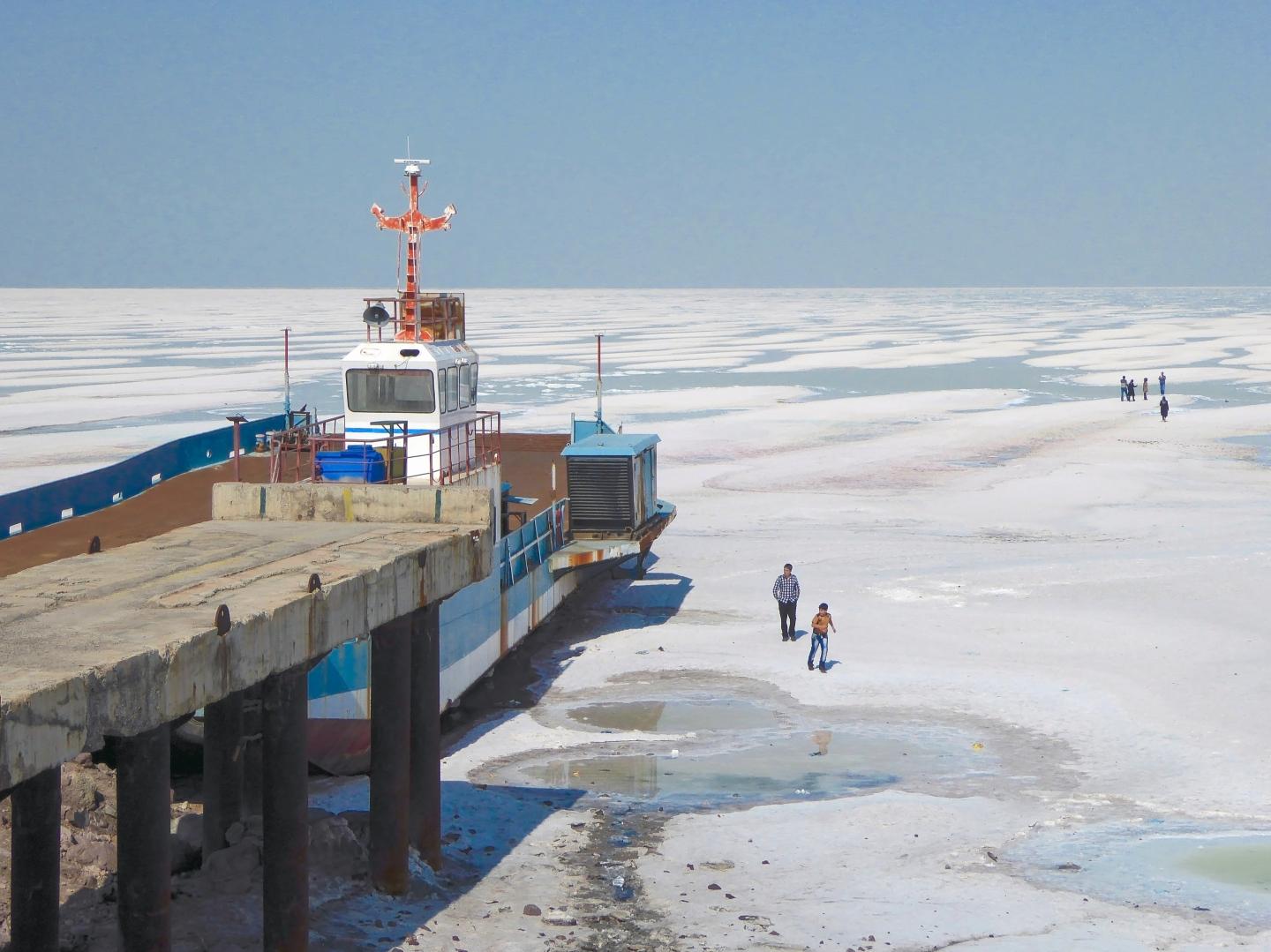
Credit: Somayeh Sima

In a rare exchange, scientists and water resources engineers from Iran and Utah are collaborating on a bold scientific study to restore one of the world’s largest saline lakes.

Lake Urmia — a massive salt lake in Iran’s northwest and a sister to Utah’s Great Salt Lake — has lost nearly 95 percent of its volume over the last two decades. As water levels drop, salinity spikes, threatening the lake’s brine shrimp population and the flamingos and other bird species that depend on the shrimp for food. Lake levels are so low that at some coastal resorts, tourism boats must be pulled a kilometer (0.6 mile) or more from shore by tractor before reaching suitable depths. In addition, new land bridges are forming in the drying lake bed which allows mainland predators to threaten endangered mammals living in the southern islands. The vast, dry lakebed imposes a growing dust problem for the five million residents who live in the Lake Urmia basin. What’s more, the area’s ecotourism industry has collapsed, and now experts fear an environmental disaster awaits if drastic changes are not made.

“We’re at the tipping point,” said professor and lead author Somayeh Sima of Tarbiat Modares University in Iran. “Every single step matters. We have to take action now.” Sima’s work will be used to update Iran’s $1 billion Lake Urmia Restoration Program. In 2018, she traveled to Utah on a visiting scholarship from the Semnani Family Foundation to collaborate with Utah State University water resources professor David Rosenberg who studies integrated water management and water conservation in Western U.S. river basins, including rivers that feed the Great Salt Lake. Prof. Wayne Wurtsbaugh, Sarah Null, and Karin Kettenring from the USU Quinney College of Natural Resources also collaborated in the limnology and ecology parts of this multidisciplinary research.

The team synthesized 40 years of data to define eight metrics that define the health of Lake Urmia and its many ecosystems. Their findings were published in the latest edition of the Journal of Hydrology: Regional Studies. One key finding shows that setting a target water level will not necessarily solve Lake Urmia’s problems.

“We can’t say that restoring the lake to some magic number will improve the overall situation,” said Rosenberg. “Instead, we need to consider how the lake’s ecosystem services are interconnected and how a varying lake level will impact those systems over time.”

“We have to embrace lake level variability and focus our restoration efforts where it makes sense,” Sima added. “Restoration is not an easy task. It is everyone’s responsibility, and we’ll need public support to make meaningful change.”

The problems facing Lake Urmia are not unique to Iran. Water levels at the Great Salt Lake are also at their lowest in recent years, and similar problems of land bridges, dust, changes in salinity, and ecological damage have experts concerned.

To promote transparency and reproducibility in science and encourage further collaborations, the researchers published their article open access (free to readers) and shared their data and code on the HydroShare.org repository.

“This partnership between U.S. and Iranian researchers is valuable because we have so much in common on this topic, said Sima. “Only together can we begin to understand how to solve these problems.”

###

Media Contact
Dr. David Rosenberg
[email protected]

Original Source

https://www.usu.edu/today/story/united-states-and-iranian-researchers-collaborate-on-lake-urmia-restoration

Related Journal Article

http://dx.doi.org/10.1016/j.ejrh.2021.100812

Tags: Earth ScienceEcology/EnvironmentHydrology/Water Resources
Share13Tweet8Share2ShareShareShare2

Related Posts

From Complexity to Clarity: Unraveling the “Topological Laws” Governing Cell Death — Biology

From Complexity to Clarity: Unraveling the “Topological Laws” Governing Cell Death

May 11, 2026
New Classification Framework Identifies Tumor-Associated Bacterial Effectors as Crucial Drivers of Tumor Biology and Immune Response — Biology

New Classification Framework Identifies Tumor-Associated Bacterial Effectors as Crucial Drivers of Tumor Biology and Immune Response

May 11, 2026

HIV-1 Strains Reveal Varied Paths to Antibody Escape

May 11, 2026

CRISPRi Screening Identifies Fungal-Specific Drug Targets

May 11, 2026
Please login to join discussion

POPULAR NEWS

  • Research Indicates Potential Connection Between Prenatal Medication Exposure and Elevated Autism Risk

    841 shares
    Share 336 Tweet 210
  • New Study Reveals Plants Can Detect the Sound of Rain

    728 shares
    Share 290 Tweet 182
  • Salmonella Haem Blocks Macrophages, Boosts Infection

    62 shares
    Share 25 Tweet 16
  • Breastmilk Balances E. coli and Beneficial Bacteria in Infant Gut Microbiomes

    57 shares
    Share 23 Tweet 14

About

We bring you the latest biotechnology news from best research centers and universities around the world. Check our website.

Follow us

Recent News

Humans and Zebra Finches Share Similar Speech Learning Techniques #ASA190

New Study Uncovers How Fungal Parasites Attack Strawberries and Raspberries

City of Hope Researchers to Present Groundbreaking Immunotherapy and Precision Medicine Advances Across Multiple Cancer Types at ASCO 2026

Subscribe to Blog via Email

Enter your email address to subscribe to this blog and receive notifications of new posts by email.

Join 82 other subscribers
  • Contact Us

Bioengineer.org © Copyright 2023 All Rights Reserved.

Welcome Back!

Login to your account below

Forgotten Password?

Retrieve your password

Please enter your username or email address to reset your password.

Log In
No Result
View All Result
  • Homepages
    • Home Page 1
    • Home Page 2
  • News
  • National
  • Business
  • Health
  • Lifestyle
  • Science

Bioengineer.org © Copyright 2023 All Rights Reserved.