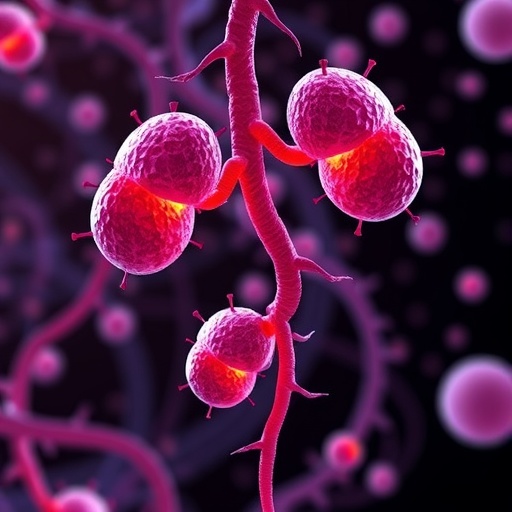
Kawasaki disease, a rare but potentially dangerous inflammatory illness of childhood, is drawing renewed attention from researchers seeking faster and more precise ways to track the disease. A study published in Pediatric Research examines urinary exosomal microRNAs, tiny molecular regulators enclosed within nanoscale particles released by cells, and explores how these signals change after treatment. The work addresses a major challenge in Kawasaki disease: inflammation can evolve rapidly, while the biological markers currently used in clinical practice do not always reveal how an individual child is responding.
Kawasaki disease is an acute systemic vasculitis, meaning that inflammation affects blood vessels throughout the body. It occurs primarily in infants and young children and can involve the coronary arteries, which supply blood to the heart. Fever, changes in the mouth and eyes, skin eruptions, and swelling of the hands and feet are among its characteristic clinical features, but the presentation can vary. If inflammation is not controlled, injury to the coronary arteries may result in aneurysms or other long-term cardiovascular complications. The disease is not classified as a conventional viral infection, although infectious and immune triggers have long been investigated.
The study by Huang, Kuo, Yu and colleagues focuses on exosomes found in urine. Exosomes are extracellular vesicles, typically tens to hundreds of nanometres in diameter, that are released by many types of cells. They carry molecular cargo, including proteins, lipids, messenger RNAs and microRNAs, and can transport this material between cells. Because exosomes are protected by a lipid membrane, their contents may remain relatively stable in body fluids. Urine is also obtained non-invasively, making urinary exosomes particularly attractive for pediatric research and for repeated sampling during the course of an illness.
MicroRNAs are short, non-coding RNA molecules that regulate gene activity after transcription. Rather than providing instructions for building proteins, they bind to specific messenger RNAs and can reduce or alter the production of proteins involved in cellular processes. A single microRNA may influence multiple genes, while several microRNAs can act together on pathways governing immunity, blood-vessel function, tissue repair and inflammation. In Kawasaki disease, such regulatory networks could reflect the intense activation of immune cells and the vascular changes associated with systemic inflammation.
Unlike many blood-based biomarkers, urinary exosomal microRNAs may provide information from several biological systems at once. Exosomes released by tissues can enter the circulation and eventually be filtered or excreted through the kidneys. Their molecular cargo may therefore offer an indirect window into inflammation occurring beyond the urinary tract. At the same time, urinary signals must be interpreted carefully because they can be influenced by kidney function, hydration, age, urine concentration and other biological variables. Normalizing measurements and distinguishing disease-related changes from technical or physiological variation are important components of exosome research.
The investigation is significant because it considers not only whether particular urinary microRNAs are associated with Kawasaki disease, but also how those signals change after treatment. This temporal perspective is central to clinical biomarker development. A molecule that differs between children with Kawasaki disease and healthy children may help with diagnosis, but a marker that rises or falls in parallel with inflammation could be more useful for monitoring recovery. Dynamic changes may also help identify children whose vascular inflammation persists despite an initial clinical improvement.
Treatment for Kawasaki disease is aimed at rapidly suppressing the inflammatory response and reducing the risk of coronary-artery damage. Clinical decisions are currently based on symptoms, physical findings, laboratory tests and cardiac imaging, including echocardiography. These tools remain essential, but they do not always provide a complete molecular picture of the disease. Urinary exosomal microRNAs could eventually complement existing assessments by offering a minimally invasive way to follow immune and vascular activity over time. Any such application would require validation in larger and more diverse groups of patients.
The researchers’ work also illustrates how extracellular vesicles are becoming important in precision medicine. Because exosomes reflect the cells that produce them, their contents may change as inflammation begins, intensifies or resolves. However, identifying a useful biomarker requires more than detecting a statistical difference. Scientists must determine whether a microRNA is reproducibly measurable, whether its change is specific to Kawasaki disease, whether it predicts coronary complications or treatment resistance, and whether the result can be translated into a practical clinical test. The study’s emphasis on post-treatment changes provides a foundation for these future questions.
By examining urinary exosomal microRNAs in children with Kawasaki disease and tracking their behavior after therapy, Huang and colleagues contribute to a growing effort to understand the molecular course of pediatric vasculitis. The findings may help clarify how systemic inflammation is reflected in urine and whether exosomal signals can serve as non-invasive indicators of disease activity. Further studies will be needed to establish the biological origin and clinical value of the identified microRNAs, but the approach points toward a future in which a simple urine sample could support more individualized monitoring of children at risk of cardiovascular complications.
Subject of Research: Urinary exosomal microRNAs in Kawasaki disease and their changes after treatment
Article Title: Urinary exosomal microRNAs in Kawasaki disease and their changes after treatment
Article References: Huang, HC., Kuo, HC., Yu, HR. et al. Urinary exosomal microRNAs in Kawasaki disease and their changes after treatment. Pediatr Res (2026). https://doi.org/10.1038/s41390-026-05337-1
Image Credits: AI Generated
DOI: 10.1038/s41390-026-05337-1
Keywords: Kawasaki disease; urinary exosomes; microRNAs; pediatric vasculitis; inflammation; biomarkers; treatment response
Tags: cardiovascular complications in Kawasakidiagnostic methods for Kawasaki diseaseearly detection of childhood vasculitisimmune response markers in Kawasaki diseaseKawasaki disease biomarkersmolecular indicators of Kawasaki diseasenanoscale particle analysis in pediatric diseasesnon-invasive urinary biomarker researchpediatric inflammatory illnessespost-treatment microRNA changessystemic vasculitis in childrenurinary exosomal microRNAs