


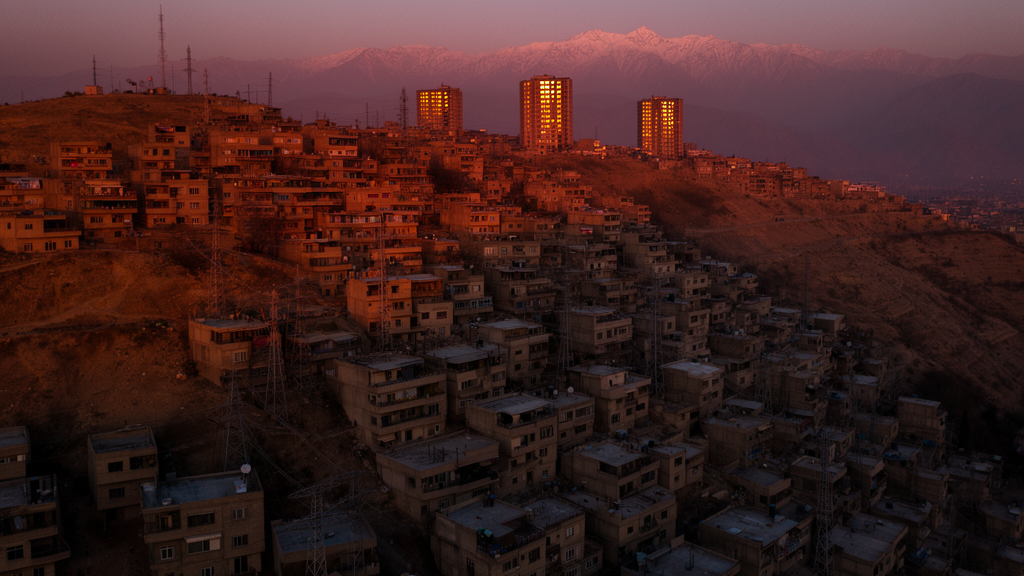
In Tehran, where households endure prolonged daily blackouts during the summer cooling season, a new study finds that the physical shape of neighborhoods measurably influences how much electricity residents consume. Using survey data from 820 randomly selected households and billing-period consumption records for 2021, researchers modeled residential electricity consumption in Iran’s capital and identified which urban form variables matter in a hot, arid climate. Their conclusion challenges a body of literature built largely on temperate and cold cities: the density-related variables that correlate with lower electricity use elsewhere showed no such negative correlations in Tehran, and the findings do not support compact urban development there.
The study, published in the journal City and Built Environment, employed a multi-level modeling approach to account for the hierarchical structure of the data, with individual households nested within their neighborhoods. This mattered statistically: the intraclass correlation coefficient in the annual null model was 0.453, meaning that 45.3 percent of the variation in residential electricity consumption could be ascribed to neighborhood characteristics. Because households within the same neighborhood share values for variables such as floor area ratio, building coverage ratio, and population density, the independence assumption of standard multiple linear regression would have been violated. The researchers therefore modeled annual and cooling electricity demand per household separately, using fixed effects to capture the overall influence of urban form.
The final annual model explained 47.4 percent of the variance in annual residential electricity consumption using fixed effects alone, of which 7.4 percent was attributable to urban form variables. At the neighborhood level, the model explained 92.9 percent of variance, with an overall explained variance of 55.3 percent. Among the urban form variables considered, building orientation, the average number of floors, and the standard deviation of floors within a neighborhood emerged as significant predictors.
Several of the specific associations point to the physical mechanisms at work. A one standard deviation increase in the average number of floors was associated with a 7.9 percent standard deviation increase in average residential electricity consumption in that neighborhood, a pattern the authors link to arguments that tall buildings are less energy-efficient because of greater exposure to sunlight. Meanwhile, the correlation between the standard deviation of building heights and cooling electricity demand was negative, which the researchers interpret as highlighting the role of varied building heights in enabling natural ventilation during summer months.
Building orientation also proved consequential. Although much of the prior literature has identified an East-West orientation as the most energy-efficient layout, that association did not reach statistical significance in Tehran. Instead, the Northeast-Southwest orientation showed a positive association with annual consumption: an average household living in a dwelling oriented toward southwest-northeast consumed 56.7 percent of a standard deviation more electricity than an average household facing south-north. The authors note that this orientation has also been identified as energy-inefficient in prior research conducted in Vietnam.
Variables beyond urban form added further texture to the results. Housing size correlated positively with consumption, with a one standard deviation increase corresponding to a 43.3 percent standard deviation increase in annual consumption and a 22 percent increase in cooling demand. Floor level mattered for cooling: households on top floors consumed 17 percent of a standard deviation more cooling electricity than those on middle floors, while first-floor units consumed 11.4 percent less, suggesting that shading plays a critical role in summer electricity demand. Building age was positively associated with cooling demand, with an extra standard deviation in age corresponding to an 11.3 percent standard deviation increase, which the authors attribute to weaker insulation in older apartment buildings.
Socio-economic characteristics showed differentiated effects. Household income level was significantly and positively associated with annual consumption but was not a strong predictor of cooling electricity demand, which the researchers ascribe to differences in appliance ownership affecting discretionary loads rather than air-conditioning. Interestingly, the percentage of university graduates in a household, controlling for income, was negatively correlated with annual consumption: a one standard deviation increase corresponded to a reduction of 117 kilowatt-hours per year, a relationship the authors connect to greater energy-saving awareness. This variable likewise showed no meaningful association with cooling demand, reflecting what the researchers describe as the essential nature of cooling need.
The contrast with earlier studies is central to the paper’s argument. Previous work conducted primarily in temperate and cold regions has frequently reported negative correlations between population density, floor area ratio, or building coverage ratio and residential electricity consumption, supporting compact urban form as an efficiency strategy. In Tehran, no such negative correlations were observed; population density, for instance, was not a statistically significant predictor and was dropped from the fitted model. Because shading and ventilation are the critical factors for reducing electricity demand in this arid climate, the authors conclude that the findings do not support compact urban development there.
The case study context amplifies the stakes. Tehran, home to more than 2.9 million households across 22 districts and 352 neighborhoods, recorded 1361.3 annual Cooling Degree Days in 2021, compared with a European Union average of 100.15 that year. The city sits between the Alborz Mountains and a desert, with elevations ranging from 1030 to 2032 meters above sea level, and building elevation was included as a control variable serving as a proxy for climatic traits, since the limited number of synoptic stations prevented assigning distinct Cooling Degree Days to individual parcels. Electricity peaks sharply in summer for space cooling, while the smaller winter peak from electric heating was deemed insufficient to warrant a separate model, particularly as natural gas remains the dominant heating source in Iran.
The authors acknowledge important limitations. Cooling electricity demand is an estimate rather than a direct measurement, calculated by subtracting each household’s constant daily electricity use from total consumption on days when temperature exceeded the World Health Organization comfort zone of 18 to 24 degrees Celsius. This method assumes that non-air-conditioning loads remain relatively stable across months, so the estimated cooling demand carries uncertainty, and the authors call for further validation studies. Natural gas consumption could not be incorporated because many Tehran apartments lack distinct gas meters, and the underlying dataset is confidential for privacy reasons. Even so, the study argues that urban planners have a quantifiable lever: by optimizing urban form variables, they can help reduce residential electricity consumption and enhance the resilience of an electricity grid that, in Tehran’s summers, is pushed to the edge of failure.
Subject of Research: The influence of urban form on residential electricity consumption and summer blackouts in Tehran
Article Title: Reducing residential electricity demand in a hot, arid city: the role of urban form in preventing blackouts
Article References: Narimani Abar, S., Schulwitz, M., & Faulstich, M. (2026). Reducing residential electricity demand in a hot, arid city: the role of urban form in preventing blackouts. City and Built Environment, 4(1), Article 9. https://doi.org/10.1007/s44213-026-00076-9
Image Credits: AI Generated
DOI: 10.1007/s44213-026-00076-9
Keywords: Tehran, residential electricity consumption, urban form, cooling demand, multi-level modeling, blackouts, arid climate, building orientation, building floors, energy efficiency, urban planning, space cooling
News Source: Denise Maddox. (October 29, 2026). Urban form shapes household electricity use in blackout-prone Tehran. Scienmag.



