


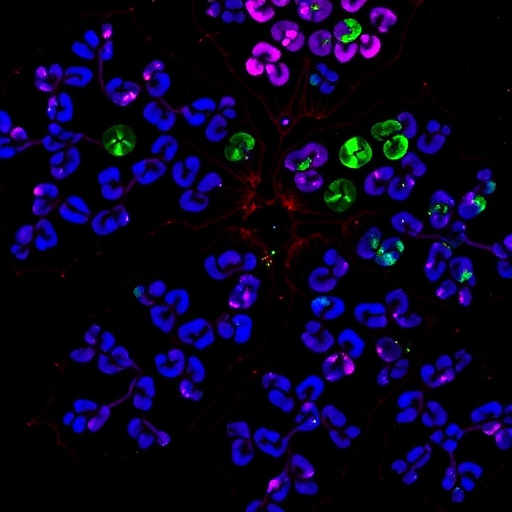
In a groundbreaking study set to redefine our understanding of Parkinson’s disease (PD), researchers have illuminated a critical molecular pathway linking mitochondrial dysfunction to neuronal degeneration. The study, spearheaded by Li, Huang, and colleagues, focuses on the role of UQCRC1 deficiency and its downstream effect on mitophagy—a specialized form of autophagy essential for mitochondrial quality control—via PINK1-dependent mechanisms. Their findings, published in npj Parkinson’s Disease in 2026, offer profound insights into the cellular underpinnings of PD and open new avenues for therapeutic intervention.
Parkinson’s disease, a progressive neurodegenerative disorder characterized by motor symptoms such as tremors, rigidity, and bradykinesia, has long been associated with mitochondrial impairment. Mitochondria, the powerhouses of the cell, are central to energy production and cellular homeostasis. Dysfunction of these organelles leads to oxidative stress and neuronal death, hallmark features observed in PD pathology. However, the precise molecular players and pathways orchestrating mitochondrial quality control in Parkinson’s neurons have remained elusive—until now.
UQCRC1, or ubiquinol-cytochrome c reductase core protein 1, is a critical component of complex III within the mitochondrial respiratory chain. This complex is pivotal for electron transport and ATP generation, making UQCRC1 a linchpin in cellular energy metabolism. The new research reveals that deficiency in UQCRC1 disrupts normal mitochondrial function, triggering defective mitophagy processes. Mitophagy serves as a cellular cleanup mechanism, selectively removing dysfunctional mitochondria to maintain cellular health. The study elucidates how a lack of UQCRC1 impairs this system, culminating in the accumulation of damaged mitochondria within neurons.
Central to the process of mitophagy is the protein PINK1 (PTEN-induced kinase 1), which functions as a sensor for mitochondrial damage. Under normal conditions, PINK1 is imported and rapidly degraded within healthy mitochondria. However, when mitochondria become depolarized or damaged, PINK1 stabilizes on the outer mitochondrial membrane, initiating a cascade that recruits Parkin, an E3 ubiquitin ligase, to label the organelle for degradation via autophagy. Li and colleagues demonstrate that UQCRC1 deficiency hampers this PINK1-dependent signaling pathway, thereby impairing mitophagy and fostering a cellular environment conducive to neurodegeneration.
Employing sophisticated genetic models and in vitro neuronal cultures derived from patient iPSCs, the researchers meticulously dissected how UQCRC1 downregulation leads to aberrant mitochondrial morphology and functional decline. They observed that mitochondria in UQCRC1-deficient neurons exhibited fragmented architecture, reduced membrane potential, and diminished ATP output. Furthermore, these dysfunctional mitochondria failed to effectively recruit PINK1, stalling the mitophagic process and resulting in their persistence within cells where they propagate oxidative damage.
In what may be a paradigm shift in PD etiology, the team’s discovery implicates UQCRC1 deficiency as a potential upstream trigger for mitochondrial quality control failure. This finding not only advances our molecular understanding of PD but also lends credence to the hypothesis that targeting mitochondrial maintenance pathways could yield novel neuroprotective strategies. The link between UQCRC1 and PINK1-dependent mitophagy unveils an intricate regulatory axis that, when compromised, sparks a cascade of events leading to dopaminergic neuron loss.
The implications of this research extend beyond fundamental biology to translational and clinical realms. Current therapeutic approaches for Parkinson’s primarily alleviate symptoms without addressing the disease’s root causes. By highlighting a concrete molecular target within mitochondrial dynamics and autophagic regulation, the study sets the stage for innovative drug discovery efforts. Modulating UQCRC1 expression or enhancing PINK1-mediated mitophagy may emerge as viable strategies to stall or reverse neurodegeneration in PD patients.
Moreover, these insights offer a window into biomarker development. Since mitochondrial dysfunction is an early event in PD, molecular signatures linked with UQCRC1 status or mitophagy efficiency could serve as predictive tools for disease onset or progression. Non-invasive assays quantifying such biomarkers might transform early diagnostic paradigms, enabling timely intervention before irreversible neuronal loss occurs.
On a broader scale, the investigation spotlights the dynamic interplay between mitochondrial biology and neurodegeneration across diverse neurological disorders. Similar mechanisms of impaired mitophagy and energy metabolism have been implicated in Alzheimer’s disease, amyotrophic lateral sclerosis, and Huntington’s disease, underscoring the potential cross-disease relevance of these findings. Therapeutic modalities fine-tuned to restore mitochondrial quality control could thus hold promise for multiple neurodegenerative conditions.
Technologically, the research leverages cutting-edge imaging techniques, high-resolution electron microscopy, and advanced proteomic analyses to delineate mitochondrial characteristics with unprecedented clarity. This integration of multidisciplinary tools exemplifies the power of systems biology approaches in unraveling disease mechanisms at the molecular and cellular levels. The sophisticated use of CRISPR-Cas9 gene editing further enabled precise modulation of UQCRC1 expression, underpinning causality and function in experimental models.
The study also addresses the complex regulatory networks governing mitochondrial biogenesis, dynamics, and clearance. UQCRC1’s role appears tightly interwoven with other mitochondrial factors influencing fission, fusion, and respiratory efficiency, highlighting a multilayered control system. Disruption in any node, as demonstrated by UQCRC1 insufficiency, precipitates a domino effect impairing overall mitochondrial health and viability.
Challenges remain, however, in translating these molecular discoveries into therapeutic gains. Ensuring specificity and safety of agents designed to modulate UQCRC1 or PINK1 pathways will be paramount. Furthermore, the heterogeneity of Parkinson’s disease, influenced by genetic and environmental factors, necessitates personalized medicine frameworks for effective treatment deployment. Future research must also explore compensatory mitochondrial pathways that may mitigate UQCRC1 loss and factor into disease resilience.
Nonetheless, the work of Li et al. propels the field forward, furnishing a compelling narrative linking mitochondrial complex III integrity with neuronal survival. By positioning UQCRC1 as a pivotal player in mitophagy and Parkinson’s pathophysiology, this study charts a promising course towards elucidating disease mechanisms and crafting innovative therapeutics. As the global burden of PD escalates alongside aging populations, such advances hold transformative potential for millions worldwide affected by this relentless condition.
In conclusion, the elucidation of UQCRC1’s impact on PINK1-dependent mitophagy underscores the essential nature of mitochondrial health in maintaining neuronal function and viability. As mitochondria emerge as critical hubs in neurodegenerative disease biology, unlocking their secrets becomes ever more vital. This landmark study not only expands our molecular lexicon regarding Parkinson’s disease but also inspires hope that targeted mitochondrial interventions could one day halt or even reverse the course of neurodegeneration.
Subject of Research: Parkinson’s Disease, Mitochondrial Dysfunction, Mitophagy, UQCRC1, PINK1
Article Title: UQCRC1 deficiency impairs mitophagy via PINK1-dependent mechanisms in Parkinson’s disease
Article References:
Li, JL., Huang, SY., Huang, PY. et al. UQCRC1 deficiency impairs mitophagy via PINK1-dependent mechanisms in Parkinson’s disease. npj Parkinsons Dis. (2026). https://doi.org/10.1038/s41531-026-01262-6
Image Credits: AI Generated
Tags: cellular pathways in Parkinson’s researchcomplex III in mitochondrial respiratory chaingroundbreaking findings in Parkinson’s researchLi Huang study on UQCRC1mitochondrial dysfunction in neurodegenerationmitochondrial quality control in neuronsneurodegenerative disorders and cellular energy metabolismoxidative stress and neuronal deathPINK1-dependent mitophagy mechanismsrole of mitochondria in Parkinson’s pathologytherapeutic interventions for Parkinson’s diseaseUQCRC1 deficiency and Parkinson’s disease



