• HOME
  • NEWS
  • EXPLORE
    • CAREER
      • Companies
      • Jobs
    • EVENTS
    • iGEM
      • News
      • Team
    • PHOTOS
    • VIDEO
    • WIKI
  • BLOG
  • COMMUNITY
    • FACEBOOK
    • INSTAGRAM
    • TWITTER
Sunday, June 28, 2026
BIOENGINEER.ORG
No Result
View All Result
  • Login
  • HOME
  • NEWS
  • EXPLORE
    • CAREER
      • Companies
      • Jobs
        • Lecturer
        • PhD Studentship
        • Postdoc
        • Research Assistant
    • EVENTS
    • iGEM
      • News
      • Team
    • PHOTOS
    • VIDEO
    • WIKI
  • BLOG
  • COMMUNITY
    • FACEBOOK
    • INSTAGRAM
    • TWITTER
  • HOME
  • NEWS
  • EXPLORE
    • CAREER
      • Companies
      • Jobs
        • Lecturer
        • PhD Studentship
        • Postdoc
        • Research Assistant
    • EVENTS
    • iGEM
      • News
      • Team
    • PHOTOS
    • VIDEO
    • WIKI
  • BLOG
  • COMMUNITY
    • FACEBOOK
    • INSTAGRAM
    • TWITTER
No Result
View All Result
Bioengineer.org
No Result
View All Result
Home NEWS Science News

UQ opens new era in cancer research and drug development

Bioengineer by Bioengineer
March 28, 2017
in Science News
Reading Time: 2 mins read
0
Share on FacebookShare on TwitterShare on LinkedinShare on RedditShare on Telegram
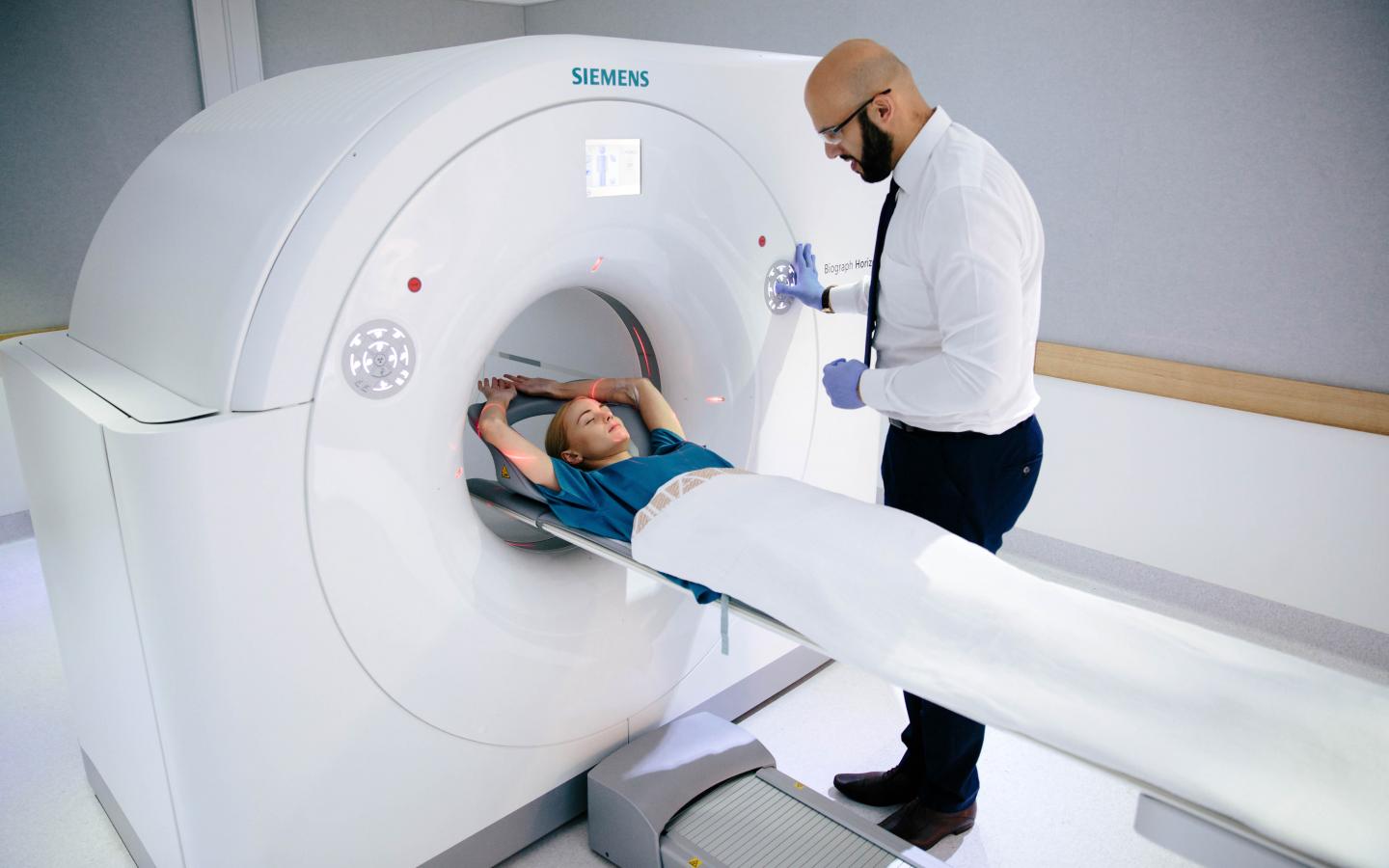
IMAGE

Credit: Centre for Advanced Imaging, University of Queensland

New cancer-fighting drugs could emerge from The University of Queensland in coming years, thanks to a state-of-the-art imaging facility opened today.

A $2.5 million grant from the Australian Cancer Research Foundation (ACRF) enabled the purchase of a large-bore PET-CT scanner and an upgrade of the centre's existing Magnetic Resonance Imaging (MRI) facilities.

The new ACRF Facility for Molecular Imaging Agents in Cancer is housed in UQ's Centre for Advanced Imaging (CAI).

CAI director Professor David Reutens said the facility's opening today would enable "a new paradigm" in comparative oncology by allowing researchers to examine the effects of tiny doses of anti-cancer drugs in both human and animal cancers at a cellular level.

"We are using molecular imaging to improve cancer detection, characterisation, treatment and monitoring," he said.

"The new facility addresses a key issue in enhancing the success of clinical trials on human cancer therapies.

"It also builds on the long-term development of world-class facilities in health and medical bioscience and research in Queensland, linking with other imaging capabilities such as the Herston Imaging Research Facility and the TRI Innovation and Translation Centre.

"Researchers will use naturally occurring cancers in companion animals such as dogs to bridge the gap between conventional preclinical models and human trials, facilitating clinical translation of new drugs, devices, and imaging procedures for human cancers," Professor Reutens said.

He said the CAI's Comparative Oncology research program was the first of its kind in Australia.

Australian Cancer Research Foundation CEO Professor Ian Brown said the ACRF Facility for Molecular Imaging Agents in Cancer offered a new opportunity to better understand cancer in its many forms.

"It provides a chance for the development of new approaches for the prevention, detection and treatment of cancer," he said.

"The ACRF supporters who made this grant possible know that the investment in state-of-the-art technology when placed in the hands of the best researchers will lead to the breakthroughs that we all desire."

"The facility will build on the long-term development of world-class facilities in health and medical bioscience and research in Queensland, linking with other imaging capabilities such as the Herston Imaging Research Facility and the TRI Innovation and Translation Centre.

"Researchers in Australia are among the best in the world and we're delighted to be supporting the cutting-edge work of the teams working together at UQ.

"Research and innovation are our best means of finding ways to end cancer."

###

Media Contact

Nina Moore
[email protected]
61-733-651-785
@uq_news

http://www.uq.edu.au

############

Story Source: Materials provided by Scienmag
Share12Tweet8Share2ShareShareShare2

Related Posts

Tracking Lanthanide-Labeled Microplastics in Plants

June 25, 2026

POSTECH Researchers Slash Cost of Reconstituted Cell-Free Systems by 95%

June 25, 2026

AI and Physics Collaborate to Design Advanced Hydrogen Storage Materials

June 25, 2026

Natural Hallucinogens: Evolution’s Ecological Tools, Not Mere Chemical Byproducts

June 25, 2026
Please login to join discussion

POPULAR NEWS

  • Saying Goodbye to PGY-6: Pediatric Fellowship Realities

    103 shares
    Share 41 Tweet 26
  • Multi-Hospital Study Reveals Long Covid Burden Is Twice as High as Current Estimates

    92 shares
    Share 36 Tweet 23
  • Detection of EDCs in Breast Milk and Infant Urine Up to Six Months Highlights Early Exposure Risks

    77 shares
    Share 31 Tweet 19
  • New Drug Candidate Developed at McMaster Shows Potential for Treating Brain Cancer

    58 shares
    Share 23 Tweet 15

About

We bring you the latest biotechnology news from best research centers and universities around the world. Check our website.

Follow us

Recent News

Tracking Lanthanide-Labeled Microplastics in Plants

POSTECH Researchers Slash Cost of Reconstituted Cell-Free Systems by 95%

AI and Physics Collaborate to Design Advanced Hydrogen Storage Materials

Subscribe to Blog via Email

Success! An email was just sent to confirm your subscription. Please find the email now and click 'Confirm' to start subscribing.

Join 82 other subscribers
  • Contact Us

Bioengineer.org © Copyright 2023 All Rights Reserved.

Welcome Back!

Login to your account below

Forgotten Password?

Retrieve your password

Please enter your username or email address to reset your password.

Log In
No Result
View All Result
  • Homepages
    • Home Page 1
    • Home Page 2
  • News
  • National
  • Business
  • Health
  • Lifestyle
  • Science

Bioengineer.org © Copyright 2023 All Rights Reserved.